Hagar: A Survivor Seen By God

Bible verses: Genesis 16:1-16, Genesis 21:8-21, Genesis 25:12, Galatians 4:21-31

Hagar was Sarah’s Egyptian maid and a slave whom Sarah had presumably gained during her time in Egypt. She became the mother of Ishmael with Abraham, Sarah’s husband. In the New Testament Hagar’s name is sometimes translated as Agar. The Bible doesn’t tell us anything about her early life. The first mention of Hagar is after she had already been living with Sarah and Abraham in the wilderness of Canaan for ten years. We know that she lived around 2000 BC. This was the time of the Bronze Age and the Middle Kingdom in Egypt, when pharaohs ruled with absolute power. She lived in a hard world, but Hagar was resilient and tough. She was a survivor. Her story tells that survival is possible even under the harshest conditions and that, even in those most difficult of circumstances, God sees us and cares for us. Through God, our troubles can be transformed into testimony.

A Surrogate Mother

Hagar’s mistress, Sarai (who was later renamed Sarah), longed to have a child. Since Sarai was unable to have a child of her own, she gave Hagar to her husband Abram (who was later renamed Abraham) so that Hagar could have children on her behalf. It was Sarai’s idea and Abram agreed, but there is no mention of Hagar’s opinions on the matter. Although this treatment of both Hagar and marriage was terribly wrong, it was an accepted custom of the time. In the cultures surrounding them it was thought a wife’s role was to provide children. If she was unable to have children herself, it was considered her responsibility to find another woman to have children on her behalf. Abram and Sarai had been called out of those surrounding cultures into the wilderness because God wanted to set their family apart. They were to learn God’s will so they could become a nation of priests to those surrounding cultures. However, in the context Sarai’s decision is understandable. Regardless of the rights or wrongs, Hagar and Abram slept together.

A Proud Spirit

Slavery was common in Ancient Egypt, although it wasn’t as big an enterprise as it became later on in antiquity. Slaves in Ancient Egypt were often better off than the poor peasants but that does not, of course, take away from the fact that it was still an abuse of human rights. We don’t know how Hagar ended up in her position. She may have been born into slavery, or perhaps her family sold her to pay their own debts. We can only speculate. What we do know is that Hagar may have been a slave separated from her own people and country, but she was no trampled spirit. Hagar had pride – but pride became her sin. When she found out she was pregnant, she began to despise and look down on Sarai. She had succeeded where Sarai had failed, even though Sarai was her mistress. She, Hagar, would be the mother of Abram’s only child.

In arrogance, Hagar began to lord it over Sarai and rub salt into her most vulnerable wound. For all it had been Sarai’s idea, she hadn’t anticipated this outcome. There would be no joy in sharing this child now. Instead there was only great hurt and competition. Sarai responded with jealousy. After Abram refused to intervene and told Sarai to do what she liked, Sarai began to abuse her position. She was cruel and mistreated Hagar harshly. Sarai may not have been the mother, but she was still the woman in charge! This story is so sad. It’s the first tale of female-against-female rivalry in the Bible. Instead of uniting to love the child they had longed for, they turned on each other with cruelty. For both Hagar and Sarai, their identities hung too much on the worth they thought they gained through a child. Their value didn’t depend on motherhood. God always loved them both.

Bold Before God

Hagar ran away. She had no idea where she would go but she couldn’t stay with Sarai anymore. She took off alone into the wilderness, her unborn child still within her. While Hagar was travelling to Shur, she paused at a fountain in the wilderness. It was there that the angel of the Lord met Hagar. He asked her where she had come from and where she was going. The angel must have already known what was going on, so it would appear he was asking the questions for Hagar’s benefit, asking her to reflect for herself and showing that God cared. God already knows everything, but He wants to have a relationship with us and hear from us ourselves. Hagar answered the first question, sharing where she had come from and why, but not the second question. The truth was, she didn’t know where she was going. She was lost, with no plan. The angel told Hagar to return and submit to Sarai, which was no doubt not what Hagar wanted to hear. However, the angel of the Lord promised Hagar that she would have many descendants and that her unborn child would be a son whom she was to call Ishmael because God had heard her. In Hebrew, Ishmael means ‘God hears’.

The angel of the Lord told Hagar that her son Ishmael would be a wild man and a fighter who would live in enmity with his brothers. Hagar was a survivor and it seems that her son Ishmael was to act out that trait in his own way. Hagar had been abused by her adoptive family, and Ishmael was to live in conflict with and be estranged from his family. The failings of one generation negatively impacted not only Hagar but the next generation with her son. Injustice has lasting consequences, but God then as now worked hope into the tragic human mess. Hagar had been captive, but her son Ishmael would be wild. Hagar was seen by God. Even though in the eyes of the world she was little more than a miserable slave who may as well have been invisible, the great God of Abraham knew Hagar. He saw her as infinitely precious and loved her in spite of her flaws. That realisation must have been awe-inspiring for Hagar.

Boldly, she named the God who had named her child. Hagar called God ‘Thou God seest me’, identifying a part of His character. Even when the people who are supposed to show God’s love fail, even when they sin and are hurtful, God still cares and God still hears us. Hagar is one of few people in the Bible to directly hear a covenant from God, and one of even fewer to give a name to God. She recognised God’s kindness in the privilege of this by asking in wonder, had she really there seen Him who sees her? Hagar also named the well after the encounter, which in Hebrew became known as Beer-lahai-roi. Obeying God’s directions, Hagar returned to Sarai and Abram. She must have told them of her encounter, because when gave birth to a son Abram called him Ishmael as God had told Hagar to do.

The Other Woman

Hagar continued to live with Sarai and Abram for another 14 years. During those years Ishmael had been an only child growing up in the rather confused family arrangements. However, when Ishmael was about 14 years old, Sarah and Abraham (for so they had been renamed in that time) finally had the child together that God had promised them. Ishmael didn’t think much of his new baby half-brother Isaac. No doubt he had been brought up with the rivalry of his mother Hagar and his step-mother Sarai. Ishmael mocked his baby half-brother. Sarah saw him doing so and complained to Abraham, insisting that Hagar and Ishmael must be cast out because Ishmael would not inherit along with her Isaac. This grieved Abraham because he loved his son Ishmael and was concerned for Hagar, but God told Abraham to listen to Sarah and do as she said. God told Abraham not to worry because He would make Ishmael into nation for Abraham’s sake. Early the next morning, Abraham took bread and water which he gave to Hagar and put on her shoulder himself. Hagar was sent away along with her son Ishmael.

In the Wilderness Again

Hagar wandered through wilderness of Beer-sheba with Ishmael. When she ran out of water, she hid her son in the shrubs and went to sit a long way off herself so she wouldn’t have to see him die. Hagar wept. She was alone in the desert with no hope of a future. She’d been cast out from the only family she’d known for the past 24 years. She had nowhere to go, no one to go to, and no one would even know when she died let alone mourn it. They’d been given limited resources, which had helped for a while, but now there was nothing left. Her son Ishmael was the only person she had in the world and now he was surely going to die. Her mother’s heart broke. They didn’t have enough water to make it to any habitation, and even if they did it would hardly be safe for them there. They were strangers and foreigners. She was a single woman with nothing of value to give, accompanied only by a young teenage boy. She didn’t want to think what could happen to her son, let alone her. This was the hostile Bronze age after all. The world was a wild, dangerous place. But that wasn’t something she had to worry about, because they weren’t even going to make it that far.

They were going to die right here, right now, alone. Hagar resigned herself to that fact. She already felt parched and weak from walking so far in the strong sun with not a drop of water left. She had left Ishmael in the shrubs to shade him at least a bit from the sun’s cruel heat, but there was no doubt he was going to die. The only relief she could give was to not witness it herself. She couldn’t cope with that. She just couldn’t. As Hagar sat, desolate, in the wilderness, she lifted her voice and wept. All was lost. Except it wasn’t. God heard the boy crying out and the angel of God called to Hagar out from heaven. What’s the matter, Hagar? God called. I imagine Hagar didn’t know whether to laugh or cry at that moment. What was the matter?! Wasn’t it obvious?!

God continued, telling Hagar not to fear because He had heard Ishmael’s voice where he was. It seems strange that God said he was responding to Ishmael’s voice, when the Bible has just been telling us about Hagar crying. Maybe God was trying to teach Hagar something. Hagar had sat far enough away that she couldn’t hear Ishmael, but God could still hear him. God had seen her before when she felt unseen. Now God heard Ishmael who she was trying not to hear herself. God was a God who sees. Ishmael was well named: ‘God hears’. Even when we come to the end of ourselves, God is still with us and loves us beyond measure. God told Hagar to go and lift up the boy and promised that He would make a nation of Ishmael. Then God opened her eyes to see a well of water nearby that she hadn’t seen before. Hagar filled her bottle with water from the well and gave it to Ishmael to drink. They were saved.

Matriarch of Her Own Nation

God remained with Ishmael as he grew up in the wilderness and became an archer. They lived in the wilderness of Paran. In time, when Ishmael was full-grown, Hagar took him a wife from Egypt. Finally, Hagar had agency and power of her own. They had survived alone in the wilderness against all odds with God’s help, and now God had made her the matriarch of the beginnings of her own nation. Ishmael had a wife and would found a nation, as God had promised. As the angel of the Lord had said, Ishmael became a wild survivor and fighter from a broken family. The world had abandoned them, so they must learn to survive on their own. Hagar cared for Ishmael as a single mother. However, it appears not all ties were completely severed with the family of Abraham. Abraham had lived an unusually long life. Ishmael was born when Abraham was 86 years old, Isaac was born when he was 100, and then Abraham lived to be a total of 175 years old. When Abraham eventually died, it seems the then 89-years-old Ishmael cared enough to attend Abraham’s burial along with his 75-year-old younger half-brother Isaac.

The two brothers had never got to know each other, since Hagar and Ishmael left when Isaac was still a baby. I’m curious as to what that meeting was like. Was it tense? Were they bound by a common grief? Did it finally take them a lifetime to reconcile? Or did they avoid each other as much as possible and just attend to burying their father? How did Isaac let Ishmael know that Abraham was dead? Did they know where each other lived and had they met again before? The Bible says that Ishmael’s hand would be against every man and that every man’s hand would be against him. Ishmael was a fighter who would dwell in the presence of all his brethren. That does not sound like reconciliation was an option to Ishmael. However, that is all we know. The Bible simply doesn’t say. Nor does it say whether Hagar lived to see Abraham’s funeral with her son, or whether she died before then.

Hagar’s Hope

There is one mention of Hagar in the New Testament where she is used as an allegory along with Sarah. I have written about this previously in my blog article on Sarah, so I won’t say as much here. In the allegory, Hagar the bondmaid represents this broken world and the old covenant of the Jewish people. Hagar was a survivor but there was pain and hurt in her story. The New Testament allegory points out that we no longer belong to that broken world as through Jesus Christ’s sacrifice we have been granted citizenship to the kingdom of God and a heavenly rather than the earthly Jerusalem. That doesn’t mean we won’t still suffer on earth. Even Jesus himself underwent suffering. However, the point of the allegory is that we have been granted an inheritance by God and are free through Christ instead of being slaves to other spiritual forces. Instead of being bound like Hagar the bondmaid, we can now be free like Sarah the freewoman. In other words, there is now a new hope for the Hagars of the world. God sees you, hears you, loves you, and wants you to be free in Christ.

‘And she called the name of the LORD that spake unto her, Thou God seest me: for she said, Have I also here looked after him that seeth me?’

Genesis 16:13
Learn More:

Michaelmas Traditions

Michelmas, also known as the Feast of St Michael and All Angels, is on the 29th September. Because it falls near the autumnal equinox, it was historically one of the four quarter days of the year (the others being Christmas in winter, Lady Day in spring, and Midsummer in summer). In British and Irish tradition, the quarter days were the days on which servants were hired at hiring fairs, rents were due, accounts were settled, lawsuits resolved, and school terms started. The purpose of quarter days was to ensure that debts and unresolved lawsuits were not allowed to linger on. Michaelmas was especially important as a quarter day because it marked the end of harvest and therefore also the end of the farming year – hence it made sense to settle accounts at that time. Michaelmas is also associated with the beginning of autumn and the shortening of days in the northern hemisphere.

‘If ducks do slide at Michaelmas,

At Christmas they will swim;

If ducks do swim at Michaelmas

At Christmas they will slide.’

Traditional rhyme

St Michael & the Angels

Michaelmas is a celebration of St Michael, the archangel mentioned in the Bible as leading God’s armies against forces of spiritual evil. In Christian tradition St Michael is an advocate and protector of God’s people, honoured for defeating the satan in the war in heaven, and portrayed as a spiritual warrior and the greatest of the angels. His name ‘Michael’ is Hebrew for ‘Who is like God?’ – a fine battle cry declaring God’s power and goodness! Because he’s seen as a military saint, St Michael has been adopted as the patron saint of chivalry, policemen, paramedics, the military, and occasionally of horsemen.

Although St Michael is the only archangel mentioned in the Bible, he is sometimes recognised as one of four archangels alongside Raphael (meaning ‘God has healed’), Gabriel (meaning ‘God is my strength’), and Uriel (meaning ‘God is my light’). These other angels are included within the ‘All Angels’ title of the Feast of St Michael and All Angels. The Bible doesn’t say much about other spiritual beings such as angels because we don’t need to know about them – we only need to know and trust in God. However, because He’s generous, God does graciously give us in the Bible a glimpse behind the scenes at the spiritual realm, and this includes the archangel Michael.

‘Then said he unto me, Fear not, Daniel: for from the first day that thou didst set thine heart to understand, and to chasten thyself before thy God, thy words were heard, and I am come for thy words. But the prince of the kingdom of Persia withstood me one and twenty days: but, lo, Michael, one of the chief princes, came to help me; and I remained there with the kings of Persia.’

Daniel 10:12-13

Activities & Celebrations

Michaelmas remains to this day the start of the new academic and legal years, since it marks the end of harvest when historically everyone had been needed to help on the farms during the summer holidays. Although schools in England now start at the beginning of September instead, universities still start their teaching around Michaelmas time. More traditional universities and private schools even refer to their autumn terms as ‘Michaelmas term’. With autumn also comes the end of the fishing season and the start of the hunting season.

Besides the autumnal organisation of hiring fairs and the new academic year, Michaelmas was a great religious feast during the Middle Ages. People celebrated with church services, sharing a meal with their family and friends, and horse races across the recently harvested stubble fields. It was a time of horse sales, goose fairs, and ploughing contests. The late-flowering purple Michaelmas daisies give colour and warmth to gardens at this time of year, so perhaps they were picked to decorate the feasting tables. Michaelmas daisies symbolise farewell and departure, much how Michaelmas Day is seen to say farewell to a productive year and to welcome in the next cycle.

‘The Michaelmas Daisies, among dead weeds,

Bloom for St Michael’s valorous deeds.

And seems the last of flowers that stood,

Till the feast of St Simon and St Jude.’

Traditional rhyme

Old Michaelmas Day

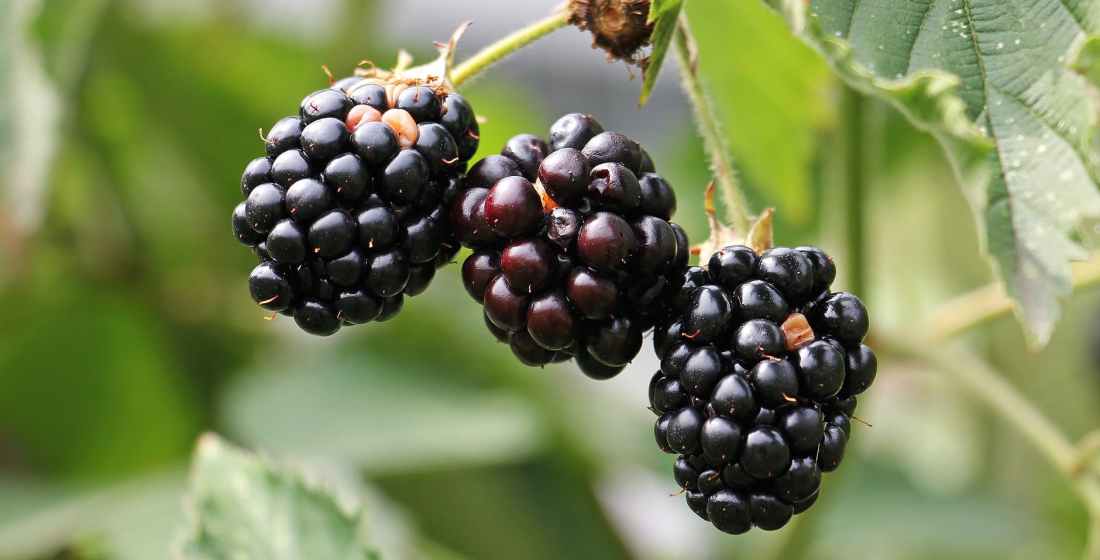
While Michaelmas Day is now on the 29th September, that was not always the case. Until the Julian calendar was dropped for the more accurate Gregorian calendar in 1752, Michaelmas used to be on the 10th October. The 10th of October is now known as Old Michaelmas Day as it has folklore of its own. According to legend, when the devil fell from heaven after fighting the archangel Michael, he fell straight into a bramble bush – which is, of course, very prickly. It’s said that the devil cursed, breathed fire, spat, and stamped all over the blackberries, making them unfit for consumption. Every year on Old Michaelmas Day the devil flies over all the bramble bushes to either spit or urinate on the blackberries, and so blackberries shouldn’t be picked after that day. In reality, blackberries begin to go bad as colder weather approaches.

‘A dark Michaelmas, a light Christmas.’

Traditional folklore saying

Michaelmas Recipes

According to folklore, the most important part of a Michaelmas feast was a roast goose as it was believed this brought good luck for the year. Even Jane Austen wrote to her sister Cassandra in 1813 that she ‘dined upon goose yesterday, which, I hope, will secure a good sale of my second edition.’ Nowadays, of course, vegetarian alternatives are available. This could be cooked with seasonal root vegetables such as honey-glazed roast carrots, honey-roasted parsnips, sweet roasted onions, and herb-infused roast potatoes. Other traditional recipes include St Michael’s bannock and Michaelmas dumplings. Nuts, blackberries, and ginger beer are also associated with Michaelmas. A few blackberry recipes for puddings include apple and blackberry crumble, blackberry and apple pie, or blackberry jam to go on the St Michael’s Bannock.

‘Eat a goose on Michaelmas Day,

Want not for money all the year.’

Traditional folklore saying

Holy Cross Day Traditions

Holy Cross Day has been celebrated on the 14th September since the seventh century. It is also known as the Feast of the Cross. The day commemorates the cross on which Jesus was crucified and which was an instrument of salvation for those who choose to follow Jesus. The cross is deeply symbolic and has great meaning in Christianity. It serves as a reminder of just how much God loves us, how much we are lost without Him, how Jesus has saved us, and how we are called to follow Him in sacrificially serving and loving our neighbours. Because we owe everything we have and everything we are to God, Christians should not boast about what glory they’ve achieved in the world. Instead, we should only boast about the freedom we’ve been gifted through Christ and the cross – which is a gift free to anyone who decides to believe.

‘But God forbid that I should glory, save in the cross of our Lord Jesus Christ, by whom the world is crucified unto me, and I unto the world.’

Galatians 6:14

St Helena & St Constantine

Holy Cross Day also recalls three events. First was the finding of Jesus’ cross by St Helena while she was on pilgrimage in Jerusalem. St Helena lived from approximately AD 246 until AD 330. She was empress of the Roman Empire and the mother of the Roman emperor St Constantine. It was St Helena’s conversion to Christianity that influenced her son to legalise Christianity in AD 313 (ending some persecution) then later declare Christianity the state religion of the Roman Empire and convert himself.

The second event recalled on Holy Cross Day is the dedication of churches that St Constantine and St Helena had built on the site where Jesus had been crucified. Then the third event is the restoration of the True Cross (as Jesus’ cross is sometimes called) to Jerusalem in AD 629 after it had been taken as a trophy in the Sasanian conquest of Jerusalem a few years prior. There is of course more to the story than I’ve shared here, however that is the basic history. What matters is not any relic of the cross itself, but that it was the means through which God offered us salvation.

Celebrations & Recipes

Holy Cross Day is most commonly commemorated through church services and prayer. However, it was historically also celebrated with a feast – hence why it is called the Feast of the Cross. Recipes for Holy Cross Day could include hot cross buns, chocolate and spice hot cross buns, hot cross cookies, or any bread roll or cake decorated with a cross. Since apples are ripe for harvest around this time of year, you could bake a Dorset apple cake and then decorate the top with extra apple slices in the shape of a cross.

Holy Cross Day and St Helena are also associated with basil. According to story, while St Helena was on pilgrimage in Jerusalem and searching for the holy cross, she noticed an unfamiliar green plant growing in the earth. Because it had a strong, sweet smell she decided to dig it up to take it back to Rome with her. It was while St Helena was digging the herb up that she found fragments of Jesus’ cross, the veracity of which she only became convinced by after she had witnessed it miraculously heal a woman who had been near death. St Helena named the green herb basil, because basileus was Greek for ‘king’ and it had grown from the cross of the king of kings. Recipes including basil could be fun for Holy Cross Day. Basil could be made into pesto, tomato and basil pasta salad, spinach and basil lasagne, garlic and basil butter to go on your cross-decorated bread rolls, tomato and basil soup, or any other creative recipes using basil you can think of.

British Seasonal Celebrations

‘For thousands of years, awareness of seasonal changes was enhanced by ritualistic celebrations. Nobody is going to forget the passing of the winter solstice when it was accompanied by a fire festival and the biggest party of the season, in the way that it’s successor, Christmas, does not go unnoticed now.’

From ‘Wild Signs and Star Paths’ by Tristan Gooley (2018)

I love nature and I love history, so perhaps it’s not surprising that I find myself drawn to the idea of seasonal celebrations. They bring the two together after all. Seasonal celebrations connect communities to their heritage as part of a greater story. They also reinforce an appreciation for the changing seasons and natural world, which is needed more than ever now so many of us are disconnected from the environment. I also think seasonal celebrations have a real potential to bring communities and families together through wholesome bonding traditions, fun shared memories, and enjoying this life that we’ve been blessed with.

As a child I always loved the magic of Christmas anticipation; hunting for Easter eggs around the churchyard (then sneaking out of church early to help hide them when I was older); learning maypole dances at school in preparation for the May Fayre; barn dances and barbeques in the summer; running around the local horticultural show with my friends; the beauty and colour of Guy Fawkes’ Night; taking part in the Remembrance Day parade with the Girl Guides; then the Christmas spirit beginning all over again with Christingle oranges and sparkling fairy lights. It’s been my experience that these festivities are often predominantly focused at children, but there’s no reason why they can’t be for all ages as they once were. Just because we’re now adults, it doesn’t mean we have to forget the magic in life or the value of innocent fun.

Below I’ve compiled a list of seasonal celebrations that were once traditional to my culture. It includes annual celebrations from the Church of England liturgical year, the British agricultural seasons, and more modern secular celebrations. Traditionally holidays were holy days – hence the name – and date back hundred of years. The word ‘holiday’ comes from the Old English ‘háligdæg’ and was first recorded during the Anglo-Saxon period around AD 950. For any international readers out there, in Britain the name ‘holiday’ is used to refer to any celebration, travel, or time off work, regardless of whether they’re religious or secular in nature. The more American ‘vacation’ instead comes from French and is connected to the word ‘vacate’ with the meaning to be unoccupied.

‘I sing of brooks, of blossoms, birds, and bowers,
Of April, May, of June, and July flowers.
I sing of May-poles, hock-carts, wassails, wakes,
Of bridegrooms, brides, and of their bridal-cakes.
I write of youth, of love, and have access
By these to sing of cleanly wantonness.
I sing of dews, of rains, and piece by piece
Of balm, of oil, of spice, and ambergris.
I sing of Time’s trans-shifting; and I write
How roses first came red, and lilies white.
I write of groves, of twilights, and I sing
The court of Mab, and of the fairy king.
I write of Hell; I sing (and ever shall)
Of Heaven, and hope to have it after all.’

‘The Argument of his Book’ by Robert Herrick (1648)

Advent

The liturgical year begins with the season of Advent in preparation and expectation for Christmas. Advent starts on the fourth Sunday before Christmas, which is usually in late November, and lasts until Christmas Eve on the 24th December. This period contains the winter solstice on the 21st December and is during the darkest time of the year. In England sunrise is around 8am and sunset is before 4pm at this time of year.

Late November – First Sunday of Advent.

30th November – St Andrew’s Day (the patron saint of Scotland).

December – Second Sunday of Advent.

6th December – St Nicholas’ Day (the patron saint of children, now known as Father Christmas).

13th December – St Lucy’s Day (previously coincided with the winter solstice).

December – Third Sunday of Advent.

17th December – O Sapientia (the seventh day before Christmas Eve).

December – Fourth Sunday of Advent.

21st December – Winter Solstice.

24th December – Christmas Eve.

Christmas

Christmas Day on the 25th December is followed by the 12 days of Christmas, celebrating and commemorating Christ’s birth – an event that changed history and demonstrated God’s love for us in the most amazing way. We don’t know exactly when Christ’s birthday was, but choosing to celebrate it around the time of the winter solstice (for the northern hemisphere) when light begins to return has symbolic significance that reinforces the story.

25th December – Christmas Day.

26th December – St Stephen’s Day (the first Christian martyr) or Boxing Day.

28th December – The Holy Innocents.

31st December – New Year’s Eve or Hogmanay.

1st January – The Naming & Circumcision of Jesus or New Year’s Day.

5th January – Twelfth Night.

Epiphany

The season of Epiphany starts with Epiphany itself on the 6th January, which celebrates the visit of the wise men to the infant Jesus and the recognition that Jesus Christ was the Son of God. The season lasts until Candlemas on the 2nd February, which commemorates the presentation of Jesus at the temple 40 days after his birth. This covers most of January and the coldest (although no longer darkest) month of the year in the northern hemisphere.

6th January – Epiphany.

First Sunday of Epiphany – The Baptism of Christ or Plough Sunday.

Monday after Plough Sunday – Plough Monday.

18th to 25th January – Week of Prayer for Christian Unity.

21st January – St Agnes’ Day (the patron saint of virgins).

25th January – The Conversion of Paul or Burns’ Night.

2nd February – Candlemas.

Ordinary Time

The periods of the liturgical year outside Advent, Christmastide, Epiphanytide, Lent, and Eastertide are called ‘ordinary time’. This is because they are not focused on any of the major Christian celebrations. The period of ordinary time between Epiphany and Lent lasts about five Sundays. During this time the church stops looking back to Jesus’ birth and later looks forwards to Jesus’ death and resurrection. The last day of this ordinary time is celebrated as Pancake Day.

14th February – St Valentine’s Day (the patron saint of lovers).

February or March – Shrove Tuesday or Pancake Day.

Lent

Lent is a time of reflection, penitence, and solemn observance in preparation for the celebration of Easter. It lasts 40 days, which is about six weeks, in commemoration of the 40 days that Jesus spent journeying in the desert. During Lent many Christians fast from certain luxuries such as sugar, dairy, and meat or take up new spiritual disciplines. In England it historically coincided with the ‘hungry gap’ of late winter and early spring when there was no fresh produce available from vegetable gardens. Near the end of Lent is Good Friday, commemorating the crucifixion and death of Jesus Christ.

February or March – Ash Wednesday.

1st March – St David’s Day (the patron saint of Wales).

March or April, Fourth Sunday of Lent – Mothering Sunday.

17th March – St Patrick’s Day (the patron saint of Ireland).

Fifth Sunday of Lent – Passiontide.

21st March – spring equinox.

25th March – Lady Day or The Annunciation.

March or April – Holy Week.

Sunday of Holy Week – Palm Sunday.

Thursday of Holy Week – Maundy Thursday.

Friday of Holy Week – Good Friday.

Easter

Easter lasts for 50 days from Easter Day until Pentecost. This time celebrates the resurrection of Jesus Christ from the dead and with it how He has rescued us to give us new life. Along with Christmas, Easter is the most important celebration of the year. The date of Easter Day itself is determined by the moon and changes each year, as it is held on the Sunday following the paschal moon. Like several other celebrations, the meaning of Easter is reinforced by the symbolism of the natural season. In the northern hemisphere Easter takes place after the spring equinox when the earth is growing and coming to life again.

March or April, Sunday following the paschal moon – Easter Day.

March or April – Easter Week.

1st April – April Fool’s Day.

23rd April – St George’s Day (the patron saint of England).

1st May – May Day.

Three weekdays before Ascension Day – Rogationtide.

40th day after Easter Day, May or June – Feast of the Ascension.

31st May – The Visit of the Blessed Virgin Mary to Elizabeth.

50th day after Easter Day, May or June – Pentecost or Whit Sunday.

Ordinary Time

The season from Pentecost until Advent is designated as ‘ordinary time’ in the liturgical calendar. This period lasts about 24 Sundays from early summer until early winter, covering all of summer and autumn with the historically busy harvest season. Around the summer solstice on the 21st June, sunrise is before 5am while sunset is well after 9pm in England. This gives over 16 hours of daylight – double the just eight hours of daylight during the depths of winter.

May or June – Trinity Sunday.

Thursday after Trinity Sunday – Corpus Christi.

21st June – Father’s Day or summer solstice.

24th June – The Birth of John the Baptist or Midsummer’s Day.

15th July – St Swithun’s Day (traditionally associated with folklore about the weather).

1st August – Lammastide.

6th August – The Transfiguration of Our Lord.

15th August – The Blessed Virgin Mary.

14th September – Holy Cross Day.

Late September or early October, Sunday nearest the harvest moon – Harvest Festival or Harvest Thanksgiving.

21st September – autumnal equinox.

29th September – Michaelmas (the archangel).

First Sunday in October – Dedication Festival.

4th October – St Francis’ Day (the patron saint of animals).

31st October – All Hallows’ Eve or Hallowe’en.

1st November – All Hallows’ Day.

2nd November – All Souls’ Day.

5th November – Bonfire Night or Guy Fawkes’ Night.

11th November – Martinmas (the patron saint of the poor) or Remembrance Day.

23rd November – St Clement’s Day or Old Clem’s Night (the patron saint of blacksmiths).

25th November – St Catherine’s Day or Catterntide (the patron saint of lace makers).

Sunday before Advent – Christ the King.

Old Testament Women Timeline

The Bible is divided into two sections. First is the Old Testament, which contains 39 smaller books and was written in the years BC (Before Christ) about the history of the Jewish people and their relationship with God. Second is the New Testament, which contains 27 smaller books and was written in the years AD (Anno Domini, meaning In the Year of Our Lord) about Jesus and His early Christian followers. The Old Testament was originally written in Hebrew and some Aramaic between about 1400 BC and 450 BC, with the earliest stories being passed down through oral tradition. The New Testament, on the other hand, was originally written in Greek between about AD 50 and AD 95. Despite spanning a massive period of time with a range of different cultures and circumstances, the total 66 books of the Bible are all part of one unified story – the story between God and His people.

The overarching narrative of the Old Testament is that humans had become separated from God because our sinful flaws were incompatible with His holy perfection. God loves us and so wants to mend the broken relationship, but time and time again throughout generations humans kept falling short. We were incapable on our own of meeting with God. We were just too broken. However, God loved us so much that He didn’t give up. He promised that one day a messiah would come and succeed where everyone else had failed. This messiah would save us and open up the way for us to be with God. The Old Testament gives us this great promise and hope – then ends on the world’s greatest cliffhanger. Who was this messiah? When would he come? How long must we wait? It leads right into the New Testament, where Jesus comes to fulfil the Old Testament prophecies.

Here I’ve given a summary and a timeline of the Old Testament. Since I’m particularly interested in the women of the Bible, I’ve also named some of the women to be found at different points in the Old Testament.

Creation Myths

Bible books: Genesis.

Unknown – Genesis chapters 1-11 tell the beginnings of creation and humanity in a way that uses deep symbolism to convey important truths about God. As such, these stories can’t be accurately dated and to try to do so is to misunderstand the literary purpose of these early chapters. We don’t need to know how old the world is. What, or rather who, we need to know is God.

Despite this, some people claim that the world was created in exactly 4004 BC, that the great flood and Noah’s ark were circa 2500 BC, and that the confusion of languages at the Tower of Babel happened circa 2400 BC. By contrast, scientists have found homo sapiens skeletons dating back nearly 200,000 years old and currently estimate the Earth to be over 4.5 billion years old. Specific dates aren’t of much relevance for these early stories.

Women of this period: Eve, Adah, Zillah, Naamah.

Ancestral History

Bible books: Genesis, possibly Job.

Circa 2000 BC – It is only from Genesis chapter 12 when the Bible shifts into ancestral history that dates can begin to be applied. It is at this point that Abraham was called by God, beginning the historical narrative of the Israelite people who would later descend from him and lead to Jesus.

Circa 1750 BC – Three generations later, Joseph (of amazing technicolor dream coat fame) had risen to become the powerful second-in-command of Egypt and his family moved to join him in Egypt.

Women of this period: Sarah, Hagar, Rebekah, Leah, Rachel, Zilpah, Bilhah, Dinah, Tamar (1), Potiphar’s wife. Possibly also Jemima, Kezia, Keren-happuch.

Israelites in Egypt

Bible books: none as the gap between Genesis and Exodus is unrecorded.

Between circa 1750 BC and circa 1550 BC – The early Israelite people remained in Egypt for the several hundred years from the end of Genesis until the beginning of Exodus. During this time they multiplied from one large family into a nation comprised of 12 tribes (descended from the original 12 brothers). In addition to the passage of time that erodes memories, Egypt was a politically tumultuous country among the ruling classes and power changed hands several times to different dynasties. These different dynasties didn’t know the history of how Joseph had helped Egypt and saw the large number of Israelite people as a threat. At some stage during this period, the Egyptians enslaved the Israelites and began abusing them terribly.

Slavery & Escape from Egypt

Bible books: Exodus.

Circa 1550 BC – Moses was called by God to lead the Israelite people out of slavery in Egypt and into the land that had been promised to Abraham and his descendants. The Pharaoh of Egypt was nothing short of a tyrant but God’s power always prevails when it is His will, so Moses led the Israelites out of Egypt and into the wilderness on a journey to the promised land.

Women of this period: Shiprah, Puah, Jochebad, Miriam, Pharoah’s daughter, Zipporah.

In the Wilderness

Bible books: Exodus, Leviticus, Numbers, Deuteronomy.

Circa 1550 BC – Moses led the constantly moaning Israelites through the wilderness and received the ten commandments along with other laws from God at Mount Sinai. However, despite having witnessed God’s power and justice in freeing them from brutal slavery in Egypt, the Israelite people were ungrateful and broke God’s laws as soon as He had given them. God sentenced the Israelites to wander in the wilderness for 40 years. They needed to get the Egypt out of them and it would be their children’s generation who would enter the promised land.

Circa 1400 BC – Moses also rebelled against God and, although God graciously allowed him to view it from a distance, was not allowed to enter the promised land. It was only after Moses’ death that the Israelites began moving into the land.

Women of this period: Miriam, Mahlah, Noah, Hoglah, Milcah, Tirzah.

Entering The Promised Land

Bible books: Joshua.

Circa 1400 BC – After Moses’ death, his protégé Joshua inherited leadership and led the Israelites into the promised land. The land was already occupied by violent city states so Joshua commanded battles to claim the land promised to them, however he failed to complete the task.

Women of this period: Rehab.

Settlement of Israel

Bible books: Judges, Ruth, 1 Samuel.

Circa 1400 BC – The next few hundred years after entering the promised land contained some of the darkest stories in Israel’s history. The Israelites began to settle the land but disobeyed God’s laws and were corrupted by the violent tribes that still remained in the land. When they rebelled against God, He allowed those violent tribes to oppress the Israelites. Then, when they repented and turned back to God, He would raise up a judge to deliver them. This pattern repeated multiple times. The land was lawless, but even within that there were stories of hope and promise.

Circa 1100 BC – Samuel was born to Hannah, who sent him to be raised by Israel’s chief priest. God began speaking to Samuel and he was recognised as a prophet. The chief priest’s sons had been disobeying God’s laws. After their deaths and the chief priest’s death, Samuel’s role as prophet meant he became the leader of Israel.

Women of this period: Deborah, Jael, Jephthah’s daughter, Samson’s mother, Delilah, the Levite’s concubine, Naomi, Orpah, Ruth, Hannah, Penninah.

Israel’s Monarchy

Bible books: 1 Samuel, 2 Samuel, 1 Kings, 1 Chronicles, 2 Chronicles, Psalms, Proverbs, Ecclesiastes, Song of Solomon

Circa 1050 BC – The Israelite people decided they needed a king because they wanted to be like all the other nations. They demanded that Samuel find a king for them. Samuel was unhappy about this but God allowed it, warning however that a king would bring consequences. At God’s direction, Samuel appointed Saul as the first king of Israel. To begin with the people were glad to have Saul as their king, but Saul soon began to disobey God. Instead God began to raise up a shepherd boy, David, and Saul in his jealousy started persecuting David.

Circa 1000 BC – After Saul killed himself, David was chosen to became the next king of Israel. At first he too seems like a good king. In many ways David was better than Saul had been, for truly loved God. However, in the end David disobeyed God too, committing adultery and murder. Although he repented, he could not undo what he had done.

970 BC – On David’s death, his son Solomon became the third king of Israel. Because Solomon was initially obedient to God he was gifted with wisdom. Israel flourished under his rule and a grand temple was built to honour God. However, Solomon then made a lot of political marriages to secure foreign alliances, disobeying God’s laws as well as displaying a lack of trust in Him. This caused his downfall because his many wives influenced him to instead worship foreign deities, which angered God.

Women of this period: Michal, Ahinoam, Abigail, the medium of En-dor, Bathsheba, Tamar (2), Abishag, the two harlot mothers, the Queen of Sheba.

A Divided Kingdom

Bible books: 1 Kings, 2 Kings, 2 Chronicles, Isaiah, Hosea, Joel, Amos, Obadiah, Jonah, Micah, Nahum, Habakkuk, Zephaniah.

931 BC – After Solomon’s death his son Rehoboam assumed the throne. Rehoboam refused to treat the Israelite people kindly, thus sparking a civil war. The 12 tribes of Israel divided into two separate kingdoms, with the northern kingdom of Israel being made up of 11 tribes and Rehoboam ruling the remaining tribe in the southern kingdom of Judah. The two kingdoms remained separated and both deteriorated as a succession of kings and queens rose and fell over the years.

Women of this period: Jezebel, Athaliah, Jehosheba, Huldah, Gomer.

Exile to Babylon

Bible books: 2 Kings, 2 Chronicles, Jeremiah, Lamentations, Ezekiel.

722 BC – Despite multiple prophets sent by God having tried to warn the Israelites to turn back to God instead of worshipping false deities and sinning against each other, the people refused to listen even after all God had done for them throughout their history. Eventually their behaviour brought consequences. Samaria in the northern kingdom of Israel was captured by the Assyrians.

605 BC – Since they had failed to learn from the example of Samaria and still refused to turn back to God, there was the first Babylonian takeover of the southern kingdom of Judah.

597 BC – The second Babylonian takeover of the southern kingdom of Judah came a few years after the first takeover.

586 BC – There was a third and final takeover of Judah, resulting in the destruction of Jerusalem and its temple by the Babylonians. The last of the Israelites were taken into exile to Babylon.

Women of this period: Aholah, Aholibah.

Return From Exile

Bible books: Ezra, Nehemiah, Esther, Daniel, Haggai, Zechariah, Malachi.

Circa 539 BC – The Persians of the Archaemenid Empire conquered Babylon, where the Israelites were held captive in exile.

538 BC – Zerubabbel and over 40,000 other Israelites were released to go back to Jerusalem following the decree of the new Persian king Cyrus.

515 BC – The Israelites finally restored their temple in Jerusalem.

486 BC to 465 BC – Xerxes I was king of Persia. It is thought that in Hebrew he was known by the name of Ahasuerus, which would make him them the king that Esther married and this the time period in which she saved her people.

457 BC – A second group of Israelites returned from exile to Jerusalem, led by Ezra.

432 BC – The third group of Israelites returned from exile, led by Nehemiah.

Women of this period: Queen Vashti, Esther.

Second Temple Period

Bible books: none as there were no prophets in the gap between the Old Testament and the New Testament.

515 BC to AD 70 – The period from the restoration of the temple in Jerusalem (following the Israelite’s return from exile) until its destruction by the Romans (which was in response to Jewish revolt) is known as the second temple period. This period overlaps with end of Old Testament and the beginning of Christianity, covering about 400 years of silence in between during which God did not speak to His people by prophets. The Old Testament was the world’s greatest cliffhanger, ending with the promise of a messiah who would save them but waiting a then unknown stretch of time for this messiah to appear.

330 BC – Empires rise and fall, but the word of the Lord endures forever. The Israelites had been captured by the Babylonians, the Babylonians were conquered by the Persians, and now the Persian Empire was defeated by Alexander the Great, who would die himself just seven years later at the age of 32.

63 BC – Israel lost independence once again after Pompey led the Siege of Jerusalem and it was conquered by the Roman Empire. This led to yet more oppression, upheaval, and social discontent while the rich got richer and the poor suffered for it.

4 BC – In a lowly stable in a village just five and a half miles from Jerusalem, a baby boy was born to a young, poor, nobody couple. They had been forced to travel far from their families just at the time when they needed that support most, and soon they would be forced to escape to Egypt as teenage refugees. The mother was the subject of scandal at home and surrounded by incriminating rumours. The father had taken a leap of faith by not breaking off their betrothal and agreeing to raise this child who was not his. Neither of them knew what they were doing. They hadn’t expected this, and they hadn’t expected to have to make this long journey at the most inconvenient of times. But this was the fulfilment of those Old Testament prophecies and promises that dated back right to the start of Genesis itself. Their baby was to be called Jesus. But that’s the story of the New Testament…

Building Friendships, Community, & Family

‘When two people unite, they become a family. When families unite, they become a clan. When clans unite, they become a tribe. When tribes unite, they become a nation. And when nations unite… well, that never really happens, does it?’

Anonymous (a.k.a. I can’t remember where I read it!)

Marriages, families, clans, tribes, nations, societies, communities, friendships, human relationships… all these are building blocks and not so different from each other. This is something I’ve been pondering lately. What is community and what makes a good community? How can we create good community, and how does that relate to all the other levels of human relationships?

The largest grouping of people that we usually deal with or belong to is society, which tends to correspond with nation state – flawed though that division may be. When we interact face-to-face, in person with someone, we are both in the same land and so interact in a certain society, even if we may be from differing countries. Groupings larger than society are too big to deal with in this little blog post anyway, so let’s draw the line there for now. Though maybe in this disembodied realm of the internet, language takes on the role that land once used to have?

Society (country) is made up of communities, and those communities (towns or villages) in turn are made up of families (households). As children we learn in our family how to be part of community and how to contribute to society. However, as we grow up and leave home, we learn in community (our friendship groups) how to create connections and the type of environment we’ll one day want to take into our own families, if or when we marry and have children ourselves. It’s a cycle constantly feeding into itself. Community comes from family, and family comes from community.

It takes a village to raise a child, yet people are people and sometimes community can be difficult. Nothing valuable is ever easy and, for all the heartache and tears it may cause, we must never give up trying to build human connections. We have to live and learn and try again. None of us are meant to exist in isolation – to quote another often-repeated saying: ‘no man is an island’. We have to learn to let down the drawbridge of our souls.

I like the quotation I shared at the top of this blog post because it links different levels of human relationship and shows how they grow out of each other – even though its end is rather cynical. What do those progressive levels mean? People are our personal relationships and individual connections, such as marriage and one-to-one friendships. Family means the nuclear family of parents and children, or a household. Clan is our extended family of grandparents, aunts, uncles, cousins, extended cousins, as well as our close friends. Clans have shared kinship from common ancestors, but aren’t necessarily as close-knit as a nuclear family. Tribe is our local community, neighbourhood, and (if we are Christian) small-c church as in our local church. Unlike clans, tribe members are not all related, but live alongside each other within a shared culture and commonly accepted way of life.

Nation is the big one. It’s arguably the largest structure that society organises itself into, sharing culture, governance, and laws. Big-C Church, as in the universal church across all countries and denominations, stands at the same level as nation in terms of being a society. All Christians who seek after God recognise His culture of loving kindness and His righteous laws, and are therefore united within the kingdom of God. The universal Church links to a society that transcends nation or land. At least, it should do – but people being people tend to mess up and cause division or sometimes even cruelty. The more people you get, the more chance someone will fall short. That doesn’t mean we should give up or totally dismiss idealistic goals; we simply need to be realistic in our expectations and have grace for one another. The truth is we all fall short – and that’s why Jesus forgiving our sins on the cross unites us.

‘The word “natio” means “birth” because a person is born into his nation and that cannot be changed. By virtue of one’s birth one owes allegiance to the ancestral spirits, who one will have to honour throughout life. Before Christianity, conversion was inconceivable. Each nation worshipped its own ancestral gods forever – the Romans, the Celts, the Jews, the Egyptians, the Britons, the Belgae, the Greeks – each nation had its own temples and shrines where its gods were worshipped.’

Jan Knappert

These days we tend to forget just how radical Christianity was in bringing people together. It was the first religion to welcome all people, rather than belonging to a single ethnic and cultural group. Equally, we need to remember that the reason there are so many letters in the New Testament was because those early churches needed help in resolving their differences and seeking Christ together. People were people, even then. God called us not just to follow Him but to be the Church and be with ‘one another’. Perhaps this blog post has been a bit of a ramble, but I hope it gives you some food for thought. The process of writing it has certainly given me some things to think about.