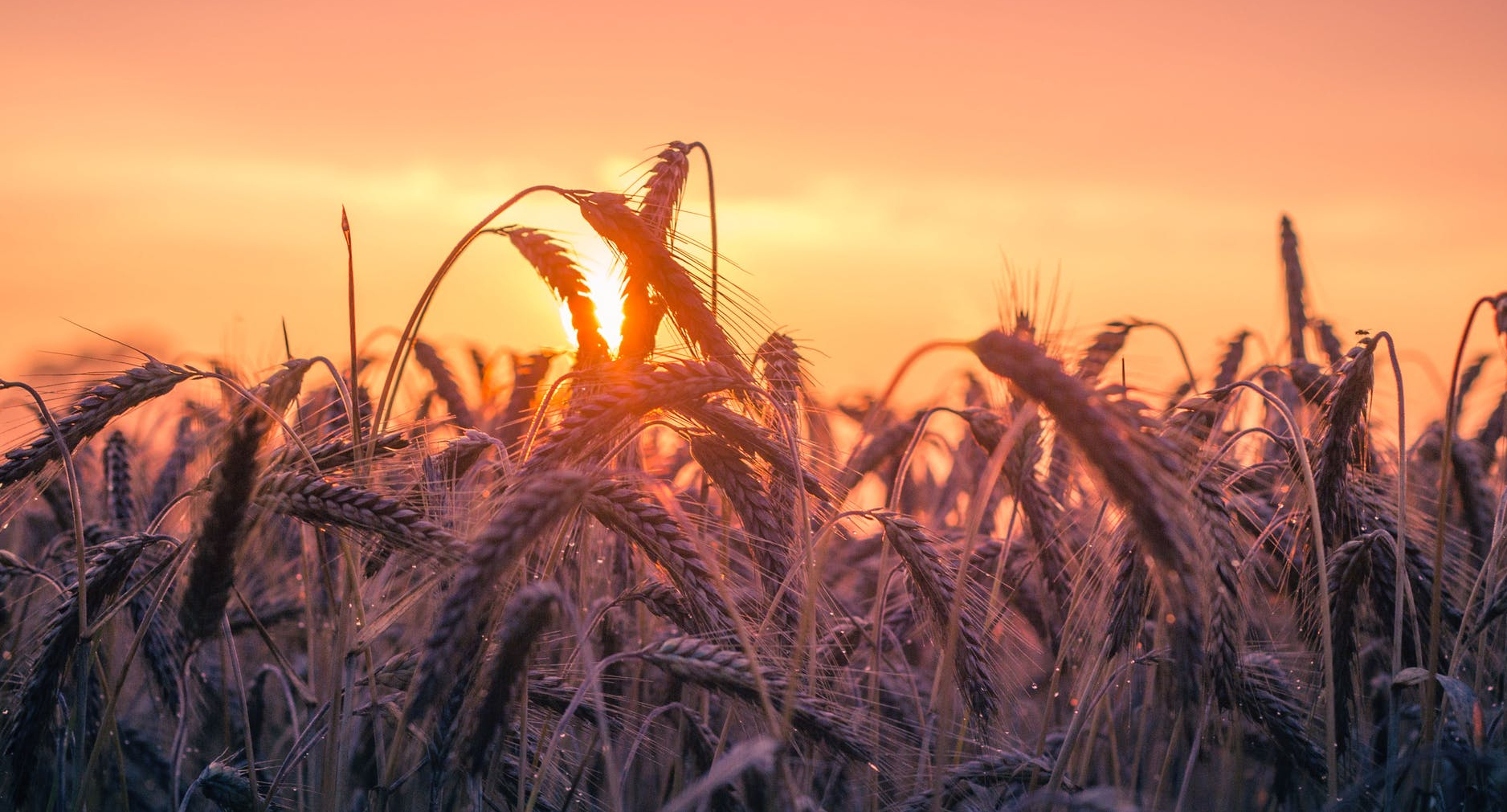
In the UK, the Harvest Festival or Harvest Thanksgiving is held on the Sunday closest to the Harvest Moon. The Harvest Moon is the full moon closest to the autumnal equinox on the 21st September. This year, in 2020, the Harvest Moon is on the 1st October and hence the Harvest Festival is on the following Sunday, the 4th October 2020. To find out what date it will be on in any other year, you can check when the full moon will be on a lunar calendar, which you can easily find online.
The end of harvest has been a momentous occasion for all farming communities around the world ever since the agricultural revolution, which took place around 10,000 BC. A good harvest promised plenty of food and survival through the harsh winter months. It was the cumulation of the whole year’s hard work and hence worthy of a celebration. It’s only since the Second Agricultural Revolution in the 18th century and then the Industrial Revolution a mere 200 years ago that people have come to be distanced from agricultural production.
Farming was introduced to the British Isles between 5000 BC and 4500 BC, having spread from its origins in Syria and Iraq several thousand years earlier. It then took a further 2,000 years for farming to extend across the British Isles, with hunter-gatherer and agricultural communities living alongside each other. Farming remained the dominant occupation, involving nearly all the population, for the next several thousand years. Following the aforementioned Second Agricultural Revolution in Britain, food productivity increased and fewer people had to be involved in farming.
By 1850, only 22% of the British population were involved in farming, which at that point was the smallest proportion of the population of any country in the world. Nowadays just 1.5% of the UK’s workforce is employed in the agricultural industry. The UK produces less than 60% of the food it consumes. Given this, it’s hardly surprising that in our urbanising society people feel increasingly separated from the natural rhythms of the seasons, lacking the common knowledge of our forebears. With supermarkets stocking out-of-season, plastic-packaged, instant food all year round, those of us living in affluent, comfortable countries are at risk of taking it all for granted. I think the Harvest Festival can be an important way for us to reconnect with our roots and practice appreciation for the bounteous gifts that nature provides us.
‘Come, ye thankful people, come,
First verse of ‘Come, Ye Thankful People, Come’ by Henry Alford (1844)
Raise the song of harvest home!
All is safely gathered in,
Ere the winter storms begin;
God, our Maker, doth provide
For our wants to be supplied;
Come to God’s own temple, come;
Raise the song of harvest home!‘
Harvest Revelry
The start of harvest season was traditionally celebrated with the Christian holiday of Lammas at the beginning of August. After about two months of hard labour, the bringing in of the final harvest was celebrated with the Harvest Festival around the end of September or early October. Thanks has been given for successful harvests in Britain since pagan times. With the arrival of the good news about Jesus Christ, these festivals turned to thanking and praising God for the harvest. By the 16th century there were established traditions about bringing in the last harvest.
Harvest Races
Farmers and their workers would race neighbouring farms not to be the last to finish cutting the corn, as that was considered bad luck – and it brought some competitive fun. Different regions had different customs for cutting the very last patch of corn or wheat. Some areas would cut this last patch, called the ‘Mell’, by throwing their scythes at it. Others would instead have the workers taking turns to be blindfolded and swing their scythes at it until it was all down. No doubt this was all accompanied with plenty of shouting, laughter, and good-natured banter.
The Hock Cart
The last wagon bringing home the harvest was called the hock cart. Both the hock cart and the horses pulling it would be decorated with flower garlands and ribbons. It would be accompanied with a merry procession of all the farm workers, which in those days would include families from nearly the whole local community. These would give songs, rhymes, and shouts of ‘hooky, hooky’ (or ‘hocky’, ‘hoakey’, ‘ or ‘horkey’ depending on which part of the country it was). In some parts of the country, local people would pelt the hock cart – and no doubt the farm workers as well – with buckets of water as a sign that it didn’t matter if it rained now that the harvest was in. I can imagine that easily turning into a water fight. There would be blessings and prayers for the harvest as well as merriment and festivities. Church bells would be rung, a seed cake known as a hoky cake would be distributed among the farm workers, and each region would have their own ceremonies and rituals.
Harvest Supper
Until the 20th century, most farmers celebrated the end of harvest with a big harvest supper, to which everyone who had helped with the harvest was invited. This was when they could taste the fruits of their labour, a celebratory time of generosity and abundance. The harvest supper would be accompanied by plenty of revelry, singing, games, and social barn dancing. It was essentially a big party. A corn dolly would be sat in the place of honour at the harvest supper table. It would then spend winter in the farmer’s home before being ploughed into the first furrow of the new season for good luck.
Corn Dollies & Countryman’s Favours
Corn dollies were made from plaiting and weaving together strands of wheat, oats, barley, or rye from the last sheaf of harvest. There are different styles of corn dollies named after the various parts of the country they originated from. Some designs are more complicated than others, but the simple loop or two of a basic corn dolly, tied with a pretty ribbon, was an easy rural craft that I enjoyed making as a child. A variation of a corn dolly is a countryman’s favour. This was a plait of straws loosely tied into a knot representing a heart. The idea was that a young man working in the fields would make a countryman’s favour from straws he picked up at the end of harvest, which he would then present to the young woman he loved. If she was wearing it next to her heart the next time he saw her, he would know that his love was reciprocated.
‘We ourselves are God’s own field,
Second verse of ‘Come, Ye Thankful People, Come’ by Henry Alford (1844)
Fruit unto his praise to yield;
Wheat and tares together sown
Unto joy or sorrow grown;
First the blade and then the ear,
Then the full corn shall appear;
Grant, O harvest Lord, that we
Wholesome grain and pure may be.’
Churches & Charity
The British tradition of celebrating the Harvest Festival of Thanksgiving in churches began in 1843. It was started by the Cornish vicar Robert Hawker, who invited his parishioners to a special church service to give thanks and celebrate the harvest. The idea was well received and spread across the country. Harvest-themed hymns also helped popularise his idea of Harvest Festival. The tradition of decorating churches with home-grown fruit, vegetables, and flowers continues to this day. Churches and schools also collect tinned or otherwise long-lasting food to distribute among the poor through food banks and homeless shelters.
As British people have come to rely more on imported food rather than home-grown produce, there has been a shift in emphasis with Harvest Festivals. They now increasingly link Harvest Festival with an awareness of food poverty and concern for people in developing countries for whom growing sufficient crops remains a struggle. Many churches engage with international development and relief charities to learn more about those in need around the world. Some churches and villages still have harvest suppers, which are often organised as charity fund-raising events.
‘For the Lord our God shall come,
Third verse of ‘Come, Ye Thankful People, Come’ by Henry Alford (1844)
And shall take the harvest home;
From His field shall in that day
All offences purge away,
Giving angels charge at last
In the fire the tares to cast;
But the fruitful ears to store
In the garner evermore.’
Harvest Supper Ideas
Harvest suppers were traditionally a shared meal for all farm workers and their families. Nowadays you could arrange one for your extended family and friends, or even organise a fund-raising event in your local community. You could learn some English country dances together, roping in your friends with musical skills, or create some rural crafts such as corn dollies. For a fund-raising event, you could even invite someone to give a short talk about a relevant topic such as the environment or an international charity. Try to cook with local, seasonal ingredients.
During late September and early October in the UK, fresh seasonal produce includes: apples, artichoke, aubergine, blackberries, beetroot, broccoli, brussels sprouts, butternut squash, carrots, cauliflower, celery, celeriac, chicory, chillies, courgettes, cucumber, damsons, elderberries, fennel, figs, garlic, grapes, kale, leeks, lettuce, marrow, melon, nectarines, onions, parsnips, pears, peas, peppers, plums, potatoes, pumpkins, rocket, radishes, runner beans, spring greens, spring onions, summer squash, sweetcorn, swedes, swiss chard, tomatoes, turnips, watercress, wild mushrooms, and more!
‘Then, thou Church triumphant come,
Fourth verse of ‘Come, Ye Thankful People, Come’ by Henry Alford (1844)
Raise the song of harvest home!
All be safely gathered in,
Free from sorrow, free from sin,
There, forever purified,
In God’s garner to abide;
Come, ten thousand angels, come,
Raise the glorious harvest home!’


