Harvest Festival Traditions

In the UK, the Harvest Festival or Harvest Thanksgiving is held on the Sunday closest to the Harvest Moon. The Harvest Moon is the full moon closest to the autumnal equinox on the 21st September. This year, in 2020, the Harvest Moon is on the 1st October and hence the Harvest Festival is on the following Sunday, the 4th October 2020. To find out what date it will be on in any other year, you can check when the full moon will be on a lunar calendar, which you can easily find online.

The end of harvest has been a momentous occasion for all farming communities around the world ever since the agricultural revolution, which took place around 10,000 BC. A good harvest promised plenty of food and survival through the harsh winter months. It was the cumulation of the whole year’s hard work and hence worthy of a celebration. It’s only since the Second Agricultural Revolution in the 18th century and then the Industrial Revolution a mere 200 years ago that people have come to be distanced from agricultural production.

Farming was introduced to the British Isles between 5000 BC and 4500 BC, having spread from its origins in Syria and Iraq several thousand years earlier. It then took a further 2,000 years for farming to extend across the British Isles, with hunter-gatherer and agricultural communities living alongside each other. Farming remained the dominant occupation, involving nearly all the population, for the next several thousand years. Following the aforementioned Second Agricultural Revolution in Britain, food productivity increased and fewer people had to be involved in farming.

By 1850, only 22% of the British population were involved in farming, which at that point was the smallest proportion of the population of any country in the world. Nowadays just 1.5% of the UK’s workforce is employed in the agricultural industry. The UK produces less than 60% of the food it consumes. Given this, it’s hardly surprising that in our urbanising society people feel increasingly separated from the natural rhythms of the seasons, lacking the common knowledge of our forebears. With supermarkets stocking out-of-season, plastic-packaged, instant food all year round, those of us living in affluent, comfortable countries are at risk of taking it all for granted. I think the Harvest Festival can be an important way for us to reconnect with our roots and practice appreciation for the bounteous gifts that nature provides us.

‘Come, ye thankful people, come,
Raise the song of harvest home!
All is safely gathered in,
Ere the winter storms begin;
God, our Maker, doth provide
For our wants to be supplied;
Come to God’s own temple, come;
Raise the song of harvest home!

First verse of ‘Come, Ye Thankful People, Come’ by Henry Alford (1844)

Harvest Revelry

The start of harvest season was traditionally celebrated with the Christian holiday of Lammas at the beginning of August. After about two months of hard labour, the bringing in of the final harvest was celebrated with the Harvest Festival around the end of September or early October. Thanks has been given for successful harvests in Britain since pagan times. With the arrival of the good news about Jesus Christ, these festivals turned to thanking and praising God for the harvest. By the 16th century there were established traditions about bringing in the last harvest.

Harvest Races

Farmers and their workers would race neighbouring farms not to be the last to finish cutting the corn, as that was considered bad luck – and it brought some competitive fun. Different regions had different customs for cutting the very last patch of corn or wheat. Some areas would cut this last patch, called the ‘Mell’, by throwing their scythes at it. Others would instead have the workers taking turns to be blindfolded and swing their scythes at it until it was all down. No doubt this was all accompanied with plenty of shouting, laughter, and good-natured banter.

The Hock Cart

The last wagon bringing home the harvest was called the hock cart. Both the hock cart and the horses pulling it would be decorated with flower garlands and ribbons. It would be accompanied with a merry procession of all the farm workers, which in those days would include families from nearly the whole local community. These would give songs, rhymes, and shouts of ‘hooky, hooky’ (or ‘hocky’, ‘hoakey’, ‘ or ‘horkey’ depending on which part of the country it was). In some parts of the country, local people would pelt the hock cart – and no doubt the farm workers as well – with buckets of water as a sign that it didn’t matter if it rained now that the harvest was in. I can imagine that easily turning into a water fight. There would be blessings and prayers for the harvest as well as merriment and festivities. Church bells would be rung, a seed cake known as a hoky cake would be distributed among the farm workers, and each region would have their own ceremonies and rituals.

Harvest Supper

Until the 20th century, most farmers celebrated the end of harvest with a big harvest supper, to which everyone who had helped with the harvest was invited. This was when they could taste the fruits of their labour, a celebratory time of generosity and abundance. The harvest supper would be accompanied by plenty of revelry, singing, games, and social barn dancing. It was essentially a big party. A corn dolly would be sat in the place of honour at the harvest supper table. It would then spend winter in the farmer’s home before being ploughed into the first furrow of the new season for good luck.

Corn Dollies & Countryman’s Favours

Corn dollies were made from plaiting and weaving together strands of wheat, oats, barley, or rye from the last sheaf of harvest. There are different styles of corn dollies named after the various parts of the country they originated from. Some designs are more complicated than others, but the simple loop or two of a basic corn dolly, tied with a pretty ribbon, was an easy rural craft that I enjoyed making as a child. A variation of a corn dolly is a countryman’s favour. This was a plait of straws loosely tied into a knot representing a heart. The idea was that a young man working in the fields would make a countryman’s favour from straws he picked up at the end of harvest, which he would then present to the young woman he loved. If she was wearing it next to her heart the next time he saw her, he would know that his love was reciprocated.

‘We ourselves are God’s own field,
Fruit unto his praise to yield;
Wheat and tares together sown
Unto joy or sorrow grown;
First the blade and then the ear,
Then the full corn shall appear;
Grant, O harvest Lord, that we
Wholesome grain and pure may be.’

Second verse of ‘Come, Ye Thankful People, Come’ by Henry Alford (1844)

Churches & Charity

The British tradition of celebrating the Harvest Festival of Thanksgiving in churches began in 1843. It was started by the Cornish vicar Robert Hawker, who invited his parishioners to a special church service to give thanks and celebrate the harvest. The idea was well received and spread across the country. Harvest-themed hymns also helped popularise his idea of Harvest Festival. The tradition of decorating churches with home-grown fruit, vegetables, and flowers continues to this day. Churches and schools also collect tinned or otherwise long-lasting food to distribute among the poor through food banks and homeless shelters.

As British people have come to rely more on imported food rather than home-grown produce, there has been a shift in emphasis with Harvest Festivals. They now increasingly link Harvest Festival with an awareness of food poverty and concern for people in developing countries for whom growing sufficient crops remains a struggle. Many churches engage with international development and relief charities to learn more about those in need around the world. Some churches and villages still have harvest suppers, which are often organised as charity fund-raising events.

‘For the Lord our God shall come,
And shall take the harvest home;
From His field shall in that day
All offences purge away,
Giving angels charge at last
In the fire the tares to cast;
But the fruitful ears to store
In the garner evermore.’

Third verse of ‘Come, Ye Thankful People, Come’ by Henry Alford (1844)

Harvest Supper Ideas

Harvest suppers were traditionally a shared meal for all farm workers and their families. Nowadays you could arrange one for your extended family and friends, or even organise a fund-raising event in your local community. You could learn some English country dances together, roping in your friends with musical skills, or create some rural crafts such as corn dollies. For a fund-raising event, you could even invite someone to give a short talk about a relevant topic such as the environment or an international charity. Try to cook with local, seasonal ingredients.

During late September and early October in the UK, fresh seasonal produce includes: apples, artichoke, aubergine, blackberries, beetroot, broccoli, brussels sprouts, butternut squash, carrots, cauliflower, celery, celeriac, chicory, chillies, courgettes, cucumber, damsons, elderberries, fennel, figs, garlic, grapes, kale, leeks, lettuce, marrow, melon, nectarines, onions, parsnips, pears, peas, peppers, plums, potatoes, pumpkins, rocket, radishes, runner beans, spring greens, spring onions, summer squash, sweetcorn, swedes, swiss chard, tomatoes, turnips, watercress, wild mushrooms, and more!

‘Then, thou Church triumphant come,
Raise the song of harvest home!
All be safely gathered in,
Free from sorrow, free from sin,
There, forever purified,
In God’s garner to abide;
Come, ten thousand angels, come,
Raise the glorious harvest home!’
Fourth verse of ‘Come, Ye Thankful People, Come’ by Henry Alford (1844)

Michaelmas Traditions

Michelmas, also known as the Feast of St Michael and All Angels, is on the 29th September. Because it falls near the autumnal equinox, it was historically one of the four quarter days of the year (the others being Christmas in winter, Lady Day in spring, and Midsummer in summer). In British and Irish tradition, the quarter days were the days on which servants were hired at hiring fairs, rents were due, accounts were settled, lawsuits resolved, and school terms started. The purpose of quarter days was to ensure that debts and unresolved lawsuits were not allowed to linger on. Michaelmas was especially important as a quarter day because it marked the end of harvest and therefore also the end of the farming year – hence it made sense to settle accounts at that time. Michaelmas is also associated with the beginning of autumn and the shortening of days in the northern hemisphere.

‘If ducks do slide at Michaelmas,

At Christmas they will swim;

If ducks do swim at Michaelmas

At Christmas they will slide.’

Traditional rhyme

St Michael & the Angels

Michaelmas is a celebration of St Michael, the archangel mentioned in the Bible as leading God’s armies against forces of spiritual evil. In Christian tradition St Michael is an advocate and protector of God’s people, honoured for defeating the satan in the war in heaven, and portrayed as a spiritual warrior and the greatest of the angels. His name ‘Michael’ is Hebrew for ‘Who is like God?’ – a fine battle cry declaring God’s power and goodness! Because he’s seen as a military saint, St Michael has been adopted as the patron saint of chivalry, policemen, paramedics, the military, and occasionally of horsemen.

Although St Michael is the only archangel mentioned in the Bible, he is sometimes recognised as one of four archangels alongside Raphael (meaning ‘God has healed’), Gabriel (meaning ‘God is my strength’), and Uriel (meaning ‘God is my light’). These other angels are included within the ‘All Angels’ title of the Feast of St Michael and All Angels. The Bible doesn’t say much about other spiritual beings such as angels because we don’t need to know about them – we only need to know and trust in God. However, because He’s generous, God does graciously give us in the Bible a glimpse behind the scenes at the spiritual realm, and this includes the archangel Michael.

‘Then said he unto me, Fear not, Daniel: for from the first day that thou didst set thine heart to understand, and to chasten thyself before thy God, thy words were heard, and I am come for thy words. But the prince of the kingdom of Persia withstood me one and twenty days: but, lo, Michael, one of the chief princes, came to help me; and I remained there with the kings of Persia.’

Daniel 10:12-13

Activities & Celebrations

Michaelmas remains to this day the start of the new academic and legal years, since it marks the end of harvest when historically everyone had been needed to help on the farms during the summer holidays. Although schools in England now start at the beginning of September instead, universities still start their teaching around Michaelmas time. More traditional universities and private schools even refer to their autumn terms as ‘Michaelmas term’. With autumn also comes the end of the fishing season and the start of the hunting season.

Besides the autumnal organisation of hiring fairs and the new academic year, Michaelmas was a great religious feast during the Middle Ages. People celebrated with church services, sharing a meal with their family and friends, and horse races across the recently harvested stubble fields. It was a time of horse sales, goose fairs, and ploughing contests. The late-flowering purple Michaelmas daisies give colour and warmth to gardens at this time of year, so perhaps they were picked to decorate the feasting tables. Michaelmas daisies symbolise farewell and departure, much how Michaelmas Day is seen to say farewell to a productive year and to welcome in the next cycle.

‘The Michaelmas Daisies, among dead weeds,

Bloom for St Michael’s valorous deeds.

And seems the last of flowers that stood,

Till the feast of St Simon and St Jude.’

Traditional rhyme

Old Michaelmas Day

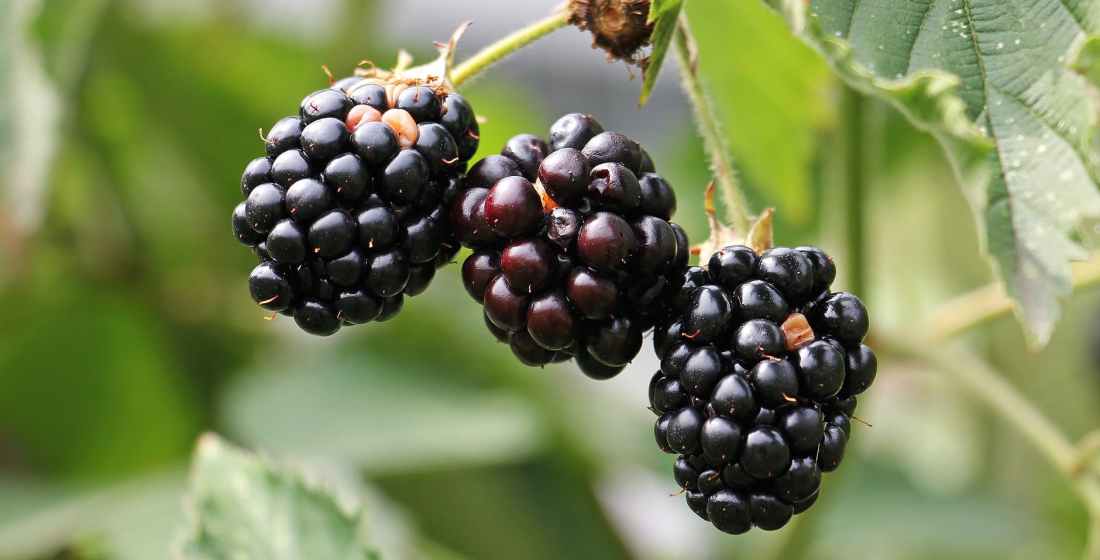
While Michaelmas Day is now on the 29th September, that was not always the case. Until the Julian calendar was dropped for the more accurate Gregorian calendar in 1752, Michaelmas used to be on the 10th October. The 10th of October is now known as Old Michaelmas Day as it has folklore of its own. According to legend, when the devil fell from heaven after fighting the archangel Michael, he fell straight into a bramble bush – which is, of course, very prickly. It’s said that the devil cursed, breathed fire, spat, and stamped all over the blackberries, making them unfit for consumption. Every year on Old Michaelmas Day the devil flies over all the bramble bushes to either spit or urinate on the blackberries, and so blackberries shouldn’t be picked after that day. In reality, blackberries begin to go bad as colder weather approaches.

‘A dark Michaelmas, a light Christmas.’

Traditional folklore saying

Michaelmas Recipes

According to folklore, the most important part of a Michaelmas feast was a roast goose as it was believed this brought good luck for the year. Even Jane Austen wrote to her sister Cassandra in 1813 that she ‘dined upon goose yesterday, which, I hope, will secure a good sale of my second edition.’ Nowadays, of course, vegetarian alternatives are available. This could be cooked with seasonal root vegetables such as honey-glazed roast carrots, honey-roasted parsnips, sweet roasted onions, and herb-infused roast potatoes. Other traditional recipes include St Michael’s bannock and Michaelmas dumplings. Nuts, blackberries, and ginger beer are also associated with Michaelmas. A few blackberry recipes for puddings include apple and blackberry crumble, blackberry and apple pie, or blackberry jam to go on the St Michael’s Bannock.

‘Eat a goose on Michaelmas Day,

Want not for money all the year.’

Traditional folklore saying

Holy Cross Day Traditions

Holy Cross Day has been celebrated on the 14th September since the seventh century. It is also known as the Feast of the Cross. The day commemorates the cross on which Jesus was crucified and which was an instrument of salvation for those who choose to follow Jesus. The cross is deeply symbolic and has great meaning in Christianity. It serves as a reminder of just how much God loves us, how much we are lost without Him, how Jesus has saved us, and how we are called to follow Him in sacrificially serving and loving our neighbours. Because we owe everything we have and everything we are to God, Christians should not boast about what glory they’ve achieved in the world. Instead, we should only boast about the freedom we’ve been gifted through Christ and the cross – which is a gift free to anyone who decides to believe.

‘But God forbid that I should glory, save in the cross of our Lord Jesus Christ, by whom the world is crucified unto me, and I unto the world.’

Galatians 6:14

St Helena & St Constantine

Holy Cross Day also recalls three events. First was the finding of Jesus’ cross by St Helena while she was on pilgrimage in Jerusalem. St Helena lived from approximately AD 246 until AD 330. She was empress of the Roman Empire and the mother of the Roman emperor St Constantine. It was St Helena’s conversion to Christianity that influenced her son to legalise Christianity in AD 313 (ending some persecution) then later declare Christianity the state religion of the Roman Empire and convert himself.

The second event recalled on Holy Cross Day is the dedication of churches that St Constantine and St Helena had built on the site where Jesus had been crucified. Then the third event is the restoration of the True Cross (as Jesus’ cross is sometimes called) to Jerusalem in AD 629 after it had been taken as a trophy in the Sasanian conquest of Jerusalem a few years prior. There is of course more to the story than I’ve shared here, however that is the basic history. What matters is not any relic of the cross itself, but that it was the means through which God offered us salvation.

Celebrations & Recipes

Holy Cross Day is most commonly commemorated through church services and prayer. However, it was historically also celebrated with a feast – hence why it is called the Feast of the Cross. Recipes for Holy Cross Day could include hot cross buns, chocolate and spice hot cross buns, hot cross cookies, or any bread roll or cake decorated with a cross. Since apples are ripe for harvest around this time of year, you could bake a Dorset apple cake and then decorate the top with extra apple slices in the shape of a cross.

Holy Cross Day and St Helena are also associated with basil. According to story, while St Helena was on pilgrimage in Jerusalem and searching for the holy cross, she noticed an unfamiliar green plant growing in the earth. Because it had a strong, sweet smell she decided to dig it up to take it back to Rome with her. It was while St Helena was digging the herb up that she found fragments of Jesus’ cross, the veracity of which she only became convinced by after she had witnessed it miraculously heal a woman who had been near death. St Helena named the green herb basil, because basileus was Greek for ‘king’ and it had grown from the cross of the king of kings. Recipes including basil could be fun for Holy Cross Day. Basil could be made into pesto, tomato and basil pasta salad, spinach and basil lasagne, garlic and basil butter to go on your cross-decorated bread rolls, tomato and basil soup, or any other creative recipes using basil you can think of.

British Seasonal Celebrations

‘For thousands of years, awareness of seasonal changes was enhanced by ritualistic celebrations. Nobody is going to forget the passing of the winter solstice when it was accompanied by a fire festival and the biggest party of the season, in the way that it’s successor, Christmas, does not go unnoticed now.’

From ‘Wild Signs and Star Paths’ by Tristan Gooley (2018)

I love nature and I love history, so perhaps it’s not surprising that I find myself drawn to the idea of seasonal celebrations. They bring the two together after all. Seasonal celebrations connect communities to their heritage as part of a greater story. They also reinforce an appreciation for the changing seasons and natural world, which is needed more than ever now so many of us are disconnected from the environment. I also think seasonal celebrations have a real potential to bring communities and families together through wholesome bonding traditions, fun shared memories, and enjoying this life that we’ve been blessed with.

As a child I always loved the magic of Christmas anticipation; hunting for Easter eggs around the churchyard (then sneaking out of church early to help hide them when I was older); learning maypole dances at school in preparation for the May Fayre; barn dances and barbeques in the summer; running around the local horticultural show with my friends; the beauty and colour of Guy Fawkes’ Night; taking part in the Remembrance Day parade with the Girl Guides; then the Christmas spirit beginning all over again with Christingle oranges and sparkling fairy lights. It’s been my experience that these festivities are often predominantly focused at children, but there’s no reason why they can’t be for all ages as they once were. Just because we’re now adults, it doesn’t mean we have to forget the magic in life or the value of innocent fun.

Below I’ve compiled a list of seasonal celebrations that were once traditional to my culture. It includes annual celebrations from the Church of England liturgical year, the British agricultural seasons, and more modern secular celebrations. Traditionally holidays were holy days – hence the name – and date back hundred of years. The word ‘holiday’ comes from the Old English ‘háligdæg’ and was first recorded during the Anglo-Saxon period around AD 950. For any international readers out there, in Britain the name ‘holiday’ is used to refer to any celebration, travel, or time off work, regardless of whether they’re religious or secular in nature. The more American ‘vacation’ instead comes from French and is connected to the word ‘vacate’ with the meaning to be unoccupied.

‘I sing of brooks, of blossoms, birds, and bowers,
Of April, May, of June, and July flowers.
I sing of May-poles, hock-carts, wassails, wakes,
Of bridegrooms, brides, and of their bridal-cakes.
I write of youth, of love, and have access
By these to sing of cleanly wantonness.
I sing of dews, of rains, and piece by piece
Of balm, of oil, of spice, and ambergris.
I sing of Time’s trans-shifting; and I write
How roses first came red, and lilies white.
I write of groves, of twilights, and I sing
The court of Mab, and of the fairy king.
I write of Hell; I sing (and ever shall)
Of Heaven, and hope to have it after all.’

‘The Argument of his Book’ by Robert Herrick (1648)

Advent

The liturgical year begins with the season of Advent in preparation and expectation for Christmas. Advent starts on the fourth Sunday before Christmas, which is usually in late November, and lasts until Christmas Eve on the 24th December. This period contains the winter solstice on the 21st December and is during the darkest time of the year. In England sunrise is around 8am and sunset is before 4pm at this time of year.

Late November – First Sunday of Advent.

30th November – St Andrew’s Day (the patron saint of Scotland).

December – Second Sunday of Advent.

6th December – St Nicholas’ Day (the patron saint of children, now known as Father Christmas).

13th December – St Lucy’s Day (previously coincided with the winter solstice).

December – Third Sunday of Advent.

17th December – O Sapientia (the seventh day before Christmas Eve).

December – Fourth Sunday of Advent.

21st December – Winter Solstice.

24th December – Christmas Eve.

Christmas

Christmas Day on the 25th December is followed by the 12 days of Christmas, celebrating and commemorating Christ’s birth – an event that changed history and demonstrated God’s love for us in the most amazing way. We don’t know exactly when Christ’s birthday was, but choosing to celebrate it around the time of the winter solstice (for the northern hemisphere) when light begins to return has symbolic significance that reinforces the story.

25th December – Christmas Day.

26th December – St Stephen’s Day (the first Christian martyr) or Boxing Day.

28th December – The Holy Innocents.

31st December – New Year’s Eve or Hogmanay.

1st January – The Naming & Circumcision of Jesus or New Year’s Day.

5th January – Twelfth Night.

Epiphany

The season of Epiphany starts with Epiphany itself on the 6th January, which celebrates the visit of the wise men to the infant Jesus and the recognition that Jesus Christ was the Son of God. The season lasts until Candlemas on the 2nd February, which commemorates the presentation of Jesus at the temple 40 days after his birth. This covers most of January and the coldest (although no longer darkest) month of the year in the northern hemisphere.

6th January – Epiphany.

First Sunday of Epiphany – The Baptism of Christ or Plough Sunday.

Monday after Plough Sunday – Plough Monday.

18th to 25th January – Week of Prayer for Christian Unity.

21st January – St Agnes’ Day (the patron saint of virgins).

25th January – The Conversion of Paul or Burns’ Night.

2nd February – Candlemas.

Ordinary Time

The periods of the liturgical year outside Advent, Christmastide, Epiphanytide, Lent, and Eastertide are called ‘ordinary time’. This is because they are not focused on any of the major Christian celebrations. The period of ordinary time between Epiphany and Lent lasts about five Sundays. During this time the church stops looking back to Jesus’ birth and later looks forwards to Jesus’ death and resurrection. The last day of this ordinary time is celebrated as Pancake Day.

14th February – St Valentine’s Day (the patron saint of lovers).

February or March – Shrove Tuesday or Pancake Day.

Lent

Lent is a time of reflection, penitence, and solemn observance in preparation for the celebration of Easter. It lasts 40 days, which is about six weeks, in commemoration of the 40 days that Jesus spent journeying in the desert. During Lent many Christians fast from certain luxuries such as sugar, dairy, and meat or take up new spiritual disciplines. In England it historically coincided with the ‘hungry gap’ of late winter and early spring when there was no fresh produce available from vegetable gardens. Near the end of Lent is Good Friday, commemorating the crucifixion and death of Jesus Christ.

February or March – Ash Wednesday.

1st March – St David’s Day (the patron saint of Wales).

March or April, Fourth Sunday of Lent – Mothering Sunday.

17th March – St Patrick’s Day (the patron saint of Ireland).

Fifth Sunday of Lent – Passiontide.

21st March – spring equinox.

25th March – Lady Day or The Annunciation.

March or April – Holy Week.

Sunday of Holy Week – Palm Sunday.

Thursday of Holy Week – Maundy Thursday.

Friday of Holy Week – Good Friday.

Easter

Easter lasts for 50 days from Easter Day until Pentecost. This time celebrates the resurrection of Jesus Christ from the dead and with it how He has rescued us to give us new life. Along with Christmas, Easter is the most important celebration of the year. The date of Easter Day itself is determined by the moon and changes each year, as it is held on the Sunday following the paschal moon. Like several other celebrations, the meaning of Easter is reinforced by the symbolism of the natural season. In the northern hemisphere Easter takes place after the spring equinox when the earth is growing and coming to life again.

March or April, Sunday following the paschal moon – Easter Day.

March or April – Easter Week.

1st April – April Fool’s Day.

23rd April – St George’s Day (the patron saint of England).

1st May – May Day.

Three weekdays before Ascension Day – Rogationtide.

40th day after Easter Day, May or June – Feast of the Ascension.

31st May – The Visit of the Blessed Virgin Mary to Elizabeth.

50th day after Easter Day, May or June – Pentecost or Whit Sunday.

Ordinary Time

The season from Pentecost until Advent is designated as ‘ordinary time’ in the liturgical calendar. This period lasts about 24 Sundays from early summer until early winter, covering all of summer and autumn with the historically busy harvest season. Around the summer solstice on the 21st June, sunrise is before 5am while sunset is well after 9pm in England. This gives over 16 hours of daylight – double the just eight hours of daylight during the depths of winter.

May or June – Trinity Sunday.

Thursday after Trinity Sunday – Corpus Christi.

21st June – Father’s Day or summer solstice.

24th June – The Birth of John the Baptist or Midsummer’s Day.

15th July – St Swithun’s Day (traditionally associated with folklore about the weather).

1st August – Lammastide.

6th August – The Transfiguration of Our Lord.

15th August – The Blessed Virgin Mary.

14th September – Holy Cross Day.

Late September or early October, Sunday nearest the harvest moon – Harvest Festival or Harvest Thanksgiving.

21st September – autumnal equinox.

29th September – Michaelmas (the archangel).

First Sunday in October – Dedication Festival.

4th October – St Francis’ Day (the patron saint of animals).

31st October – All Hallows’ Eve or Hallowe’en.

1st November – All Hallows’ Day.

2nd November – All Souls’ Day.

5th November – Bonfire Night or Guy Fawkes’ Night.

11th November – Martinmas (the patron saint of the poor) or Remembrance Day.

23rd November – St Clement’s Day or Old Clem’s Night (the patron saint of blacksmiths).

25th November – St Catherine’s Day or Catterntide (the patron saint of lace makers).

Sunday before Advent – Christ the King.