Old Testament Women Timeline

The Bible is divided into two sections. First is the Old Testament, which contains 39 smaller books and was written in the years BC (Before Christ) about the history of the Jewish people and their relationship with God. Second is the New Testament, which contains 27 smaller books and was written in the years AD (Anno Domini, meaning In the Year of Our Lord) about Jesus and His early Christian followers. The Old Testament was originally written in Hebrew and some Aramaic between about 1400 BC and 450 BC, with the earliest stories being passed down through oral tradition. The New Testament, on the other hand, was originally written in Greek between about AD 50 and AD 95. Despite spanning a massive period of time with a range of different cultures and circumstances, the total 66 books of the Bible are all part of one unified story – the story between God and His people.

The overarching narrative of the Old Testament is that humans had become separated from God because our sinful flaws were incompatible with His holy perfection. God loves us and so wants to mend the broken relationship, but time and time again throughout generations humans kept falling short. We were incapable on our own of meeting with God. We were just too broken. However, God loved us so much that He didn’t give up. He promised that one day a messiah would come and succeed where everyone else had failed. This messiah would save us and open up the way for us to be with God. The Old Testament gives us this great promise and hope – then ends on the world’s greatest cliffhanger. Who was this messiah? When would he come? How long must we wait? It leads right into the New Testament, where Jesus comes to fulfil the Old Testament prophecies.

Here I’ve given a summary and a timeline of the Old Testament. Since I’m particularly interested in the women of the Bible, I’ve also named some of the women to be found at different points in the Old Testament.

Creation Myths

Bible books: Genesis.

Unknown – Genesis chapters 1-11 tell the beginnings of creation and humanity in a way that uses deep symbolism to convey important truths about God. As such, these stories can’t be accurately dated and to try to do so is to misunderstand the literary purpose of these early chapters. We don’t need to know how old the world is. What, or rather who, we need to know is God.

Despite this, some people claim that the world was created in exactly 4004 BC, that the great flood and Noah’s ark were circa 2500 BC, and that the confusion of languages at the Tower of Babel happened circa 2400 BC. By contrast, scientists have found homo sapiens skeletons dating back nearly 200,000 years old and currently estimate the Earth to be over 4.5 billion years old. Specific dates aren’t of much relevance for these early stories.

Women of this period: Eve, Adah, Zillah, Naamah.

Ancestral History

Bible books: Genesis, possibly Job.

Circa 2000 BC – It is only from Genesis chapter 12 when the Bible shifts into ancestral history that dates can begin to be applied. It is at this point that Abraham was called by God, beginning the historical narrative of the Israelite people who would later descend from him and lead to Jesus.

Circa 1750 BC – Three generations later, Joseph (of amazing technicolor dream coat fame) had risen to become the powerful second-in-command of Egypt and his family moved to join him in Egypt.

Women of this period: Sarah, Hagar, Rebekah, Leah, Rachel, Zilpah, Bilhah, Dinah, Tamar (1), Potiphar’s wife. Possibly also Jemima, Kezia, Keren-happuch.

Israelites in Egypt

Bible books: none as the gap between Genesis and Exodus is unrecorded.

Between circa 1750 BC and circa 1550 BC – The early Israelite people remained in Egypt for the several hundred years from the end of Genesis until the beginning of Exodus. During this time they multiplied from one large family into a nation comprised of 12 tribes (descended from the original 12 brothers). In addition to the passage of time that erodes memories, Egypt was a politically tumultuous country among the ruling classes and power changed hands several times to different dynasties. These different dynasties didn’t know the history of how Joseph had helped Egypt and saw the large number of Israelite people as a threat. At some stage during this period, the Egyptians enslaved the Israelites and began abusing them terribly.

Slavery & Escape from Egypt

Bible books: Exodus.

Circa 1550 BC – Moses was called by God to lead the Israelite people out of slavery in Egypt and into the land that had been promised to Abraham and his descendants. The Pharaoh of Egypt was nothing short of a tyrant but God’s power always prevails when it is His will, so Moses led the Israelites out of Egypt and into the wilderness on a journey to the promised land.

Women of this period: Shiprah, Puah, Jochebad, Miriam, Pharoah’s daughter, Zipporah.

In the Wilderness

Bible books: Exodus, Leviticus, Numbers, Deuteronomy.

Circa 1550 BC – Moses led the constantly moaning Israelites through the wilderness and received the ten commandments along with other laws from God at Mount Sinai. However, despite having witnessed God’s power and justice in freeing them from brutal slavery in Egypt, the Israelite people were ungrateful and broke God’s laws as soon as He had given them. God sentenced the Israelites to wander in the wilderness for 40 years. They needed to get the Egypt out of them and it would be their children’s generation who would enter the promised land.

Circa 1400 BC – Moses also rebelled against God and, although God graciously allowed him to view it from a distance, was not allowed to enter the promised land. It was only after Moses’ death that the Israelites began moving into the land.

Women of this period: Miriam, Mahlah, Noah, Hoglah, Milcah, Tirzah.

Entering The Promised Land

Bible books: Joshua.

Circa 1400 BC – After Moses’ death, his protégé Joshua inherited leadership and led the Israelites into the promised land. The land was already occupied by violent city states so Joshua commanded battles to claim the land promised to them, however he failed to complete the task.

Women of this period: Rehab.

Settlement of Israel

Bible books: Judges, Ruth, 1 Samuel.

Circa 1400 BC – The next few hundred years after entering the promised land contained some of the darkest stories in Israel’s history. The Israelites began to settle the land but disobeyed God’s laws and were corrupted by the violent tribes that still remained in the land. When they rebelled against God, He allowed those violent tribes to oppress the Israelites. Then, when they repented and turned back to God, He would raise up a judge to deliver them. This pattern repeated multiple times. The land was lawless, but even within that there were stories of hope and promise.

Circa 1100 BC – Samuel was born to Hannah, who sent him to be raised by Israel’s chief priest. God began speaking to Samuel and he was recognised as a prophet. The chief priest’s sons had been disobeying God’s laws. After their deaths and the chief priest’s death, Samuel’s role as prophet meant he became the leader of Israel.

Women of this period: Deborah, Jael, Jephthah’s daughter, Samson’s mother, Delilah, the Levite’s concubine, Naomi, Orpah, Ruth, Hannah, Penninah.

Israel’s Monarchy

Bible books: 1 Samuel, 2 Samuel, 1 Kings, 1 Chronicles, 2 Chronicles, Psalms, Proverbs, Ecclesiastes, Song of Solomon

Circa 1050 BC – The Israelite people decided they needed a king because they wanted to be like all the other nations. They demanded that Samuel find a king for them. Samuel was unhappy about this but God allowed it, warning however that a king would bring consequences. At God’s direction, Samuel appointed Saul as the first king of Israel. To begin with the people were glad to have Saul as their king, but Saul soon began to disobey God. Instead God began to raise up a shepherd boy, David, and Saul in his jealousy started persecuting David.

Circa 1000 BC – After Saul killed himself, David was chosen to became the next king of Israel. At first he too seems like a good king. In many ways David was better than Saul had been, for truly loved God. However, in the end David disobeyed God too, committing adultery and murder. Although he repented, he could not undo what he had done.

970 BC – On David’s death, his son Solomon became the third king of Israel. Because Solomon was initially obedient to God he was gifted with wisdom. Israel flourished under his rule and a grand temple was built to honour God. However, Solomon then made a lot of political marriages to secure foreign alliances, disobeying God’s laws as well as displaying a lack of trust in Him. This caused his downfall because his many wives influenced him to instead worship foreign deities, which angered God.

Women of this period: Michal, Ahinoam, Abigail, the medium of En-dor, Bathsheba, Tamar (2), Abishag, the two harlot mothers, the Queen of Sheba.

A Divided Kingdom

Bible books: 1 Kings, 2 Kings, 2 Chronicles, Isaiah, Hosea, Joel, Amos, Obadiah, Jonah, Micah, Nahum, Habakkuk, Zephaniah.

931 BC – After Solomon’s death his son Rehoboam assumed the throne. Rehoboam refused to treat the Israelite people kindly, thus sparking a civil war. The 12 tribes of Israel divided into two separate kingdoms, with the northern kingdom of Israel being made up of 11 tribes and Rehoboam ruling the remaining tribe in the southern kingdom of Judah. The two kingdoms remained separated and both deteriorated as a succession of kings and queens rose and fell over the years.

Women of this period: Jezebel, Athaliah, Jehosheba, Huldah, Gomer.

Exile to Babylon

Bible books: 2 Kings, 2 Chronicles, Jeremiah, Lamentations, Ezekiel.

722 BC – Despite multiple prophets sent by God having tried to warn the Israelites to turn back to God instead of worshipping false deities and sinning against each other, the people refused to listen even after all God had done for them throughout their history. Eventually their behaviour brought consequences. Samaria in the northern kingdom of Israel was captured by the Assyrians.

605 BC – Since they had failed to learn from the example of Samaria and still refused to turn back to God, there was the first Babylonian takeover of the southern kingdom of Judah.

597 BC – The second Babylonian takeover of the southern kingdom of Judah came a few years after the first takeover.

586 BC – There was a third and final takeover of Judah, resulting in the destruction of Jerusalem and its temple by the Babylonians. The last of the Israelites were taken into exile to Babylon.

Women of this period: Aholah, Aholibah.

Return From Exile

Bible books: Ezra, Nehemiah, Esther, Daniel, Haggai, Zechariah, Malachi.

Circa 539 BC – The Persians of the Archaemenid Empire conquered Babylon, where the Israelites were held captive in exile.

538 BC – Zerubabbel and over 40,000 other Israelites were released to go back to Jerusalem following the decree of the new Persian king Cyrus.

515 BC – The Israelites finally restored their temple in Jerusalem.

486 BC to 465 BC – Xerxes I was king of Persia. It is thought that in Hebrew he was known by the name of Ahasuerus, which would make him them the king that Esther married and this the time period in which she saved her people.

457 BC – A second group of Israelites returned from exile to Jerusalem, led by Ezra.

432 BC – The third group of Israelites returned from exile, led by Nehemiah.

Women of this period: Queen Vashti, Esther.

Second Temple Period

Bible books: none as there were no prophets in the gap between the Old Testament and the New Testament.

515 BC to AD 70 – The period from the restoration of the temple in Jerusalem (following the Israelite’s return from exile) until its destruction by the Romans (which was in response to Jewish revolt) is known as the second temple period. This period overlaps with end of Old Testament and the beginning of Christianity, covering about 400 years of silence in between during which God did not speak to His people by prophets. The Old Testament was the world’s greatest cliffhanger, ending with the promise of a messiah who would save them but waiting a then unknown stretch of time for this messiah to appear.

330 BC – Empires rise and fall, but the word of the Lord endures forever. The Israelites had been captured by the Babylonians, the Babylonians were conquered by the Persians, and now the Persian Empire was defeated by Alexander the Great, who would die himself just seven years later at the age of 32.

63 BC – Israel lost independence once again after Pompey led the Siege of Jerusalem and it was conquered by the Roman Empire. This led to yet more oppression, upheaval, and social discontent while the rich got richer and the poor suffered for it.

4 BC – In a lowly stable in a village just five and a half miles from Jerusalem, a baby boy was born to a young, poor, nobody couple. They had been forced to travel far from their families just at the time when they needed that support most, and soon they would be forced to escape to Egypt as teenage refugees. The mother was the subject of scandal at home and surrounded by incriminating rumours. The father had taken a leap of faith by not breaking off their betrothal and agreeing to raise this child who was not his. Neither of them knew what they were doing. They hadn’t expected this, and they hadn’t expected to have to make this long journey at the most inconvenient of times. But this was the fulfilment of those Old Testament prophecies and promises that dated back right to the start of Genesis itself. Their baby was to be called Jesus. But that’s the story of the New Testament…


Friendship Podcasts (Part Seven)

Here is the seventh part of this series, gathering together and sharing some more brief quotations on the topic of friendship from various podcasts – any of which, I should say, you can find for free if they capture your interest.

#23 Finding Your Tribe with Freya Ridings – Adulting

‘I think the takeaway from that is that it makes so much sense, because you’re finally allowed to do exactly what it is that you want to be doing, so obviously you’re going to be around the people that do that.’

Oenone Forbat

‘[When you’re finally doing what you love] It brings out the best in you, and people bring out the best in them, and suddenly you just get to be yourself.’

Freya Ridings

Navigating Friendships :: Melanie Shankle [Ep 273] – Don’t Mom Alone (God Centered Mom)

‘What dawned on me was that new friends eventually become old friends but you have to start somewhere.’

Melanie Shankle

‘You can like somebody and not agree with them politically. You can like somebody and not embrace all their beliefs, but there’s still a friendship and our common human experience, and the things we’ve gone through, and the life we’ve lived with somebody, and I’m just not interested in ending the relationship over those kind of things.’

Melanie Shankle

Loneliness: The Vanishing Glass (Book 1, Chapter 2) – Harry Potter and the Sacred Text

‘There is abundance even when we don’t feel as though there is. I will often feel like “oh, I can’t take up too much of that person’s time” or “oh, what if I run out,” right? I’m always feeling rushed and I wonder how much of that is tied into feeling like nothing is enough… You know, an hour with a friend is enough, and I think that that’s just something I have to start reminding myself of. So I feel called to recognising abundance when it’s right in front of me rather than constantly feeling like everything is scarce.’

Vanessa Zoltan

Friendship: Halloween (Book 1, Chapter 10) – Harry Potter and the Sacred Text

‘We really have to learn the art of friendship.’

Casper ter Kuilie

‘I think we really learn about how friendship is formed and the kind of ingredients of friendship, in a way… there’s this element of shared memory and shared story that forms a foundation of friendship that you can always, kind of, remember together… The crucial piece is that if it just stays there it’s not enough, it doesn’t deepen.

The second ingredient is all about deepening that, which is shared work, a shared mission… physical, intellectual, moral work and that, that’s how those new memories are formed. So I think there’s something about shared work – not all types of work lead to friendship…

But then the final ingredient is also about having people who are not your friends… so there’s kind of a dark side of friendship a little bit there as well.’

Casper ter Kuile

‘If you don’t have a close band of brothers, then enough trust isn’t going to get built up to go on the real adventures together… If there was 100 of them and there wasn’t that total trust of “when I fall, you’ll catch me” that was built up, they wouldn’t be able to do the amazing things they do.’

Vanessa Zoltan

Friendship Podcasts (Part Six)

If you’ve been following this series for a while now, you know what to expect. Here are several quotations from various podcasts to offer some food for thought and some contemplation on the theme of friendship.

Belonging: The Polyjuice Potion (Book 2, Chapter 12) – Harry Potter and the Sacred Text

‘I think we as humans want to believe that we only belong in one place.’

Vanessa Zoltan

‘At the same time, so often we feel like we’re made not to belong. And if someone takes away our sense of belonging that’s like a primal would that is very difficult to heal.’

Casper ter Kuilie

‘I think that everybody gives a really hard time to teenagers that they’re rebelling, but that’s so good, right? Thank goodness that teenagers spend a lot of time questioning whether or not they really belong to their families… That period of questioning helps create new realities of regeneration.’

Vanessa Zoltan and Casper ter Kuilie

popularity and being ‘liked’: she doesn’t even go here – higher priestess

‘In childhood popularity is based on likeability. It’s who makes everyone laugh, it’s the class clown, it’s like, childhood. And then when you go through puberty, it becomes less about likeability and more about power. The idea of coolness, like confidence, power, influence, and the people that are the most popular are the “coolest”, I guess that works into status, and not necessarily the people that are the most liked.’

Persephone

‘Your body is working to keep you alive, to keep you popular, because to be popular means you can survive. To be popular means you are protected.’

Erin and Persephone

‘I also think at uni, like, you can really feel the age, ages of people. And you can just feel, and also the thing is, you can see who’s mature and immature, but beyond that and in adult life, I think it isn’t just at university, across all adult life you can feel in whatever way it plays out who was popular and secure in school, and that I think is really telling. It’s really telling because you look around and you see the behaviours that someone might pick up.’

Erin

Show Me Your Friends and I’ll Show You Your Future – The Porch

‘It’s not a perfect group – there is no perfect group, but do you have a group of people that are in your life walking alongside of you? Community, or the types of relationships that I’m saying, are like any relationships. They are forged not found. Any great relationships are forged, not found. In other words, they take work.’

David Marvin

‘Who you run with is gonna for good or bad shape the direction that you are running towards. Are you running with the right people in your life?’

David Marvin

Why Friendships End – The Love, Happiness and Success Podcast With Dr. Lisa Marie Bobby

‘People are often friends for a reason, or they’re friends for a season, or sometimes we do have friends for a lifetime.’

Anonymous, quoted by Dr. Lisa Marie Bobby

‘People have a much lower tolerance, I think, for working through inevitable problems that always come up in long-term relationships with their friends than they do with their romantic partners.’

Dr. Lisa Marie Bobby

‘The things that kept them together with their friends, some more of the partying lifestyle or just going out doing fun things, that was much of the fabric of that relationship and without that sometimes there just isn’t the substance, the depth, you know, where people really, like, there is a foundation on which to build, so people can begin withdrawing for that reason.’

Dr. Lisa Marie Bobby

‘There is very seldom a reason to not at least try… I think It’s also important to periodically just take stock of how am I feeling in this domain of my life?’

Dr. Lisa Marie Bobby

‘That is something that in many ways is really nice about friendships, because with romantic partnerships there’s so much intensity that, for necessary reasons, many times they either need to be on or off, you know. When people try to do a middle ground of just be friends… that doesn’t always work for both people. Friendships can be different in that way, you know, you can just back up a little bit.’

Dr. Lisa Marie Bobby

Friendship Podcasts (Part Five)

Usually I tend to listen to the same few podcasts. While sharing this series, however, I’ve found it interesting to instead trace a single theme through episodes from various different podcasts that I had never even heard of before. There’s a wider range of voices speaking on a single topic that way, and I’ve been finding it an interesting way to bring different voices into conversation. There are some more quotations continuing that below.

Friendship: The Half-Blood Prince (Book 6, Chapter 9) – Harry Potter and the Sacred Text

‘It reminded me – I’ve only heard of it, I’ve not read the study in full – a really striking statistic that if you grow up in a community with inter-generational friendships, people are 80% less likely to suffer from depression later in life. Which I was just like, woah, that’s a huge statistic.’

Casper ter Kuilie

‘I think one of the beautiful things about being loved by a friend is that they sometimes worry more about you than you necessarily worry about yourself.’

Vanessa Zoltan

‘It made me realise that my life is not just my business, which is kind of a confronting moment.’

Casper ter Kuilie

‘When I was thinking about this theme of friendship, that element of protection and being willing to assert yourself into someone else’s life, even sometimes uncomfortably, actually I think is a mark of friendship.’

Casper ter Kuilie

‘And, you know, my joke about Ginny being a sister or not, I think speaks to another really important element of friendship. And I think it is the thing that makes friendship special and distinct from partnership, is that friendship can be fluid. You can go from being best friends and talking every single day to sometimes not talking for three months and then just picking right back up. Whereas a partner, you know, life dictates a certain level of commitment. Whereas the fluidity of friendship I think… you can play so many different roles in friendship, and I think that is a real gift of friendship, and we see that with Ginny and Harry.’

Vanessa Zoltan

CC: Creating Conscious Friendships with my soul sis Alexi Panos – Over It And On With It

‘I think that comes back again to just honouring what’s alive for us, honouring what’s true for us, allowing what’s true for us, and not trying to be something that we’re not because we think something else is better. And now we’re into authenticity and just being ourselves. If you’re looking for a tip to make friends, that’s really it. Just be you… And there was a point in my life, in my journey, when it was authentic for me to say “I’m learning who I actually am.”‘

Alexi Panos and Christine Hassler

‘That would be my first tip: think about the places where like-minded people are. And a lot of it was I had to try different things… And then secondly, at those things not expecting people to be like “oh, Christine! You look lonely. Come and join us!”… So it was finding those events, and not all of them were, you know, successful. Like, I didn’t leave all of them, some of them were just fails. But going to enough and then actually initiating conversation, and actually connecting with people,and putting myself out of my comfort zone, and, you know, putting effort in.’

Christine Hassler

‘Women have been taught – I mean in my experience – women have been taught and shown that we are meant for and it is our job to make sure everybody feels good. Make sure you’re taken care of, make sure you’re taken care of. And we have this idea of “super-woman” and “wonder-woman” and “she does it all.” Right? Like, “She works really hard, and then she comes home and cooks dinner. And then she’s also still sexy. And She’s also super-mum. She’s saving the world.” And while I do think we can all have parts of that – I forget who said this quote – “you can be anything, but not everything.”… And I do think we’ve really got to ask ourselves, what’s most important for me?’

Alexi Panos

Esther Perel: The Quality of Your Relationships Determines the Quality of Your Life – The School of Greatness

‘You learn to love yourself in the context of your relationships with others. This idea that you go first to work on yourself here and then you prepare this nice little package, then you bring it to relationships – that is completely off actually. It’s interactive. You need a good amount of self-awareness, but you also need to be in relationships because it’s people who help you become more aware… It’s by being with others that you get to know who you are.’

Esther Perel

‘Make sure that when people remember you, they smile.’

Esther Perel

Friendship Podcasts (Part Four)

Friendships, relationships, and community are important. If there’s anything worth learning more about, I think that’s one of them. I’ve discovered that there are many more podcasts than I expected discussing friendship, when you look for them, so this series might continue for longer than I originally planned. I want to make a note of the words of wisdom spoken by these many different people – to aid my own memory if nothing else. It’s encouraging to hear so many different people speaking about this, and I want to learn what I can. Friendships are a vital aspect in life that oftentimes seem to be overlooked and not designated the same significance as other types of relationships.

#6: The Science of Friendships, Science Journalist Lydia Denworth – Health Psychology and Human Nature

‘And what we have found, just in the last twenty years really, is that the strength of social bonds is one of the most important predictors of how long individuals live and of their reproductive success. And that is measured in monkeys and apes because there you can measure it, but in humans we don’t measure the reproductive success but the longevity we do, and we have found that the people with the strongest social bonds live the longest and are the healthiest. They’re also happiest. So there is just this fundamental need to belong that we all have and one of the ways that we can satisfy it is through having really good, strong friendships.’

Lydia Denworth

‘One of the things I think is really interesting is that all of this new science of friendship that’s out there now shows that friendship can be something of a template for all other relationships. It’s an example of how we ought to do it. If you think of your best friends and how you are with them, that is the kind of relationship that you need.’

Lydia Denworth

‘And that is one of the fundamental definitions of friendship, is, is this someone that you could call if you needed help or if you needed support… So if you look at in evolution, what happens is that the tendency, the traits and behaviours that help us us survive and have babies are the things that tend to continue and get passed along. So the theory here is that it’s something like a survival of the friendliest, is what has happened.’

Lydia Denworth

‘Back with early man but also with animals, you see the same patterns. So that ability, as we started to hang out with larger groups of individuals, we needed to be able to navigate that and we needed to know who we count on. And that is still what friendship is today: who can you count on?’

Lydia Denworth

‘You can’t just put people together in a room and say “ok, now be friends.” It doesn’t work that way. If you bring them together around a project that everyone believes in and is a shared passion, those relationships, those friendships are much more likely to happen naturally.’

Lydia Denworth

‘We need to be thinking about friendship and social connection all through our lives. And it’s very much like, when you’re 65, it’s like smoking. If you stop smoking at 65 it’s still better than continuing to smoke, but damage will have been done. Friendships and relationships are the same. You need to be building them and working on them all through your life. If you only start really focusing on it when you retire, say, or when your kids are grown, that’s better than never focusing on it at all, but some damage will have been done.’

Lisa Burke

‘We model for our kids what matters, what we think matters in life. And if all we’re modelling is the importance of achievement and hard work and all of that, and if that’s all we’re pushing them to do and we’re not pushing them to be good friends and spend time with their friends and work on their relationships, then we’re not sending the right message entirely.’

Lydia Denworth

274: Quality Friendships = Quality Life – The Simple Sophisticate, Intelligent Living Paired with Signature Style

‘As we’re growing up, when we’re in our childhood home up until puberty, our parents are our buffer to life stress often and they help us navigate as best as we can. We’re not out and about as much as kids, as far as away from parents. But then after puberty, she’s found in studies, our parents no longer will buffer or be able to buffer stress from their children. So friends take on that role, and that’s where quality friendships make a tremendous difference.’

Shannon Ables

‘Social bonds have the power to shape the trajectories of our lives, and that means friendship is not a choice or a luxury. It’s a necessity that is critical to our ability to succeed and thrive. It can even be a model against which other relationships should be measured.’

Lydia Denworth

Friendship Podcasts (Part Three)

Continuing on from Part One and Part Two, here are some more quotations I thought were interesting from various podcasts discussing the questions and uncertainties involved in cultivating deeper friendships.

Ep 3: Friendship & Loneliness – Things You Can’t Ask Yer Mum

‘It’s one of those things where people say you pick up where you left off. We don’t have to be in each other’s lives constantly to know we still love and care about each other and we’d be there at the drop of a hat. And that’s actually the key of adult friendships. Not holding anything against each other when you’ve got no time… You just dip back into it or see each other after a few months, and it’s like you’ve been speaking to each other every day. ‘Cos you need that, and someone that makes it feel high maintenance is just not going to work ‘cos that’s not what you need from friendships, I don’t think. You don’t want someone making you feel guilty when you haven’t got time, or when you’re very busy or stressed, or something else. It doesn’t mean that friendship is less important; it just means life is happening, and friends stick by no matter what is going on.’

Lizzy Hadfield and Lindsey Holland

How to Cultivate Deep Friendships: LIVE with Callie Duke – The Woman Podcast

‘I think being able to be vulnerable is so important, and that’s where friendships really deepen.’

Callie Duke

‘I think we’ve got to look for people who are going to spur us along in our spiritual growth… You need friends that care more about your long-term holiness than your short-term happiness.’

Callie Duke

Are some Friendships too much work? Emotional labour, boundaries and pity friendships – I Said What I Said

‘Another thing is I’ve learnt to be honest with myself about whether this is actually my friend or whether this is just an acquaintance, or whether this is just someone I’ve outgrown… I wonder if we need to be clearer? I just don’t see, like, my male friends going round calling people friends as easily as I do. And I wonder how that hurts people, how that confuses people. I think the difference between men and women in this context is that men aren’t socialised to edit themselves for people’s comfort… Even if that means lying to ourselves and others, women are a lot more willing to overstep our own boundaries or to lie to ourselves just to make people comfortable.’

Mukundwa and Nyak

‘I’m curious about what friendship is to begin with. I think, when you do these really fun interviews with your nieces and nephews and you ask them these questions, and you ask them a question “what is friendship?” and some of their answers were, you know, “I know someone’s a friend if they talk to me, if they share with me, and if they smile at me.” It’s so simple for them. And so much, so much of that is true. Like, “if I have a good time with you and you’re kind to me, we’re friends.” But now there’s so much more complexity. Like, very few of my friendships now, few of them reflect that still. Some of them are, there’s just added complexity because of geography, because of time, because of you’ve got this partner and that partner and now you’re divided. This is what your work means for your time, and your mental health is coming to the party now. When you’ve got all of these dimensions I just never had to deal with.

So I used to be a very good friend because all I needed to do was to show up, and at school I had no choice but to show up because I had to show up for school. The structure of your life literally is conducive to friendship. And I think now that a lot of us have friends spread around the world, it’s hard to, it’s starting to distance in terms of [not just] geographical distance but emotional distance. [It] starts to tease out the fissures in your friendship, and the nuances… I think that’s just a bit complex, having these partitions in our friendships because I just feel like that wasn’t what we were told. We were told a friendship – for women – a best friend is everything. And that’s just not the case.’

Mukundwa and Nyak

#1 Teaser | Flying Solo – Adulting

‘It seems as though one of the resounding aspects that affects all of us when becoming an adult is a feeling of isolation and maybe even loneliness that we really didn’t expect. I think it can be quite a shock to the system when a huge number of us; you spend a vast amount of time in education, and at school you kind of have no choice but to be involved in some kind of peer group, and of course you’re all on the same wavelength, you have the same goals. And then perhaps when you go to university, once again you’re still not quite adulting. In fact, I’d say uni is a little bit like a waiting room. Like, you might get some people who pass it and go straight into work. And already the structure that made up your background bubble starts to break apart and then some people never leave the waiting room. I’m sure we’ve all got friends who seem to be perpetually studying or studenting or travelling. And once you’re flung from the comforting arms of education – never really thought that I’d say that – the world seems a lot bigger and then a lot smaller all at once.

And then the thing that you seem to have been preparing for all you life – which is your career – isn’t at the end of the tunnel, it isn’t directly ready for you all packaged up neatly once you’re out of education. And when you’re at uni or school, I think it was a bit more of a relay race, a team effort… it’s still very much like you’re all in this together. But then suddenly you’re on a straight and narrow… and suddenly it’s very uneven and you might feel like you’re lagging behind, or you might feel like you’re doing slightly better than your friends. And it doesn’t really matter where you are on the scale. I think for everyone it’s slightly uncomfortable to feel as though, oh, I don’t know what’s happened to that really comforting array of people that were around me and are now spread out maybe all over the country, maybe abroad, maybe in completely different fields to [what] you thought… I think what it forces you to do is really look into yourself in a way that maybe you’ve never done before, and kind of see yourself in a whole new light as a whole individual rather than as part of a team. And I think that can be quite difficult.’

Oenone Forbat

Friendship Podcasts (Part Two)

In a continuation to Part One, here are some more thoughts about friendship and community that I’ve gathered from various podcasts. After our relationship with God, our relationships with the people around us are one of the most important things in this world. I think they’re worth learning about, pondering on, and trying to improve at. Do you have any thoughts to share on this topic?

Friendventory – Gettin’ Grown

‘The four types of people you should have in your life: number one is the confidant. So everyone should have a friend that they can tell their business and confide in, and not have any fear or worry that they will hear this information again. And the confidant is also a listener. He or she may not need to respond or give advice, but it’s just a person for you to just let it all out to, and someone who can just kind of acknowledge your feelings and where you are, and listen to you and kinda just hold your secrets and, you know, keep that, keep them in confidence.

The next person is the comforter. So that person will be someone who can, you know, help you process your feelings and encourage you, and exhort you, and, you know, push you, you know, help you to deal with and cope with the feelings that you’re having, whatever those may be. So that person is really just like in your corner to just kinda help you, you know, keep going and deal with, you know, the struggles and challenges whatever those might be.

The next person is the confronter. This is the person who is willing to call you out on your stuff. This is not your yes-man, this is someone who’s going to be like “hey sis, that’s some bull’s point.” And we all need that person who is going to always tell us the truth – not in a judgemental way, but just someone who’s gonna be honest and let us know, you know, give us perspective outside of, give us that… objective perspective outside of what we see through the lens of our own experience.

And finally is the clarifier. That’s the person that’s going to help you process and help you think through things. So “hey sis, I’ve got an idea.” That’s the person that’s gonna get out our legal bit and “let’s talk logistics.” “Let’s think this through. Let’s think through the next, the logical steps of gettin’ this done.” Or if you have a problem, “let’s think through what we need to do in order to solve this.”‘

Tykeia Robinson

Female Friendships – Wonder Women

‘When women are together, we release a hormone called oxytocin, and it basically is a stress reliever. And when men are together, they release more testosterone. Also is you think about it, when men are together they usually do something… [Whereas generally women] we’re not going to do anything else, we’re literally going to sit on a sofa, maybe have a coffee or a coke zero or a gin and tonic, and all we’re going to do is talk, and then we release this oxytocin. Whereas men usually, if someone comes round their house, it’s play station or you go do something together…

This is why I think it’s very important to have a strong group of beautiful, amazing, clever, smart women around you. Because…. you can’t expect one person to give you everything. And this is what is so interesting. In 2002 UCLA study it was shown that women tend to befriend and connect with people in times of stress, whereas men would go into fight or flight mode. And the intensity is that, where it comes from, the business of raising babies back in the days, it was so intense and so complex and time-consuming that you needed, the more people there were to help you, the easier it was. So you had these big groups of women that were raising babies together, you know back when we all lived in the village, and it was just such a natural thing for us is to connect.’

Carrie Hope Fletcher and Celinde Schoenmaker

#4 Female Friendships ft. Gracefituk – Adulting

‘At school you’re kind of thrust into relationships with people and you have to maintain them. And it’s really interesting because outside, when you lose that kind of momentum of people being put, like, right in front of your vision and you have to make friends with them, you then realise that actually it’s up to you to go out and make friends. On the other side of that, it’s that you might be put into a group that actually, really aren’t people you’re necessarily aligned with in your beliefs, but they become your kind of life-long friends.’

Oenone Forbat

‘I feel like in general it is such a different environment [after leaving school] because [at school] you do literally get put in this, like, little melting pot and get told that one, you kind of don’t really need to give anything to a friendship to maintain it because you’ll see them everyday. But also you do need to, like, if there is, like, a falling out or something you need to sort it out as soon as possible. You’re probably not gonna not be friends again. And like, there are lots of issues I find from not being in that situation, though obviously there were many issues from being in that situation too, especially if you, say, weren’t someone who thrived off school type relationships or if you went to a very cliquey school, especially anywhere I guess with girls will be quite cliquey, just in the nature of friendship groups.’

Grace Beverley

‘I guess also with school, so much of your school life is surrounded around friendship groups and peer groups and things. And maybe also, if you’re someone who hasn’t learned how to make friends at school, when you leave it can then be very difficult to understand.’

Oenone Forbat

‘The other thing I think the problem with close friendships like you’re talking about, the best friend thing, it’s so romanticised in movies, especially, like, American movies with all these sleepover clubs and things. And when you’re younger, I don’t know if the pressure’s so much on guys, but when you’re younger as a girl, there is this, like, horrible, overarching feeling that you’ve really, like, failed at life if you don’t have this absolute best friend or group that is so stable.’

Oenone Forbat

‘I think everything in life, it all starts with you, and sometimes that process of working out who you are can be a little bit painful. It’s always worth it.’

Oenone Forbat

Elegance Advice

According to the Oxford English Dictionary, the word ‘elegance’ was adopted into English from the Middle French élégance during the Medieval period. By the Tudor period at end of the fifteenth century, it had come to refer to refined manners and courtesy as well as a refined appearance. If we seek to become elegant ladies, it’s good to understand what the term actually means.

‘With reference to appearance, movement, etc.: grace or simple beauty, combined with good taste; freedom from awkwardness, coarseness, or clumsiness; refined tastefulness.’

‘With reference to social conduct: refined propriety; pleasing decorousness; graciousness.’

Oxford English Dictionary

To be elegant means to be both graceful and gracious. It involves the cultivation of good taste, the refinement of manners, and the seeking of harmonious simplicity. True elegance is beautiful and pleasing to those you interact with. It offers social confidence through freedom from awkward or embarrassing behaviours. The idea of elegance seems to be inextricably bound with that of refinement. The Oxford English Dictionary states refinement to be ‘the removing of impurities or unwanted elements by some process, or series of processes.’ This is significant in that it points out that elegance is a journey of self-improvement and education. It’s a process rather than being automatic, and is therefore achievable to us all.

Have Self-Respect

Much of elegant behaviour should flow out of having a healthy sense of dignity and respect for yourself. An elegant lady knows her own worth and won’t put up with people who treat her disrespectfully, although she remains aware of her flaws and has a modest humility as well. She can stand up for herself, when appropriate to do so, and is prepared to communicate her boundaries. She treats herself with respect even when there is no one else to see – meaning she maintains standards as a matter of habit regardless of whether she’s at home alone or out socialising. She takes care to make sure that both she and her home are always presentable during daylight hours, even if she’s not expecting company. She knows that sloppy surroundings inevitably affect her mindset, and an elegant lady wants to set herself up for success.

Be Respectful of Others

Elegance also means behaving in a respectful manner towards other people, even if and especially when she doesn’t deem them to have earned her respect. An elegant lady is kindly, gracious, considerate, polite, and ensures she acts in a way that behoves the true lady she is. She seeks to be genuinely interested in other people and to put their needs first, again when appropriate. She has learnt to judge what behaviour is appropriate for different situations, and chooses to act in a way that is good and proper. An elegant lady leans into etiquette whilst seeking also to transform her heart to be more compassionate and genuinely gracious. She is aware that the words she speaks have an affect on all who hear them, so she strives to only speak that which is true and in a way that is kind, removing any coarse or clumsy language.

Seek Refined Improvement

Elegance involves refinement, and refinement is an ongoing process. An elegant lady keeps her mind active by constantly learning new things to further her journey of self-improvement. This isn’t just a mental journey, but an emotional and spiritual one as well. An elegant lady seeks to fulfil the potential of who she was created to be. By becoming the best version of herself she can become a better blessing to the people in her life.

Learn More

Friendship Podcasts (Part One)

Lately I’ve been listening to a lot of podcasts. In a way, I feel like it’s a modern twist on the age-old oral tradition of women and men sharing words of wisdom. Of course, deep in-person discussions with the people we know are important, but realistically those aren’t always feasible in our present situations. Besides, in this new digital world, podcasts give us access to the opinions, thoughts, and wisdom of a much wider range of people from around the globe, who may have different perspectives. I like that podcasts allow me to listen whilst doing something else as well, such as chores around the house that would otherwise be boring. In particular, I’ve been listening to podcasts discussing friendships and community relationships. I want to record some key quotations and words of wisdom here so I’m able to look back at them. I hope you might take something from what I share as well. I’ve included the episode title and podcast name for each quotation below.

190. Belonging with Yassmin Abdel-Magied and special guest Mariam Khan – The Guilty Feminist

‘Anyone who’s been from a small village or any sort of community where everyone knows everybody’s business, all you want is your own agency, all you want is for nobody to know your business. But then if you’re part of a society, like we are here in the UK, where everyone is individualised and atomised, all you want to do is be part of a club or a community.’

Yassmin Abdel-Magied

This Cultural Moment Live in Melbourne, Australia Pt.2 – This Cultural Moment

‘So three places we can be: the traditional [local communities], hyper-mobile [long-distance travel], and the digital [through technology]. We live in all three. You go between all three. And you look at that, that’s the challenge before us… So there’s this sense that we don’t know how to live in those three spaces. But what I realised is I think what God is doing – and we’ve just seen it through the grace of the Holy Spirit – a sense of one other space [spiritual, through the ‘communion of saints’]. And it’s the other space that God uses to germinate seeds, to spread those seeds.’

Mark Sayers

How to Navigate Friendships as an Adult with Demi Busch – Coffee & Kettlebells

‘I think that ultimately a tribe is a group of women or men surrounding you that just uplift you, encourage you, and then challenge you to be your best self because if we’re not being our best self then we can’t really pour into the world around. I think that it’s having people in your corner that are going to know the real you and help you and invest in you.’

Demi Busch

Don’t Have Any Friends? – The Fr. Mike Schmitz Catholic Podcast

‘There’s a third kind of friendship that Aristotle talked about. He called it virtuous friendship. It’s when the friendship is centred around the good. Now obviously it’s going to be pleasant and obviously sometimes it’s going to be useful, but that friendship is based around the pursuit of something that is not flimsy and that’s something that is not fleeting. It’s pursuit around pursuing “the good”. That’s when you find someone that’s racing… and you say “oh my gosh, that person’s going for what I’m going for,” and you get the sense that there’s a connection there in that pursuit… and you begin racing alongside of each other, helping each other along.’

Father Mike Schmitz

048: Adult friendships – Straight and Curly

‘I think that things like sport and theatre, you can’t actually hide the true you in either of those circumstances. So I think there’s a reason why those types of friendships last a long time, because your friends who you did triathlon with are the people who, you know, pulled you out of the mud when you fell over and didn’t get your best time, had a really bad day and, you know. My theatre friends are the ones that, you know, who were there for me and drank a lot of whisky when I forgot a line on stage, and I think it’s a testament to those types of friendships because people have seen us at our very, very, very worst, sucking at something we love – and that’s why those friendships are so solid and have lasted so long.’

Carly Jacobs

Book Review: Debrett's Etiquette for Girls

‘Beyond being true to oneself, many of one’s social obligations are met simply by making others feel at ease… A ready smile is an easy and excellent first defence in almost all awkward situations.’

Fleur Britton

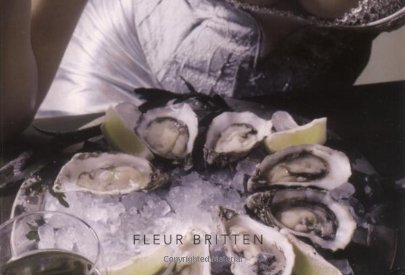
Debrett’s Etiquette for Girls by Fleur Britton was first printed in London in 2006. Published under the long-standing name of Debrett’s, it was an attempt by the organisation (best known for their listing of Peerage and Baronetage since 1769) to rebrand themselves for the twenty-first century, and is a more controversial etiquette book. Aimed at young women aged 16-30, Debrett’s Etiquette for Girls garnered interest outside that demographic as well. It feels noticeably different to the other two etiquette books I’ve reviewed recently. Rather than putting an emphasis on cultivating the inner qualities of politeness, etiquette is presented as an arguably shallower set of social skills that can help the reader get ahead in life. Parts of Debrett’s Etiquette for Girls reflect the changing morals of Western society – certain chapters would have been unthinkable just a few decades earlier.

The book has large glossy photos that depict glamorous yet elusive ‘girls about town’ – never quite showing their eyes or whole faces, and offering only glimpses of a lifestyle. These are coupled with long paragraphs of small text. Topics discussed include: social graces, image management, dining (including how to eat fancy seafood and handle fine wines), day to night events (ranging from formal dinners to night clubs and the gym), special occasions (from polo matches, yachts, and private jets to festivals, hotels, and meeting royalty or celebrities), ‘Man Management’ (the largest chapter in the book – which advises on meeting the parents and engagements as well as blind dates and one-night stands), hospitality (whether country guests, drinks parties, or flatmates), face to face interactions, written communications, gossip, ‘bitchiness’, office politics, and some ‘Golden Rules’ of etiquette.

As can be seen by listing some of the topics, Debrett’s Etiquette for Girls is a thoroughly modern etiquette book in ways both good and bad, depending on your opinions. It’s focus is on aspiring to a specific lifestyle of high society glamour, and is clearly aimed at relatively well-to-do city girls who want office careers, enjoy partying, and have no problem with society’s casual attitude to dating. Just to make it clear, I’m not making a value judgement either way on that. I’m just noting the contrast to other etiquette books. Debrett’s Etiquette for Girls exists within a twenty-first-century realm of visual merchandising and personal brands. There are definitely things I’m taking from the book, but I think it’s important to keep a critical distance and remember that the lifestyle it’s trying to sell does not have to be the ultimate dream for everyone. What I do appreciate is that the book is at least conscious of the double-standards girls must negotiate in the modern day. There is uncertainty while the rules are changing in the midst of tensions about misogyny, feminism, chivalry, and an equality that still has its limitations. Because of this, Debrett’s Etiquette for Girls calls itself ‘a modern survival manual’ and claims that ‘etiquette has re-entered the zeitgeist.’

‘Manners make life more bearable. They are there to conceal our selfish, childish instincts.’

Fleur Britton