International Girl Guide & Girl Scout Promises

Recently I’ve been reading about Girl Guides and Girl Scouts. The World Association of Girl Guides and Girl Scouts (WAGGGS) represents ten million girls in 150 countries around the globe. All of these girls are united by making a promise and sharing core values, however the exact promise varies from country to country. I’ve looked at the Girl Guide or Girl Scout promises from eight countries: the UK, the USA, Australia, Malawi, Nigeria, Syria, India, and Portugal. I find it interesting how similar the promises and laws are even with the diversity of these cultures. They have more in common than they have things that separate them. However, there are also subtle differences that perhaps reveal something about the countries’ cultures.

God

The UK and Australia, as increasingly secular countries, have removed God from their promises to make it more inclusive to girls of different beliefs. However, they both encourage girls to learn and develop their own beliefs about spirituality. The USA has kept the wording of ‘serve God’, although they allow girls to adjust this to accommodate different beliefs. Religiously diverse India also allows the wording to be adjusted from God to Dharma if so desired. Dharma is a concept in several Indian religions about duties and the right way of living. Portugal, by contrast, as a predominantly Roman Catholic country has additional references to God in their promise and law. This includes saying they will keep their promise ‘with God’s help’ and that they will see ‘the hand of God in nature’. Malawi, Nigeria, and Syria all include ‘duty to God’ in their promises.

It’s interesting to note the differences of language such as ‘serve God’, ‘duty to God’, or ‘love God’. Before Girlguiding UK introduced its current secular promise with ‘to be true to myself and develop my beliefs’, the promise used to say ‘to love my God’ – which was the promise I made as a child. The ‘my’ meant it was inclusive to girls of different religions with different gods, although it didn’t recognise atheists or agnostics. However, the wording of ‘love’ also suggests a different relationship to God than the promise of my mother’s generation – which said ‘to do my duty to God’.

Optimism

In Australia, Girl Guides strive to be optimistic. In Nigeria, they promise to be cheerful and to smile and sing under all difficulties. Likewise in Malawi, the Guide law declares they should be ‘cheerful in all difficulties’. Interestingly, for whatever reason, there is no mention of positivity in the Girl Guide and Girl Scout promises and laws of the UK, USA, or India – despite it being a repeated theme in other countries. Yet, although not outright optimism, there is an implied hopefulness in the USA Girl Scouts striving to make the world a better place. The UK Guides also find a subtle silver lining in aiming to learn and hence move forward from the challenges that face them. Guides in Syria promise to smile under all difficulties. Presumably this must be a genuine smile, since they also promise to be truthful! Meanwhile, in Portugal girls promise that they will be ‘always cheerful’, or at least ‘with God’s help, to do my best’.

Authority

In Nigeria, Guides promise to be obedient and obey orders – although it doesn’t specify who can give these orders or what the orders might be. In Malawi Guides promise to be obedient and self-controlled, whilst in Syria and Portugal they also promise to be obedient. It’s interesting to note that these more traditional countries use the term ‘obedient’ whereas the UK, USA, and Australian promises make no such requests. In the UK, as well as in Malawi, girls promise to serve the Queen, but since the Queen is a symbolic figurehead with little political power, she only represents their country and not an actual authority figure. Girl Scouts in the USA promise to ‘respect authority’, but only after promising to ‘respect myself and others’. Girl Scouts in the USA make no promises to necessarily obey or agree with that authority, especially if it conflicts with respecting themselves or other people.

The strongest statement about authority is in India where Bulbuls (the Indian equivalent of Brownies, aged 5-10) must ‘give in to elders’ – apparently every and all elders, regardless of what they are asking. This trusts that elders won’t ask the girls to do anything harmful, which is hopefully true most of the time but not necessarily always the case. However, when the Bulbuls grow up to become Guides there is no mention in the promise or laws of them giving in to elders or obeying authority. This is presumably because by that age they’re thought to be sensible enough to judge situations for themselves, and to no longer be troublesome or obstinate little children!

Adventure

Out of the eight countries we’ve been looking at here, the UK is the only one in which the promise or law actively promotes the girls seeking adventures and challenging themselves. Guides in the UK promise to ‘face challenge and learn from her experience’, while acting in accordance to the integrity of the rest of the Guide laws. These challenges are seen as personal and positive self-growth experiences. Girl Scouts in the USA aim to be ‘courageous and strong’ with the bigger picture goal of making the world a better place. Australian Guides ‘live with courage and strength’, but may do that in their everyday lives rather than seeking out opportunities for personal challenges. Portugal has no reference to courage or adventure at all in its promise or law, aiming simply to be ‘thrifty’ and ‘pure in thought, word and deed’. Indian Guides strive to be ‘courageous’ and ‘thrifty’, whilst Guides in Nigeria and Syria also endeavour to be thrifty.

What is notable is that Malawi, Nigeria, and Syria seem to have a different understanding of courage to the UK and USA, for example. From ‘has courage and is cheerful in all difficulties’ and ‘smiles and sings under all difficulties’ it sounds like they have experienced real difficulties. Guides in these countries know the meaning of true hardship that they have to be courageous though. Perhaps they’re presented with enough challenges and don’t feel the need to seek out more. However, they likely also have fewer opportunities than their Girl Guide and Girl Scout sisters in more affluent countries.

Girl Guiding was banned in Malawi for several decades until 1995, as it was replaced by a youth movement associated with the country’s only political party. All youth organisations, including Guiding and Scouting, were banned in Syria from the 1980s because of dangerous influences from extremist groups, however since Guiding has been allowed to restart it’s successfully gained trust and credibility from the people. Girl Guides have never been banned in Nigeria, however Nigeria has had plenty of other conflict and political struggles, despite being the second most affluent country in Africa


Below I’ve shared the Girl Guide and Girl Scout promises and laws from the eight countries that I’ve talked about in this blog article. I’ve only commented on a few differences that I’ve noted between them. Can you identify any other themes of interest?

UK

Rainbows Promise (age 5-7): I promise that I will do my best to think about my beliefs and to be kind and helpful.

Promise (age 7+): I promise that I will do my best, to be true to myself and develop my beliefs, to serve the Queen and my community, to help other people and to keep the (Brownie) Guide Law.

Brownie Guide Law (age 7-10): A Brownie Guide thinks of others before herself and does a good turn every day.

Guide Law (age 10+): 1) A Guide is honest, reliable and can be trusted.
2) A Guide is helpful and uses her time and abilities wisely.
3) A Guide faces challenge and learns from her experiences.
4) A Guide is a good friend and a sister to all Guides.
5) A Guide is polite and considerate.
6) A Guide respects all living things and takes care of the world around her.

USA

Promise: On my honour, I will try:
To serve God* and my country,
To help people at all times,
And to live by the Girl Scout Law.

*Girls may substitute the word God in accordance with their own spiritual beliefs.

Girl Scout Law: I will do my best to be
honest and fair,
friendly and helpful,
considerate and caring,
courageous and strong, and
responsible for what I say and do,
and to
respect myself and others,
respect authority,
use resources wisely,
make the world a better place, and
be a sister to every Girl Scout.

Australia

Promise: I promise that I will do my best
To be true to myself and develop my beliefs
To serve my community and Australia
And live by the Guide Law.

Guide Law: As a Guide I will strive to:
Respect myself and others.
Be considerate, honest and trustworthy.
Be friendly to others.
Make choices for a better world.
Use my time and abilities wisely.
Be thoughtful and optimistic.
Live with courage and strength.

Malawi

Promise: I promise that I will do my best: To do my duty to God, To serve the Queen and my country and other people, and To keep the Guide Law.

Guide Law: 1) A Guide is loyal and can be trusted.
2) A Guide is helpful.
3) A Guide is polite and considerate.
4) A Guide is friendly and a sister to all Guides.
5) A Guide is kind to animals and respects all living things.
6) A Guide is obedient.
7) A Guide has courage and is cheerful in all difficulties.
8) A Guide makes good use of her time.
9) A Guide takes care of her own possessions and those of other people.
10) A Guide is self-controlled in all she thinks, says and does.

Nigeria

Brownie Promise (age 7-10): I promise to do my best: To do my duty to God and my country, To help other people every day, especially those at home.

Brownie Law (age 7-10): 1) A Brownie is truthful, obedient and cheerful.
2) A Brownie thinks of others before herself.

Promise (age 10+): I promise, on my honour, to do my best: To do my duty to God and my country, To help other people at all times, and To obey the Guide Law.

Guide Law (age 10+): 1) A Guide’s honour is to be trusted.
2) A Guide is loyal.
3) A Guide’s duty is to be useful and to help others.
4) A Guide is a friend to all, and a sister to every other Guide.
5) A Guide is courteous.
6) A Guide is a friend to animals.
7) A Guide obeys orders.
8) A Guide smiles and sings under all difficulties.
9) A Guide is thrifty.
10) A Guide is pure in thought, word and deed.

Syria

Promise: On my honour, I promise that I will do my best to do my duty to God and my country, to help others and to obey the Girl scout/Girl Guides law.

Guide Law: 1) A girl scout is truthful.
2) A girl scout is loyal.
3) A girl scout is useful.
4) A girl scout is a brother to all other girl scouts.
5) A girl scout is courteous.
6) A girl scout is a friend to the environment.
7) A girl scout is obedient.
8) A girl scout smiles under all difficulties.
9) A girl scout is thrifty.
10) A girl scout is pure in thought in word and in deed.
11) A girl scout’s honour is to be trusted and relied on.

India

Bulbul Promise (age 5-10): I promise to do my best: To do my duty to God* and my country, To keep the Law of the Bulbul flock and To do a good turn every day.

*The word Dharma can be substituted for God if so desired.

Bulbul Law (age 5-10): 1) The Bulbul gives in to the elders.
2) The Bulbul is clean and courteous.

Promise (age 10+): On my honour, I promise that I will do my best: To do my duty to God* and my country, To help other people, and To obey the Guide Law.

*The word Dharma can be substituted for God if so desired.

Guide Law (age 10+): 1) A Guide is trustworthy.
2) A Guide is loyal.
3) A Guide is a friend to all and a sister to every other Guide.
4) A Guide is courteous.
5) A Guide is a friend to animals and loves nature.
6) A Guide is disciplined and helps protect public property.
7) A Guide is courageous.
8) A Guide is thrifty.
9) A Guide is pure in thought, word and deed.

Portugal

Little Bird Promise (age 6-10): A Little Bird is obedient. A Little Bird is always clean and tidy. A Little Bird is cheerful. A Little Bird always tells the truth.

Promise (age 10+): I promise, on my honour and with God’s help, to do my best: To do my duty to God and country, To help other people at all times, and Obey the Guide Law.

Guide Law (age 10+): 1) A Guide’s honour is sacred, and her word worthy of complete trust.
2) A Guide is loyal.
3) A Guide is useful and does a good deed every day.
4) A Guide is a friend to all and a sister to every other Guide.
5) A Guide is kind and courteous.
6) A Guide sees the hand of God in nature and protects plants and animals.
7) A Guide is obedient.
8) A Guide is always cheerful.
9) A Guide is thrifty, likes good order and respects the property of others.
10) A Guide is pure in thought, word and deed.

Girlguiding UK

‘It’s kind of like a little sisterhood. It feels like family but it’s outside of your actual family.’

Emma Tinson

Girlguiding is the UK’s largest girls-only youth organisation, empowering over 400,000 girls and young women across its age groups. First established in 1910, Girlguiding is now over one hundred years old. When the official founder of both the Girl Guides and the Boy Scouts (Robert Baden-Powell) was asked who had started the movement (since his sister Agnes Baden-Powell was closely involved as joint-founder), he declared that the girls had, in fact, ‘started themselves’. Girl-led decision making has remained an important value in the organisation ever since.

In 2010, 50% of women in the UK had been involved in Girlguiding at some stage in their life. This may have been in one of Girlguiding’s four age sections – Rainbows, Brownies, Guides, and Rangers – or as a volunteer or Guider. Most girls who have been involved in Girlguiding say that it has had a massive positive impact on them and their life. Some famous former Girl Guides include Queen Elizabeth II, Princess Margaret, author and philanthropist JK Rowling, Nobel Prize chemist Dorothy Hodgkin, Olympic athlete Dame Kelly Holmes, actress Emma Thompson, Paralympian swimmer Ellie Simmonds, television presenter Clare Balding, actress and television presenter Cat Deeley, politician and former Paralympian medalist Tanni Grey-Thompson, and many others.

Although started in the UK, the Girlguiding movement has been so popular that it’s spread across the globe. The World Association of Girl Guides and Girl Scouts (WAGGGS) now represents ten million girls in 150 different countries. It is the world’s only movement open to every girl and any girl, sharing the same core values as a sisterhood. WAGGGS supports and encourages these girls and young women to reach their full potential as leaders and active citizens of the world. This includes fun, adventure, friendship, and the space to discover their potential.

‘[Through Girlguiding, girls] go to their first ever sleepover, canoe on rivers, learn about body confidence, and lead their own camp. Or sometimes they simply have fun and try new things with friends. Girls take what they do in guiding with them as they grow up. Everything from working in a team, to taking the lead, to speaking out on issues they care about. It helps them develop the skills and confidence to become the young women they want to be. And to make a difference to the world around them.’

Girlguiding UK website

Rainbows

The youngest section of Girlguiding, Rainbows are aged five to seven. It’s a fun and exciting programme all about developing self-confidence, building friendships, learning new things and having fun. Girls get their hands dirty with arts and crafts, get in touch with nature, and play games – it’s all about learning by doing. Rainbows were started in 1987 after pilot groups had been a success. The name Rainbows was chosen to unite the diversity of uniform colours that had developed among the pilot groups, as well as being fun and colourful like the young girls.

Brownies

The largest and most popular section, Brownies are aged seven to ten. It’s about trying new things that teach girls about themselves, their community, and their world. Brownies introduces girls to a world of new opportunities, challenges, and fun. Girls go along to camps, holidays, day trips, and sleepovers. They get together with their friends at regular meetings where they learn new hobbies, get creative, develop skills, and have outdoor adventures. Brownies was set up in 1914 after the younger sisters of Guides wanted to join, but were too young to keep up with the long ‘field days’ of their elder sisters. At first they were called Rosebuds but the girls didn’t like that and demanded a new name! Instead they became Brownies, named after the magical creatures of folk tales that did secret good deeds when no one was looking.

Guides

The original section of Girlguiding and the one from which the other sections have expanded, Guides are aged ten to 14. It’s an exciting and varied programme designed to inspire and challenge girls. Guides take part in lots of exciting activities at regular meetings as well as at special events and on trips away. They have different badges and awards that help them learn new skills and try new challenges, some of which they can do on their own and others they’ll do in groups at their regular unit meetings. Girl Scouts had existed from the earliest days of the Scouting movement in 1907. They were then officially set up as the Girl Guides in 1910, after several hundred girls decided to gatecrash a Boy Scout rally at Crystal Palace in London. Generations of girls since have been glad that they did! They were named Guides after the pioneering Guides of India, by whom Robert Baden-Powell had been greatly impressed.

Rangers

The eldest section, Rangers are aged 14 to 18. It’s all about taking the lead and finding new challenges. As girls prepare for adulthood, Rangers gives them the opportunities to try new things, have fun, travel the world, learn to lead, raise their voice, and give something back to their community, whilst also building an incredible CV through gaining skills and awards. Senior Guides were first set up in 1917 to deal with girls who were outgrowing Guides but didn’t want to leave. They became known as Rangers in 1920 to create a distinct identity for them and to separate them from the Guides, allowing the younger girls the chance to lead for themselves. They were named Rangers because this reflected the desire for them to range wide and explore a larger area than the younger girls could, both physically and intellectually.

‘When you are a Guide, you see the ones [leaders] that are the younger ones, so they’re in their twenties, and you look up to them. “Oh that’s what I would like to be like if I was that age,” and the things that they’re doing seem so fun when you’re that age because that’s what you want to be able to do yourself. But I think that also, with the older ones [leaders] it’s a mother figure or sometimes even a grandma figure, and it’s just a different group of people to speak to that aren’t connected to your school and they aren’t your family. And I think that when you’re going through all those things you feel as a teenage girl, having someone that’s completely unconnected to the rest of your life to speak to about those things – especially in Guides some of the younger leaders, they’re only actually three or four years older than you… and they can kind of influence you without them appearing to give you advice because you look at them almost as a friend.’

Cat Talbot

Harvest Festival Traditions

In the UK, the Harvest Festival or Harvest Thanksgiving is held on the Sunday closest to the Harvest Moon. The Harvest Moon is the full moon closest to the autumnal equinox on the 21st September. This year, in 2020, the Harvest Moon is on the 1st October and hence the Harvest Festival is on the following Sunday, the 4th October 2020. To find out what date it will be on in any other year, you can check when the full moon will be on a lunar calendar, which you can easily find online.

The end of harvest has been a momentous occasion for all farming communities around the world ever since the agricultural revolution, which took place around 10,000 BC. A good harvest promised plenty of food and survival through the harsh winter months. It was the cumulation of the whole year’s hard work and hence worthy of a celebration. It’s only since the Second Agricultural Revolution in the 18th century and then the Industrial Revolution a mere 200 years ago that people have come to be distanced from agricultural production.

Farming was introduced to the British Isles between 5000 BC and 4500 BC, having spread from its origins in Syria and Iraq several thousand years earlier. It then took a further 2,000 years for farming to extend across the British Isles, with hunter-gatherer and agricultural communities living alongside each other. Farming remained the dominant occupation, involving nearly all the population, for the next several thousand years. Following the aforementioned Second Agricultural Revolution in Britain, food productivity increased and fewer people had to be involved in farming.

By 1850, only 22% of the British population were involved in farming, which at that point was the smallest proportion of the population of any country in the world. Nowadays just 1.5% of the UK’s workforce is employed in the agricultural industry. The UK produces less than 60% of the food it consumes. Given this, it’s hardly surprising that in our urbanising society people feel increasingly separated from the natural rhythms of the seasons, lacking the common knowledge of our forebears. With supermarkets stocking out-of-season, plastic-packaged, instant food all year round, those of us living in affluent, comfortable countries are at risk of taking it all for granted. I think the Harvest Festival can be an important way for us to reconnect with our roots and practice appreciation for the bounteous gifts that nature provides us.

‘Come, ye thankful people, come,
Raise the song of harvest home!
All is safely gathered in,
Ere the winter storms begin;
God, our Maker, doth provide
For our wants to be supplied;
Come to God’s own temple, come;
Raise the song of harvest home!

First verse of ‘Come, Ye Thankful People, Come’ by Henry Alford (1844)

Harvest Revelry

The start of harvest season was traditionally celebrated with the Christian holiday of Lammas at the beginning of August. After about two months of hard labour, the bringing in of the final harvest was celebrated with the Harvest Festival around the end of September or early October. Thanks has been given for successful harvests in Britain since pagan times. With the arrival of the good news about Jesus Christ, these festivals turned to thanking and praising God for the harvest. By the 16th century there were established traditions about bringing in the last harvest.

Harvest Races

Farmers and their workers would race neighbouring farms not to be the last to finish cutting the corn, as that was considered bad luck – and it brought some competitive fun. Different regions had different customs for cutting the very last patch of corn or wheat. Some areas would cut this last patch, called the ‘Mell’, by throwing their scythes at it. Others would instead have the workers taking turns to be blindfolded and swing their scythes at it until it was all down. No doubt this was all accompanied with plenty of shouting, laughter, and good-natured banter.

The Hock Cart

The last wagon bringing home the harvest was called the hock cart. Both the hock cart and the horses pulling it would be decorated with flower garlands and ribbons. It would be accompanied with a merry procession of all the farm workers, which in those days would include families from nearly the whole local community. These would give songs, rhymes, and shouts of ‘hooky, hooky’ (or ‘hocky’, ‘hoakey’, ‘ or ‘horkey’ depending on which part of the country it was). In some parts of the country, local people would pelt the hock cart – and no doubt the farm workers as well – with buckets of water as a sign that it didn’t matter if it rained now that the harvest was in. I can imagine that easily turning into a water fight. There would be blessings and prayers for the harvest as well as merriment and festivities. Church bells would be rung, a seed cake known as a hoky cake would be distributed among the farm workers, and each region would have their own ceremonies and rituals.

Harvest Supper

Until the 20th century, most farmers celebrated the end of harvest with a big harvest supper, to which everyone who had helped with the harvest was invited. This was when they could taste the fruits of their labour, a celebratory time of generosity and abundance. The harvest supper would be accompanied by plenty of revelry, singing, games, and social barn dancing. It was essentially a big party. A corn dolly would be sat in the place of honour at the harvest supper table. It would then spend winter in the farmer’s home before being ploughed into the first furrow of the new season for good luck.

Corn Dollies & Countryman’s Favours

Corn dollies were made from plaiting and weaving together strands of wheat, oats, barley, or rye from the last sheaf of harvest. There are different styles of corn dollies named after the various parts of the country they originated from. Some designs are more complicated than others, but the simple loop or two of a basic corn dolly, tied with a pretty ribbon, was an easy rural craft that I enjoyed making as a child. A variation of a corn dolly is a countryman’s favour. This was a plait of straws loosely tied into a knot representing a heart. The idea was that a young man working in the fields would make a countryman’s favour from straws he picked up at the end of harvest, which he would then present to the young woman he loved. If she was wearing it next to her heart the next time he saw her, he would know that his love was reciprocated.

‘We ourselves are God’s own field,
Fruit unto his praise to yield;
Wheat and tares together sown
Unto joy or sorrow grown;
First the blade and then the ear,
Then the full corn shall appear;
Grant, O harvest Lord, that we
Wholesome grain and pure may be.’

Second verse of ‘Come, Ye Thankful People, Come’ by Henry Alford (1844)

Churches & Charity

The British tradition of celebrating the Harvest Festival of Thanksgiving in churches began in 1843. It was started by the Cornish vicar Robert Hawker, who invited his parishioners to a special church service to give thanks and celebrate the harvest. The idea was well received and spread across the country. Harvest-themed hymns also helped popularise his idea of Harvest Festival. The tradition of decorating churches with home-grown fruit, vegetables, and flowers continues to this day. Churches and schools also collect tinned or otherwise long-lasting food to distribute among the poor through food banks and homeless shelters.

As British people have come to rely more on imported food rather than home-grown produce, there has been a shift in emphasis with Harvest Festivals. They now increasingly link Harvest Festival with an awareness of food poverty and concern for people in developing countries for whom growing sufficient crops remains a struggle. Many churches engage with international development and relief charities to learn more about those in need around the world. Some churches and villages still have harvest suppers, which are often organised as charity fund-raising events.

‘For the Lord our God shall come,
And shall take the harvest home;
From His field shall in that day
All offences purge away,
Giving angels charge at last
In the fire the tares to cast;
But the fruitful ears to store
In the garner evermore.’

Third verse of ‘Come, Ye Thankful People, Come’ by Henry Alford (1844)

Harvest Supper Ideas

Harvest suppers were traditionally a shared meal for all farm workers and their families. Nowadays you could arrange one for your extended family and friends, or even organise a fund-raising event in your local community. You could learn some English country dances together, roping in your friends with musical skills, or create some rural crafts such as corn dollies. For a fund-raising event, you could even invite someone to give a short talk about a relevant topic such as the environment or an international charity. Try to cook with local, seasonal ingredients.

During late September and early October in the UK, fresh seasonal produce includes: apples, artichoke, aubergine, blackberries, beetroot, broccoli, brussels sprouts, butternut squash, carrots, cauliflower, celery, celeriac, chicory, chillies, courgettes, cucumber, damsons, elderberries, fennel, figs, garlic, grapes, kale, leeks, lettuce, marrow, melon, nectarines, onions, parsnips, pears, peas, peppers, plums, potatoes, pumpkins, rocket, radishes, runner beans, spring greens, spring onions, summer squash, sweetcorn, swedes, swiss chard, tomatoes, turnips, watercress, wild mushrooms, and more!

‘Then, thou Church triumphant come,
Raise the song of harvest home!
All be safely gathered in,
Free from sorrow, free from sin,
There, forever purified,
In God’s garner to abide;
Come, ten thousand angels, come,
Raise the glorious harvest home!’

Fourth verse of ‘Come, Ye Thankful People, Come’ by Henry Alford (1844)

Michaelmas Traditions

Michelmas, also known as the Feast of St Michael and All Angels, is on the 29th September. Because it falls near the autumnal equinox, it was historically one of the four quarter days of the year (the others being Christmas in winter, Lady Day in spring, and Midsummer in summer). In British and Irish tradition, the quarter days were the days on which servants were hired at hiring fairs, rents were due, accounts were settled, lawsuits resolved, and school terms started. The purpose of quarter days was to ensure that debts and unresolved lawsuits were not allowed to linger on. Michaelmas was especially important as a quarter day because it marked the end of harvest and therefore also the end of the farming year – hence it made sense to settle accounts at that time. Michaelmas is also associated with the beginning of autumn and the shortening of days in the northern hemisphere.

‘If ducks do slide at Michaelmas,

At Christmas they will swim;

If ducks do swim at Michaelmas

At Christmas they will slide.’

Traditional rhyme

St Michael & the Angels

Michaelmas is a celebration of St Michael, the archangel mentioned in the Bible as leading God’s armies against forces of spiritual evil. In Christian tradition St Michael is an advocate and protector of God’s people, honoured for defeating the satan in the war in heaven, and portrayed as a spiritual warrior and the greatest of the angels. His name ‘Michael’ is Hebrew for ‘Who is like God?’ – a fine battle cry declaring God’s power and goodness! Because he’s seen as a military saint, St Michael has been adopted as the patron saint of chivalry, policemen, paramedics, the military, and occasionally of horsemen.

Although St Michael is the only archangel mentioned in the Bible, he is sometimes recognised as one of four archangels alongside Raphael (meaning ‘God has healed’), Gabriel (meaning ‘God is my strength’), and Uriel (meaning ‘God is my light’). These other angels are included within the ‘All Angels’ title of the Feast of St Michael and All Angels. The Bible doesn’t say much about other spiritual beings such as angels because we don’t need to know about them – we only need to know and trust in God. However, because He’s generous, God does graciously give us in the Bible a glimpse behind the scenes at the spiritual realm, and this includes the archangel Michael.

‘Then said he unto me, Fear not, Daniel: for from the first day that thou didst set thine heart to understand, and to chasten thyself before thy God, thy words were heard, and I am come for thy words. But the prince of the kingdom of Persia withstood me one and twenty days: but, lo, Michael, one of the chief princes, came to help me; and I remained there with the kings of Persia.’

Daniel 10:12-13

Activities & Celebrations

Michaelmas remains to this day the start of the new academic and legal years, since it marks the end of harvest when historically everyone had been needed to help on the farms during the summer holidays. Although schools in England now start at the beginning of September instead, universities still start their teaching around Michaelmas time. More traditional universities and private schools even refer to their autumn terms as ‘Michaelmas term’. With autumn also comes the end of the fishing season and the start of the hunting season.

Besides the autumnal organisation of hiring fairs and the new academic year, Michaelmas was a great religious feast during the Middle Ages. People celebrated with church services, sharing a meal with their family and friends, and horse races across the recently harvested stubble fields. It was a time of horse sales, goose fairs, and ploughing contests. The late-flowering purple Michaelmas daisies give colour and warmth to gardens at this time of year, so perhaps they were picked to decorate the feasting tables. Michaelmas daisies symbolise farewell and departure, much how Michaelmas Day is seen to say farewell to a productive year and to welcome in the next cycle.

‘The Michaelmas Daisies, among dead weeds,

Bloom for St Michael’s valorous deeds.

And seems the last of flowers that stood,

Till the feast of St Simon and St Jude.’

Traditional rhyme

Old Michaelmas Day

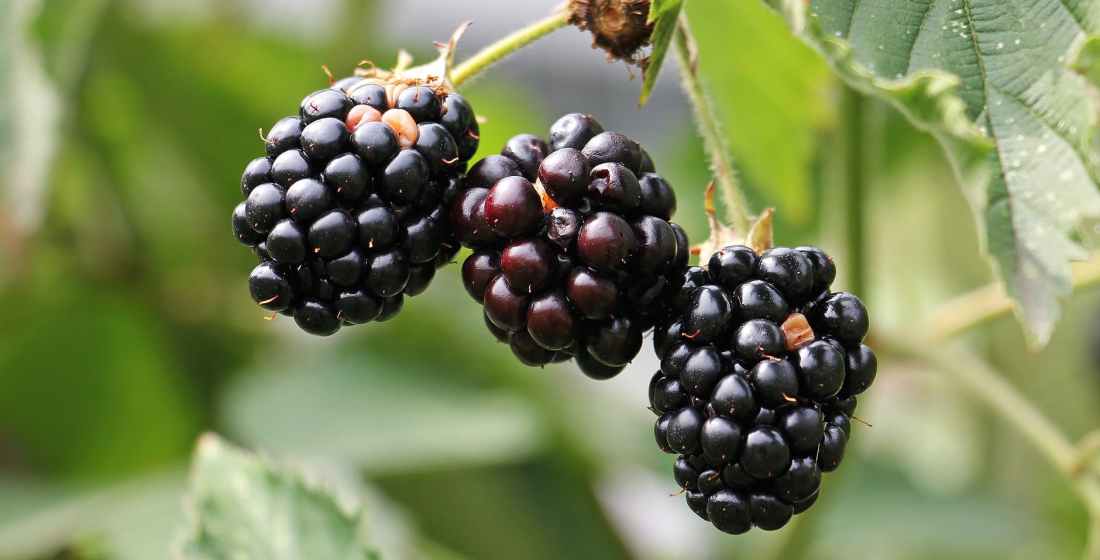
While Michaelmas Day is now on the 29th September, that was not always the case. Until the Julian calendar was dropped for the more accurate Gregorian calendar in 1752, Michaelmas used to be on the 10th October. The 10th of October is now known as Old Michaelmas Day as it has folklore of its own. According to legend, when the devil fell from heaven after fighting the archangel Michael, he fell straight into a bramble bush – which is, of course, very prickly. It’s said that the devil cursed, breathed fire, spat, and stamped all over the blackberries, making them unfit for consumption. Every year on Old Michaelmas Day the devil flies over all the bramble bushes to either spit or urinate on the blackberries, and so blackberries shouldn’t be picked after that day. In reality, blackberries begin to go bad as colder weather approaches.

‘A dark Michaelmas, a light Christmas.’

Traditional folklore saying

Michaelmas Recipes

According to folklore, the most important part of a Michaelmas feast was a roast goose as it was believed this brought good luck for the year. Even Jane Austen wrote to her sister Cassandra in 1813 that she ‘dined upon goose yesterday, which, I hope, will secure a good sale of my second edition.’ Nowadays, of course, vegetarian alternatives are available. This could be cooked with seasonal root vegetables such as honey-glazed roast carrots, honey-roasted parsnips, sweet roasted onions, and herb-infused roast potatoes. Other traditional recipes include St Michael’s bannock and Michaelmas dumplings. Nuts, blackberries, and ginger beer are also associated with Michaelmas. A few blackberry recipes for puddings include apple and blackberry crumble, blackberry and apple pie, or blackberry jam to go on the St Michael’s Bannock.

‘Eat a goose on Michaelmas Day,

Want not for money all the year.’

Traditional folklore saying

Holy Cross Day Traditions

Holy Cross Day has been celebrated on the 14th September since the seventh century. It is also known as the Feast of the Cross. The day commemorates the cross on which Jesus was crucified and which was an instrument of salvation for those who choose to follow Jesus. The cross is deeply symbolic and has great meaning in Christianity. It serves as a reminder of just how much God loves us, how much we are lost without Him, how Jesus has saved us, and how we are called to follow Him in sacrificially serving and loving our neighbours. Because we owe everything we have and everything we are to God, Christians should not boast about what glory they’ve achieved in the world. Instead, we should only boast about the freedom we’ve been gifted through Christ and the cross – which is a gift free to anyone who decides to believe.

‘But God forbid that I should glory, save in the cross of our Lord Jesus Christ, by whom the world is crucified unto me, and I unto the world.’

Galatians 6:14

St Helena & St Constantine

Holy Cross Day also recalls three events. First was the finding of Jesus’ cross by St Helena while she was on pilgrimage in Jerusalem. St Helena lived from approximately AD 246 until AD 330. She was empress of the Roman Empire and the mother of the Roman emperor St Constantine. It was St Helena’s conversion to Christianity that influenced her son to legalise Christianity in AD 313 (ending some persecution) then later declare Christianity the state religion of the Roman Empire and convert himself.

The second event recalled on Holy Cross Day is the dedication of churches that St Constantine and St Helena had built on the site where Jesus had been crucified. Then the third event is the restoration of the True Cross (as Jesus’ cross is sometimes called) to Jerusalem in AD 629 after it had been taken as a trophy in the Sasanian conquest of Jerusalem a few years prior. There is of course more to the story than I’ve shared here, however that is the basic history. What matters is not any relic of the cross itself, but that it was the means through which God offered us salvation.

Celebrations & Recipes

Holy Cross Day is most commonly commemorated through church services and prayer. However, it was historically also celebrated with a feast – hence why it is called the Feast of the Cross. Recipes for Holy Cross Day could include hot cross buns, chocolate and spice hot cross buns, hot cross cookies, or any bread roll or cake decorated with a cross. Since apples are ripe for harvest around this time of year, you could bake a Dorset apple cake and then decorate the top with extra apple slices in the shape of a cross.

Holy Cross Day and St Helena are also associated with basil. According to story, while St Helena was on pilgrimage in Jerusalem and searching for the holy cross, she noticed an unfamiliar green plant growing in the earth. Because it had a strong, sweet smell she decided to dig it up to take it back to Rome with her. It was while St Helena was digging the herb up that she found fragments of Jesus’ cross, the veracity of which she only became convinced by after she had witnessed it miraculously heal a woman who had been near death. St Helena named the green herb basil, because basileus was Greek for ‘king’ and it had grown from the cross of the king of kings. Recipes including basil could be fun for Holy Cross Day. Basil could be made into pesto, tomato and basil pasta salad, spinach and basil lasagne, garlic and basil butter to go on your cross-decorated bread rolls, tomato and basil soup, or any other creative recipes using basil you can think of.

British Seasonal Celebrations

‘For thousands of years, awareness of seasonal changes was enhanced by ritualistic celebrations. Nobody is going to forget the passing of the winter solstice when it was accompanied by a fire festival and the biggest party of the season, in the way that it’s successor, Christmas, does not go unnoticed now.’

From ‘Wild Signs and Star Paths’ by Tristan Gooley (2018)

I love nature and I love history, so perhaps it’s not surprising that I find myself drawn to the idea of seasonal celebrations. They bring the two together after all. Seasonal celebrations connect communities to their heritage as part of a greater story. They also reinforce an appreciation for the changing seasons and natural world, which is needed more than ever now so many of us are disconnected from the environment. I also think seasonal celebrations have a real potential to bring communities and families together through wholesome bonding traditions, fun shared memories, and enjoying this life that we’ve been blessed with.

As a child I always loved the magic of Christmas anticipation; hunting for Easter eggs around the churchyard (then sneaking out of church early to help hide them when I was older); learning maypole dances at school in preparation for the May Fayre; barn dances and barbeques in the summer; running around the local horticultural show with my friends; the beauty and colour of Guy Fawkes’ Night; taking part in the Remembrance Day parade with the Girl Guides; then the Christmas spirit beginning all over again with Christingle oranges and sparkling fairy lights. It’s been my experience that these festivities are often predominantly focused at children, but there’s no reason why they can’t be for all ages as they once were. Just because we’re now adults, it doesn’t mean we have to forget the magic in life or the value of innocent fun.

Below I’ve compiled a list of seasonal celebrations that were once traditional to my culture. It includes annual celebrations from the Church of England liturgical year, the British agricultural seasons, and more modern secular celebrations. Traditionally holidays were holy days – hence the name – and date back hundred of years. The word ‘holiday’ comes from the Old English ‘háligdæg’ and was first recorded during the Anglo-Saxon period around AD 950. For any international readers out there, in Britain the name ‘holiday’ is used to refer to any celebration, travel, or time off work, regardless of whether they’re religious or secular in nature. The more American ‘vacation’ instead comes from French and is connected to the word ‘vacate’ with the meaning to be unoccupied.

‘I sing of brooks, of blossoms, birds, and bowers,
Of April, May, of June, and July flowers.
I sing of May-poles, hock-carts, wassails, wakes,
Of bridegrooms, brides, and of their bridal-cakes.
I write of youth, of love, and have access
By these to sing of cleanly wantonness.
I sing of dews, of rains, and piece by piece
Of balm, of oil, of spice, and ambergris.
I sing of Time’s trans-shifting; and I write
How roses first came red, and lilies white.
I write of groves, of twilights, and I sing
The court of Mab, and of the fairy king.
I write of Hell; I sing (and ever shall)
Of Heaven, and hope to have it after all.’

‘The Argument of his Book’ by Robert Herrick (1648)

Advent

The liturgical year begins with the season of Advent in preparation and expectation for Christmas. Advent starts on the fourth Sunday before Christmas, which is usually in late November, and lasts until Christmas Eve on the 24th December. This period contains the winter solstice on the 21st December and is during the darkest time of the year. In England sunrise is around 8am and sunset is before 4pm at this time of year.

Late November – First Sunday of Advent.

30th November – St Andrew’s Day (the patron saint of Scotland).

December – Second Sunday of Advent.

6th December – St Nicholas’ Day (the patron saint of children, now known as Father Christmas).

13th December – St Lucy’s Day (previously coincided with the winter solstice).

December – Third Sunday of Advent.

17th December – O Sapientia (the seventh day before Christmas Eve).

December – Fourth Sunday of Advent.

21st December – Winter Solstice.

24th December – Christmas Eve.

Christmas

Christmas Day on the 25th December is followed by the 12 days of Christmas, celebrating and commemorating Christ’s birth – an event that changed history and demonstrated God’s love for us in the most amazing way. We don’t know exactly when Christ’s birthday was, but choosing to celebrate it around the time of the winter solstice (for the northern hemisphere) when light begins to return has symbolic significance that reinforces the story.

25th December – Christmas Day.

26th December – St Stephen’s Day (the first Christian martyr) or Boxing Day.

28th December – The Holy Innocents.

31st December – New Year’s Eve or Hogmanay.

1st January – The Naming & Circumcision of Jesus or New Year’s Day.

5th January – Twelfth Night.

Epiphany

The season of Epiphany starts with Epiphany itself on the 6th January, which celebrates the visit of the wise men to the infant Jesus and the recognition that Jesus Christ was the Son of God. The season lasts until Candlemas on the 2nd February, which commemorates the presentation of Jesus at the temple 40 days after his birth. This covers most of January and the coldest (although no longer darkest) month of the year in the northern hemisphere.

6th January – Epiphany.

First Sunday of Epiphany – The Baptism of Christ or Plough Sunday.

Monday after Plough Sunday – Plough Monday.

18th to 25th January – Week of Prayer for Christian Unity.

21st January – St Agnes’ Day (the patron saint of virgins).

25th January – The Conversion of Paul or Burns’ Night.

2nd February – Candlemas.

Ordinary Time

The periods of the liturgical year outside Advent, Christmastide, Epiphanytide, Lent, and Eastertide are called ‘ordinary time’. This is because they are not focused on any of the major Christian celebrations. The period of ordinary time between Epiphany and Lent lasts about five Sundays. During this time the church stops looking back to Jesus’ birth and later looks forwards to Jesus’ death and resurrection. The last day of this ordinary time is celebrated as Pancake Day.

14th February – St Valentine’s Day (the patron saint of lovers).

February or March – Shrove Tuesday or Pancake Day.

Lent

Lent is a time of reflection, penitence, and solemn observance in preparation for the celebration of Easter. It lasts 40 days, which is about six weeks, in commemoration of the 40 days that Jesus spent journeying in the desert. During Lent many Christians fast from certain luxuries such as sugar, dairy, and meat or take up new spiritual disciplines. In England it historically coincided with the ‘hungry gap’ of late winter and early spring when there was no fresh produce available from vegetable gardens. Near the end of Lent is Good Friday, commemorating the crucifixion and death of Jesus Christ.

February or March – Ash Wednesday.

1st March – St David’s Day (the patron saint of Wales).

March or April, Fourth Sunday of Lent – Mothering Sunday.

17th March – St Patrick’s Day (the patron saint of Ireland).

Fifth Sunday of Lent – Passiontide.

21st March – spring equinox.

25th March – Lady Day or The Annunciation.

March or April – Holy Week.

Sunday of Holy Week – Palm Sunday.

Thursday of Holy Week – Maundy Thursday.

Friday of Holy Week – Good Friday.

Easter

Easter lasts for 50 days from Easter Day until Pentecost. This time celebrates the resurrection of Jesus Christ from the dead and with it how He has rescued us to give us new life. Along with Christmas, Easter is the most important celebration of the year. The date of Easter Day itself is determined by the moon and changes each year, as it is held on the Sunday following the paschal moon. Like several other celebrations, the meaning of Easter is reinforced by the symbolism of the natural season. In the northern hemisphere Easter takes place after the spring equinox when the earth is growing and coming to life again.

March or April, Sunday following the paschal moon – Easter Day.

March or April – Easter Week.

1st April – April Fool’s Day.

23rd April – St George’s Day (the patron saint of England).

1st May – May Day.

Three weekdays before Ascension Day – Rogationtide.

40th day after Easter Day, May or June – Feast of the Ascension.

31st May – The Visit of the Blessed Virgin Mary to Elizabeth.

50th day after Easter Day, May or June – Pentecost or Whit Sunday.

Ordinary Time

The season from Pentecost until Advent is designated as ‘ordinary time’ in the liturgical calendar. This period lasts about 24 Sundays from early summer until early winter, covering all of summer and autumn with the historically busy harvest season. Around the summer solstice on the 21st June, sunrise is before 5am while sunset is well after 9pm in England. This gives over 16 hours of daylight – double the just eight hours of daylight during the depths of winter.

May or June – Trinity Sunday.

Thursday after Trinity Sunday – Corpus Christi.

21st June – Father’s Day or summer solstice.

24th June – The Birth of John the Baptist or Midsummer’s Day.

15th July – St Swithun’s Day (traditionally associated with folklore about the weather).

1st August – Lammastide.

6th August – The Transfiguration of Our Lord.

15th August – The Blessed Virgin Mary.

14th September – Holy Cross Day.

Late September or early October, Sunday nearest the harvest moon – Harvest Festival or Harvest Thanksgiving.

21st September – autumnal equinox.

29th September – Michaelmas (the archangel).

First Sunday in October – Dedication Festival.

4th October – St Francis’ Day (the patron saint of animals).

31st October – All Hallows’ Eve or Hallowe’en.

1st November – All Hallows’ Day.

2nd November – All Souls’ Day.

5th November – Bonfire Night or Guy Fawkes’ Night.

11th November – Martinmas (the patron saint of the poor) or Remembrance Day.

23rd November – St Clement’s Day or Old Clem’s Night (the patron saint of blacksmiths).

25th November – St Catherine’s Day or Catterntide (the patron saint of lace makers).

Sunday before Advent – Christ the King.

What is an Accomplished Lady?

If you’ve been following Feminine Finishing School for a while, you might have noticed that I like to find out the history behind things – such as the history of etiquette or the history of French style. Something I find very interesting is finding out about the history of female education. The ideals held up for women and what they were taught to value is revealing of women’s roles in their societies. It was only in 1880 that education became a legal requirement for all girls and boys aged five to ten in England and Wales. All societies have to educate their young in some way however, whether that involves formal schooling or not. For well-to-do Georgian women such as those of Jane Austen’s generation, the goal was to become an ‘accomplished lady’ capable of attracting an eligible suitor. Yet even with that end purpose, considerable change can be seen in what it meant to be accomplished.

Early Girls’ Boarding Schools

‘I think that learning to write, read, sew, dance, sing, and play on some musical Instrument comprizes [sic] the whole of what is intended by modern Boarding-School Education, unless you will take the Art of Cookery into the account;’

A Letter to A Lady, Concerning the Education of Female Youth. (1749)

As early as in 1749 there were debates over the purpose of female education and what it meant to be an accomplished lady. It seemed to have been taken for granted that middle-class young ladies at least should receive some form of education, but there were disagreements over what form that should take.

Mid-Eighteenth-Century Education

A Letter to A Lady describes girls as commonly being taught the skills listed in the quotation above. Reading and writing offered a basic education with the ability to communicate, which was especially important in the days of letter writing. Sewing was a practical skill required before industrialisation or fast fashion, as well as allowing artistic accomplishments with decorative embroidery. Dancing, singing, and playing a musical instrument were important social skills in the eighteenth century as many social gatherings among the middle classes revolved around those activities. Cookery is essential to life itself as we all need to eat, however it was sidelined behind the other skills because people of those socio-economic circles generally had servants of some kind. Neither the anonymous male writer nor the anonymous lady he was writing to objected to the teaching of these accomplishments, but they both thought it was too limited.

Alternative Educational Ideas

If A Letter to A Lady is to be believed, this common education of the time influenced young women to be simply petty and pretty. They were taught superficial accomplishments and allowed to remain foolish. This led to unhelpful idle gossip and an obsession with external appearance alone, lacking either developed character or intellect. The lady and male writer differed in how they thought girls should be educated however. The lady appears to have been an early feminist. She thought that girls should be given an academic education more equal to that of men, which would give them knowledge and develop an intellectual curiosity. The male writer, on the other hand, believed that such an education would be a waste and that young ladies should instead be prepared for the roles they were expected to play – those of wife, mistress of the household, and mother. Some of the comments the male writer makes are comically dated, but I can also see how they were a product of the mid-eighteenth-century society of the time.

Jane Austen’s Accomplished Lady

‘ “It is amazing to me,” said Bingley, “how young ladies have patience to be so very accomplished as they all are.”

“All young ladies accomplished! My dear Charles, what do you mean?”

“Yes, all of them, I think. They all paint tables, cover screens, and net purses. I scarcely know any one who cannot do all this, and I am sure I never heard a young lady spoken of for the first time without being informed that she was very accomplished.”

“Your list of the common extent of accomplishments,” said Darcy, “has too much truth. The word is applied to many a woman who deserves it no otherwise than by netting a purse, or covering a screen. But I am very far from agreeing with you in your estimation of ladies in general. I cannot boast of knowing more than half a dozen, in the whole range of my acquaintance, that are really accomplished.”

“Nor I, I am sure,” said Miss Bingley.

“Then,” observed Elizabeth, “you must comprehend a great deal in your idea of an accomplished woman.”

“Yes, I do comprehend a great deal in it.”

“Oh! certainly,” cried his faithful assistant, “no one can be really esteemed accomplished who does not greatly surpass what is usually met with. A woman must have a thorough knowledge of music, singing, drawing, dancing, all the modern languages, to deserve the word; and besides all this, she must possess a certain something in her air and manner of walking, the tone of her voice, her address and expressions, or the word will be but half deserved.”

“All this she must possess,” added Darcy, “and to all this she must yet add something more substantial, in the improvement of her mind by extensive reading.”

“I am no longer surprised at your knowing only six accomplished women. I rather wonder now at your knowing any.” ‘

Jane Austen, Pride and Prejudice (1813)

I find it interesting to compare what was considered an accomplished lady in 1749 and in 1813 during Jane Austen’s time. Just the short passage above shows that many of the same themes had been continued, yet that the idea of an accomplished lady had also been expanded. Jane Austen needs to be taken with a pinch of salt as the passage displays her typical humour. She’s poking fun at the high standards that were idealised for women, saying she doesn’t know anyone who is all those things, but it also gives insight on the typical views of the time.

Early-Nineteenth-Century Education

Like the girls’ boarding schools in A Letter to A Lady, Mr Bingley and much of Regency society had rather superficial ideas of what constituted an accomplished lady. All they were required to do was paint picture tables, cover decorative fire screens, and make net purses. These were essentially all creative skills or ‘fancy work’, as opposed to the less decorative ‘plain work’ that was practical sewing and mending. Miss Bingley adds drawing to this list, as well as the dancing, singing, and music that were required for social gatherings.

Additional Accomplishments

It’s the additional accomplishments, however, that stand out. Being a truly accomplished lady in 1813 was evidently much more of a challenge that it had been in 1749! Ladies were expected to have a ‘thorough knowledge’ of ‘all’ the fashionable modern languages. This most likely meant French, German, and Italian. It excluded the academic classical languages of Greek and Latin that were studied by the gentlemen, yet to be competent in three foreign languages requires a lot of study and perseverance. Even today, to be able to speak that many languages is a very impressive accomplishment!

Even with all these skills and achievements, a lady was not yet truly accomplished. She needed to cultivate something more intangible with an elegant manner and presence – something that could be called the je ne sais quoi element. A truly accomplished lady had developed poise, grace, and a sense of presence. She understood etiquette and was well practised in her social skills.

A Question of Character

In the passage from Pride and Prejudice three characters understand different levels of accomplishment. Mr Bingley is easy-going and easily pleased, so is content with an elementary level of accomplishment. Miss Bingley is more critical and raises the standard to a more intermediate level. She remains rather superficial however, focused on external appearances. Mr Darcy cares about the inner mind as well, and so describes a more advanced level of accomplishment. He adds that a truly accomplished lady also has ‘something more substantial’ and is interested in ‘the improvement of her mind’. She must be well-read and capable of interesting conversation, because this demonstrates something about her character. An accomplished lady knows there is always more to learn. She has a love of learning and a desire to improve herself.

Something they all miss though, whilst focused on skills and mannerisms and intellect, is the state of the lady’s heart. A true lady is kind-hearted and caring, respectful of others, compassionate, aware of her own flaws, gracious and polite, has an inner peace, and is strong in her integrity. A kind heart and strong values are more important than all the accomplishments of the world.

Feminine Accomplishment Themes

Whilst I’ve been pondering over the skills that were traditionally required of an accomplished lady, I’ve noticed some common themes that they can be categorised into. As Elizabeth Bennet pointed out at the end of the Pride and Prejudice passage above, few women have achieved all these accomplishments and they do not define a woman’s worth. I find in interesting however to see the underlying themes.

The traditional skills of an accomplished lady are:

  1. Practical skills: sewing, cooking, baking, household management; and nowadays also finances, paperwork, driving, adult responsibilities in general.
  2. Creative skills: drawing, painting, embroidery, dressmaking, knitting, flower arranging; a hobby and interest of your own.
  3. Music & singing: historically the piano was popular, nowadays it may be any instrument, and of course the voice is near universal.
  4. Dancing: during the Georgian period this meant English country dancing, during the Victorian period it shifted to ballroom dancing, nowadays this could be any elegant style of dance such as ballet or a traditional folk dance.
  5. Languages: historically French has been the most popular second language in Britain, although the Victorians favoured German; needless to say nowadays it could be any language of your choice and it’s perhaps best to choose one that you will be most likely to have occasion to use.
  6. Poise & grooming: deportment, grace, radiance, style, beauty, clarity of communication, historically this included elocution.
  7. Etiquette & entertaining: the etiquette of your own country and culture, as well as international cultural differences in etiquette, hostess skills.
  8. Social skills: social confidence, conversation, body language awareness, understanding of social interactions and psychology, friendships, relationships, people skills.
  9. Education & culture: good general knowledge, current events, the arts and sciences, well-read, capable of interesting and intelligent conversations, love of learning, desire to improve self.
  10. Kindness of heart: the inner core that gives good intentions to all other accomplishments, compassion, respect, integrity, character, unselfish wish to help others, altruism, desire to continually grow into a better person, the most important element, all other accomplishments are simply a means to an end.

New Year’s Resolutions That Last

When I was at college, we had a term during which we were supposed to learn about SMART goals and planning for the future. At the time, the general consensus among us students was that it was a waste of our time. It didn’t count towards our marks and as we had exams approaching, we wanted to focus on studying for them instead. Eventually the college agreed and let us drop it to prioritise our exam preparation, but as I’ve been thinking about New Year’s resolutions recently the idea of SMART goals has come back to me.

New Year’s resolutions are fun to make at the beginning of the year, but they’ve also become a bit of a joke. Very few people seem to stick by them through the whole year. Perseverance, complacency, and self-discipline are part of the problem. Yet perhaps another part is that we’re not making the right resolutions? As I think back on my New Year’s resolution for the past year, I find that I don’t know if I’ve achieved it or not. In hindsight, it was a very vague wish. It’s difficult to tell how I would even measure success or failure. I’ve made progress and learnt many things in the past year; yet was that proactive growth or simply the passage of time?

Life is short. We only have so much time on earth and we have a responsibility to make the most of the opportunity we’ve been given. God willing, I’ve been gifted another year, so I want to use it for His glory. What that will look like, I don’t know yet, but being intentional in setting positive New Year’s resolutions is the best way to start the year off on a good foot. This year I’m going to make my New Year’s resolutions SMART goals so that I have a clear path in sight to some more tangible progress by the end of the year.

Specific

SMART goals is an acronym and the first letter stands for Specific. This means making it clear exactly what you’re setting out to accomplish. Rather than having some vague, woolly idea, narrow it down to a specific goal you can focus on. The journey is more important than your destination and you should try to enjoy each step throughout the next year, yet make sure that you do have a final destination in sight. Be clear what a definite marker of success would look like at the end of the year.

Measurable

The M in SMART stands for Measurable. This means that you’re able to track your progress throughout the year and measure how far you’ve come. Break your New Year’s resolution down into smaller and more manageable steps that you can actively complete. Successfully completing one of these steps will let you see the progress you’ve made and act as motivation. Having a plan will help you check in and make sure you’re still on track with your yearly goal.

Achievable

A key part of SMART goals is that they must be Achievable. Don’t pick something that would be impossible for you to achieve within the next year. The whole point of New Year’s resolutions is that they should be realistic yet challenging. Don’t overload yourself. Only make a manageable number of New Year’s resolutions – I would advise not more than three. Goals should help you get where you want to be and enjoy the journey, not make everything perfect overnight. Know how much you can handle. There’s no pressure to be perfect.

Relevant

The driving force of SMART goals is that they must be Relevant. Choose a New Year’s resolution that you find personally relevant and that is meaningful to your true self. Don’t just choose a certain goal because society says you should. If you do you’re more likely to lose interest and not keep the resolution. Be clear on your motive. Know why you want to achieve it and why you’re willing to work for it. Having a New Year’s resolution that’s positive and has strong personal relevance will help you maintain it throughout the year. Write down what your resolution is and why it matters to you, so that it will feel more permanent. Share your goals with a friend or family member. They can help keep you accountable, offer encouragement, and remind you why you chose that resolution.

Time-Bound

Finally, the T in the SMART goals acronym stands for Time-bound. The good thing about New Year’s resolutions is that they automatically have this because they’re built around a time limit of one year. However, it’s also important to think about reviewing your progress throughout the year and considering what steps you’ll need to have taken by what month in order to stay on target for achieving your goal.

I hope that you’ll find these tips helpful in setting your New Year’s resolutions. Ultimately, however, the key to resolutions is the resolve. You’ll need willpower to stick to it and sometimes you’ll just have to make the decision to do so simply because you committed to that goal. You won’t always feel as motivated as you do now at the beginning of the year, but if your New Year’s resolution is worth making then it’s worth keeping. By feeding good habits it will become easier. I’ve linked a video below that talks about the power of habits and it gives what I think is a very helpful, motivating allegory. I’d recommend that you watch it.

Happy New Year and best of luck for your New Year’s resolutions! You can do this!

Learn More