Michelmas, also known as the Feast of St Michael and All Angels, is on the 29th September. Because it falls near the autumnal equinox, it was historically one of the four quarter days of the year (the others being Christmas in winter, Lady Day in spring, and Midsummer in summer). In British and Irish tradition, the quarter days were the days on which servants were hired at hiring fairs, rents were due, accounts were settled, lawsuits resolved, and school terms started. The purpose of quarter days was to ensure that debts and unresolved lawsuits were not allowed to linger on. Michaelmas was especially important as a quarter day because it marked the end of harvest and therefore also the end of the farming year – hence it made sense to settle accounts at that time. Michaelmas is also associated with the beginning of autumn and the shortening of days in the northern hemisphere.
‘If ducks do slide at Michaelmas,
At Christmas they will swim;
If ducks do swim at Michaelmas
At Christmas they will slide.’
Traditional rhyme
St Michael & the Angels
Michaelmas is a celebration of St Michael, the archangel mentioned in the Bible as leading God’s armies against forces of spiritual evil. In Christian tradition St Michael is an advocate and protector of God’s people, honoured for defeating the satan in the war in heaven, and portrayed as a spiritual warrior and the greatest of the angels. His name ‘Michael’ is Hebrew for ‘Who is like God?’ – a fine battle cry declaring God’s power and goodness! Because he’s seen as a military saint, St Michael has been adopted as the patron saint of chivalry, policemen, paramedics, the military, and occasionally of horsemen.
Although St Michael is the only archangel mentioned in the Bible, he is sometimes recognised as one of four archangels alongside Raphael (meaning ‘God has healed’), Gabriel (meaning ‘God is my strength’), and Uriel (meaning ‘God is my light’). These other angels are included within the ‘All Angels’ title of the Feast of St Michael and All Angels. The Bible doesn’t say much about other spiritual beings such as angels because we don’t need to know about them – we only need to know and trust in God. However, because He’s generous, God does graciously give us in the Bible a glimpse behind the scenes at the spiritual realm, and this includes the archangel Michael.
‘Then said he unto me, Fear not, Daniel: for from the first day that thou didst set thine heart to understand, and to chasten thyself before thy God, thy words were heard, and I am come for thy words. But the prince of the kingdom of Persia withstood me one and twenty days: but, lo, Michael, one of the chief princes, came to help me; and I remained there with the kings of Persia.’
Daniel 10:12-13
Activities & Celebrations
Michaelmas remains to this day the start of the new academic and legal years, since it marks the end of harvest when historically everyone had been needed to help on the farms during the summer holidays. Although schools in England now start at the beginning of September instead, universities still start their teaching around Michaelmas time. More traditional universities and private schools even refer to their autumn terms as ‘Michaelmas term’. With autumn also comes the end of the fishing season and the start of the hunting season.
Besides the autumnal organisation of hiring fairs and the new academic year, Michaelmas was a great religious feast during the Middle Ages. People celebrated with church services, sharing a meal with their family and friends, and horse races across the recently harvested stubble fields. It was a time of horse sales, goose fairs, and ploughing contests. The late-flowering purple Michaelmas daisies give colour and warmth to gardens at this time of year, so perhaps they were picked to decorate the feasting tables. Michaelmas daisies symbolise farewell and departure, much how Michaelmas Day is seen to say farewell to a productive year and to welcome in the next cycle.
‘The Michaelmas Daisies, among dead weeds,
Bloom for St Michael’s valorous deeds.
And seems the last of flowers that stood,
Till the feast of St Simon and St Jude.’
Traditional rhyme
Old Michaelmas Day
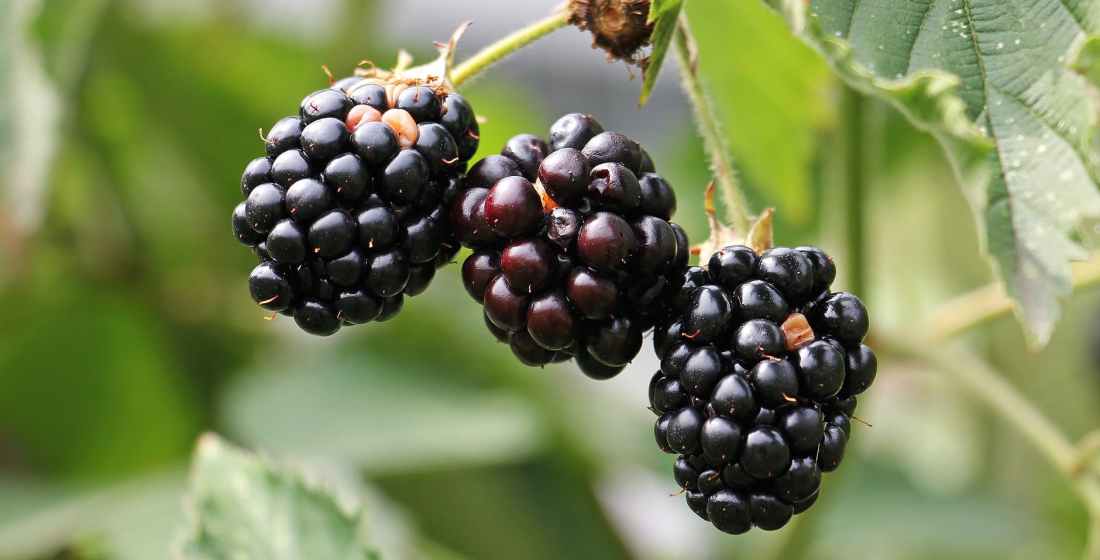
While Michaelmas Day is now on the 29th September, that was not always the case. Until the Julian calendar was dropped for the more accurate Gregorian calendar in 1752, Michaelmas used to be on the 10th October. The 10th of October is now known as Old Michaelmas Day as it has folklore of its own. According to legend, when the devil fell from heaven after fighting the archangel Michael, he fell straight into a bramble bush – which is, of course, very prickly. It’s said that the devil cursed, breathed fire, spat, and stamped all over the blackberries, making them unfit for consumption. Every year on Old Michaelmas Day the devil flies over all the bramble bushes to either spit or urinate on the blackberries, and so blackberries shouldn’t be picked after that day. In reality, blackberries begin to go bad as colder weather approaches.
‘A dark Michaelmas, a light Christmas.’
Traditional folklore saying
Michaelmas Recipes
According to folklore, the most important part of a Michaelmas feast was a roast goose as it was believed this brought good luck for the year. Even Jane Austen wrote to her sister Cassandra in 1813 that she ‘dined upon goose yesterday, which, I hope, will secure a good sale of my second edition.’ Nowadays, of course, vegetarian alternatives are available. This could be cooked with seasonal root vegetables such as honey-glazed roast carrots, honey-roasted parsnips, sweet roasted onions, and herb-infused roast potatoes. Other traditional recipes include St Michael’s bannock and Michaelmas dumplings. Nuts, blackberries, and ginger beer are also associated with Michaelmas. A few blackberry recipes for puddings include apple and blackberry crumble, blackberry and apple pie, or blackberry jam to go on the St Michael’s Bannock.
‘Eat a goose on Michaelmas Day,
Want not for money all the year.’
Traditional folklore saying
 Feminine Finishing School