Femininity in Folk Songs

If I’m honest, really this blog post is just an excuse to share some beautiful folk songs that I enjoy from different countries. However, I do think there’s something about artistic mediums such as song that makes them good at communicating energies and emotions. Below I’ve shared ten videos of folk songs. Each of them is from a different country and they all have female singers. Can you identify any common themes in femininity and womanhood across different cultures? I acknowledge that these examples are all from northern or western Europe – that is simply because it’s difficult to find songs from other countries when I don’t understand the language! If you know of any beautiful folk songs from other parts of the world, I would love to hear, so please do share them in the comments section below.

Femininity does not have to be associated with traditional cultures or the past. Those are just the songs I’ve collected here. Femininity is expressed in a diversity of ways. It is individual to every woman and does not intend to make us identical in anyway! Rather, it shares some common themes that are rooted in our shared womanhood which allow us to flourish into the women we were each created to become.

I personally love fairytales and history so look more to the past for inspiration than some of you, my sisters, may do. Although the chances are, if you’re reading this, you are probably interested in history too! I think sometimes femininity was valued more in traditional cultures than it tends to be in society today. The baby was thrown out with the bathwater, to borrow a saying. That doesn’t have to be the case, however. We can choose to learn about and reclaim our femininity. I hope you enjoy these songs.

Slovakia

Russia

Norway

England

Faroe Islands

Ireland

Poland

Sweden

Scotland

Wales

Book Review: The Young Lady’s Friend

The Young Lady’s Friend by Mrs John Farrar, otherwise known as Eliza Ware Farrar, was first published in Boston, America, in 1838. Intended as a coming-of-age guide for middle-class young ladies upon leaving school aged 15-20, the book offers guidance and advice on how they should navigate the new stage of their life in the society of the time.

Eliza Ware Farrar was born in France in 1791. During the French Revolution she left France with her family for England, where she was educated. She later moved to America, where she married her American husband in 1828, who was a professor at Harvard. Eliza Ware Farrar had several children’s books published during the 1830s, however her most important work was The Young Lady’s Friend. This was widely popular in both America and England, reprinted as late as 1880. She died in 1870, aged 78.

A lot of the book’s interest comes from its historic context and learning about the position of young ladies in the culture of the time. Some of the advice given and certain attitudes are very much outdated, showing their cultural context. However, I think there is still value to be taken from other parts of Eliza Ware Farrar’s advice. She encourages her readers to embark upon a life of constant self-improvement, founded in her Christian faith, and promotes intellectual learning alongside practical service and consideration for others. The full text is freely available online and can be read here. Below I’ve shared a selection of quotations that I thought were interesting or helpful.

On Time Management

‘By having regular hours for the different employments of the day, you will avoid the great waste of time, which is occasioned by uncertainty as to what you shall do next.’

Eliza Ware Farrar

‘If the minutes were counted, that are daily spent in idle reverie or idler talk, in thinking of setting about a task that is not relished, and in looking for things that should never have been mislaid, they would soon amount to hours, and prove sufficient to the acquisition of some elegant art, or the study of some useful science.’

Eliza Ware Farrar

‘Never use up a rainy morning in doing a variety of little jobs, and think, because you despatch a great many, you have well bestowed your time; leave small affairs for odd half-hours, and use your uninterrupted morning for something that cannot be done in half-hours.’

Eliza Ware Farrar

‘As a general rule for living neatly and saving time, it is better to keep clean than to make clean.’

Eliza Ware Farrar

On Pouring Tea

‘There is more to be learned about pouring out teas and coffee, than most young ladies are willing to believe… I have often seen persons pour out tea, who, not being at all aware that the first cup is the weakest, and that the tea grows stronger as you proceed, have bestowed the poorest cup upon the greatest stranger, and given the strongest to a very young member of the family who would have been better without any. Where several cups of equal strength are wanted, you should pour a little into each, and then go back inverting the order as you fill them up, and then the strength will be apportioned properly.’

Eliza Ware Farrar

On Hospitality

‘When friends come to see you, uninvited, do the best you can to entertain them well, but make no comment or apology; for that always sounds to your guests like a reproach for taking you unawares.’

Eliza Ware Farrar

On Nursing

‘Whatever infirmities of temper are betrayed by the sick, consider yourself bound by the charities of your office, as nurse, to bear them patiently, and never to speak of them. The only legitimate use to be made of them is that of learning to avoid similar faults, when you are yourself equally tempted.’

Eliza Ware Farrar

On Dress

‘A pure taste in dress may be gratified at a small expense; for it does not depend on the costliness of the materials employed, but on the just proportions observed in the forms, and an harmonious arrangement of colours.’

Eliza Ware Farrar

‘All styles of dress, therefore, which impede the motions of the wearer, which do not sufficiently protect the person, which add unnecessarily to the heat of summer, or to the cold of winter, which do not suit the age and occupations of the wearer, or which indicate an expenditure unsuited to her means, are inappropriate, and therefore destitute of one of the essential elements of beauty.’

Eliza Ware Farrar

‘The same honesty and self-respect… should prevent your wearing anything, even out of sight, that you would be ashamed to have seen, if sudden indisposition caused it to be exposed before strangers.’

Eliza Ware Farrar

‘If your clothes are washed every week, you only want changes enough to last two weeks; that allows you time to mend your clothes after they come out of the wash.’

Eliza Ware Farrar

On Filial Behaviour

‘It is to be feared, that some young ladies think themselves excused from the duty of filial reverence, because they are more highly educated than their parents; they have more knowledge, more refinement, and therefore they may dictate, contradict, and set up their judgements in opposition to their fathers’ and mothers’. But this is a great mistake; no superiority of culture can change the relation of child and parent, or annul the duties that grow out of it. The better your education has been, the more cause for gratitude to those who have procured for you this blessing… the more your influence is needed in the family, the more important it is, that you should not impair it,’

Eliza Ware Farrar

‘There is besides a great meanness in turning against your parents the weapons which their kindness has put in your hands. The acquirements of their children often make parents feel their own deficiencies very painfully; and nothing but the most respectful behaviour, on the part of the offspring, can lessen the mortification,’

Eliza Ware Farrar

‘The sympathy you will so often need from affectionate parents, you must abundantly repay, or you will become selfish and exacting.’

Eliza Ware Farrar

‘If you happen to be alone in your mother’s parlour when a friend of hers enters, who is a stranger to you, you should rise to receive her, as if you were mistress of the house; place a chair for her, and enter conversation with her, till your mother appears, when you may quietly withdraw, unless she so introduces you, as to indicate her wish that you should stay and make the acquaintance.’

Eliza Ware Farrar

On Brothers

‘The important relation which sisters bear to brothers cannot be fully appreciated, without a greater knowledge of the world and its temptations to young men, than girls in their teens can be supposed to possess; and therefore I would beg you to profit by my experience in this matter, and to believe me when I assure you, that your companionship and influence may be powerful agents in preserving your brothers from dissipation, in saving them from dangerous intimacies, and maintaining in their minds a high standard of female excellence.’

Eliza Ware Farrar

‘If your brothers are younger than you, encourage them to be perfectly confidential with you; win their friendship by your sympathy in all their concerns, and let them see that their interests and their pleasures are liberally provided for in the family arrangements.’

Eliza Ware Farrar

‘If you are so happy as to have elder brothers, you should be equally as assiduous in cultivating their friendship, though the advances must of course be differently made. As they have long been accustomed to treat you as a child, you may meet with some repulses when you aspire to become a companion and friend; but do not be discouraged by this. The earlier maturity of girls, will soon render you their equal in sentiment, if not in knowledge, and your ready sympathy will soon convince them of it. They will be agreeably surprised, when they find their former plaything and messenger become their quick-sighted and intelligent companion, understanding at a glance what is passing in their hearts; and love and confidence on your part will soon be repaid in kind.’

Eliza Ware Farrar

‘ Brothers and sisters may greatly aid each other in judging of their friends of the opposite sex. Brothers can throw important light on the character and merits of young men, because they see them when acting out their natures before their comrades, and relieved from the restraints of the drawing-room; and you can in return, greatly assist your brothers in coming to wise and just conclusions concerning their female friends.’

Eliza Ware Farrar

On Family

‘If your heart is right towards God, and you feel that the great business of life is the education of your immortal spirits for eternity, you will easily bear with the infirmities of others, because you will be fully impressed with a sense of your own;’

Eliza Ware Farrar

‘It is a mistake to suppose that the nearness of the relationship makes it allowable; the more intimate our connection with any one, the more necessary it is to guard ourselves against taking unwarrantable liberties. For the very reason that you are obliged to be so much together, you should take care to do nothing disagreeable to each other.’

Eliza Ware Farrar

‘Genuine politeness is a great fosterer of family love; it allays accidental irritation, by preventing harsh retorts or rude contractions; it softens the boisterous, stimulates the indolent, suppresses selfishness, and, by forming a habit of consideration for others, harmonises the whole.’

Eliza Ware Farrar

On Female Friendships

‘You can always judge better of a person’s character by her manner of talking with others, than what she addresses directly to you, and by what she says of others, than by what she says to them.’

Eliza Ware Farrar

‘Inadvertently betraying the secrets of one friend to another is a cruel injury and a fruitful source of difficulty. Do not suffer yourself to be easily bound to secrecy, for keeping a secret is a very troublesome and disagreeable thing; but, when you are thus pledged, be scrupulously faithful.’

Eliza Ware Farrar

‘Speak of yourself only to your intimate friends, and of them, let the number be very limited and very well chosen.’

Eliza Ware Farrar

‘If you would cultivate refinement of manners, you must never allow yourself to be rude or boisterous with your young companions.’

Eliza Ware Farrar

‘Whilst you strive to bear being laughed at yourself, be very careful how you inflict that pain on others. When a good-humoured laugh has involuntarily been indulged in, at the expense of one of the company, you should always try to say or do something directly after, which shall assure the person laughed at, that she has lost no esteem or regard by being the object of your merriment.’

Eliza Ware Farrar

On Gossip

‘It is very difficult, and requires all “the wisdom of the serpent and the harmlessness of the dove,” to talk of people, without violating the laws of charity or of truth; it is therefore best to avoid it.’

Eliza Ware Farrar

‘When you receive your young friends at your own house, you should consider yourself responsible for the direction which the conversation takes; and, if it is becoming uncharitable or unprofitable, you should feel bound to give it a safer and better impulse. The introduction of a beautiful annual, or portfolio of prints and drawings, will often answer the purpose;’

Eliza Ware Farrar

‘Beware lest you become a meddler, in the vain hope of being a peace-maker.’

Eliza Ware Farrar

‘Remember the liability of a letter to miscarry, to be opened by the wrong person, to be seen by other eyes than those for whom it is meant, and be very careful what you write to the disadvantage of any one.’

Eliza Ware Farrar

On Behaviour to Gentlemen

‘What a pity it is, that that thousandth chance of a gentleman becoming your lover, should deprive you of the pleasure of a free, unembarrassed, intellectual intercourse with all the single men of your acquaintance! Yet such is too commonly the case with young ladies, who have read a great many novels and romances, and whose heads are always running on love and lovers.’

Eliza Ware Farrar

‘The less your mind dwells on lovers and matrimony, the more agreeable and profitable will be your intercourse with gentlemen.’

Eliza Ware Farrar

‘Converse always with your female friends, as if a gentleman were of the party, and with young men, as if your female companions were present.’

Anonymous

‘Love, in the heart of a woman, should partake largely of the nature of gratitude; she should love, because she is already loved by one deserving her regard; and if you never allowed yourself to think of gentlemen in the light of lovers or husbands until you were asked to do so, you would escape much suffering.’

Eliza Ware Farrar

On Refusing Gentlemen

‘The offer of a man’s heart and hand, is the greatest compliment he can pay you, and, however undesirable to you those gifts may be, they should be courteously and kindly declined, and, since a refusal is, to most men, not only a disappointment, but a mortification, it should always be prevented, if possible. Men have various ways of cherishing and declaring their attachment; those who indicate the bias of their feelings in many intelligible ways, before they make a direct offer, can generally be spared the pain of a refusal.’

Eliza Ware Farrar

‘It is his secret [that you rejected a gentleman], and you have no right to tell it to anyone; but if your parents are your confidential friends on all other occasions, he will not blame you for telling them. Your young female friends should never be allowed to tease or banter you into the betrayal of this secret.’

Eliza Ware Farrar

‘If, when your own behaviour has been unexceptional, your refusal to marry a man produces resentment, it argues some fault of character in him, and can only be lamented in silence.’

Eliza Ware Farrar

‘Never think the less of a man because he has been refused, even if it be by a lady whom you do not highly value. It is nothing to his disadvantage.’

Eliza Ware Farrar

On Good Manners

‘If you wish to be a well-bred lady, you must carry your good manners everywhere with you. It is not a thing that can be laid aside and put on at pleasure… When you try to assume it for some special purpose, it will sit awkwardly upon you, and often fail you, at your utmost need.’

Eliza Ware Farrar

‘It [proper etiquette] is a trifle, compared to the more serious business of life, but still, even these trifles mark a defect of character.’

Eliza Ware Farrar

‘All unmeaning and unnecessary movements are contrary to the rules of grace and good-breeding. When not intentionally in motion, your body and limbs should be in perfect rest.’

Eliza Ware Farrar

‘Your enjoyment of a party depends far less on what you find there, than on what you carry with you.’

Eliza Ware Farrar

On Conversation

‘The frequent use of some favourite word or phrase, is a common defect in conversation, and can only be guarded against by asking your friends to point it out to you, whenever they observe such a habit; for your own ear, having become accustomed to it, may not detect it.’

Eliza Ware Farrar

‘Good conversation is one of the highest attainments of civilised society. It is the readiest way in which gifted minds exert their influence, and as such, is worthy of all consideration and cultivation.’

Eliza Ware Farrar

‘Some persons seem to forget that mere talking is not conversing; that it requires two to make a conversation, and that each must be, in turn, a listener; but no one can be an agreeable companion, who is not as willing to listen as to talk.’

Eliza Ware Farrar

Old Testament Women Timeline

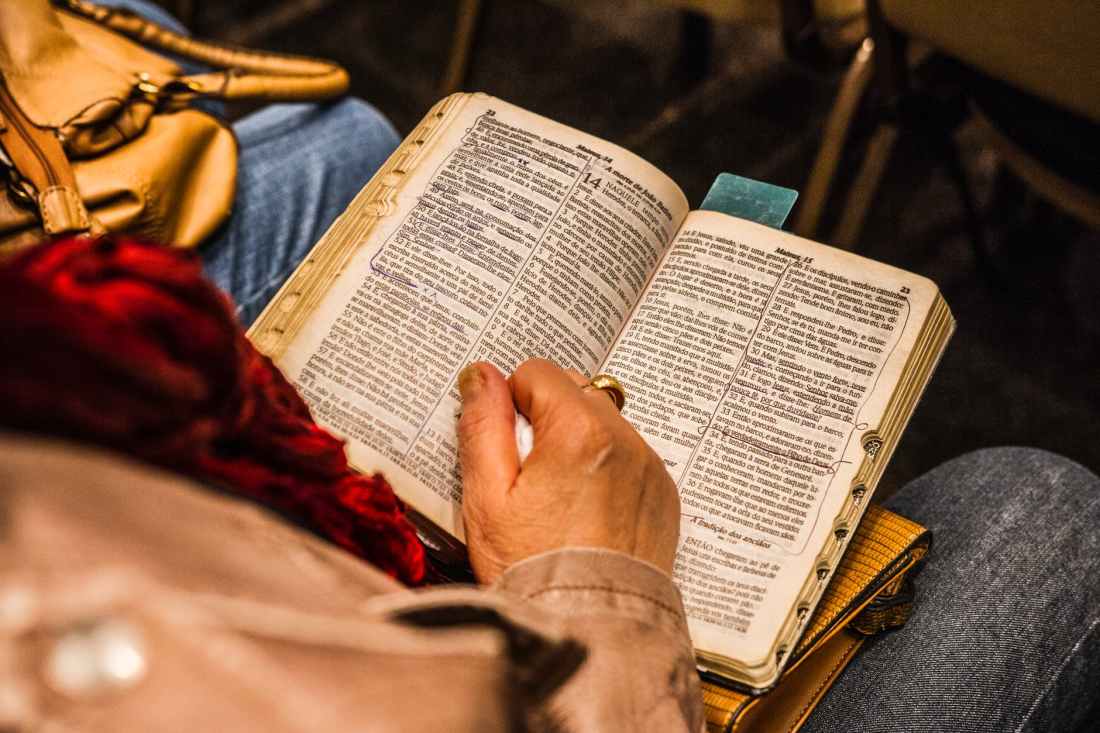
The Bible is divided into two sections. First is the Old Testament, which contains 39 smaller books and was written in the years BC (Before Christ) about the history of the Jewish people and their relationship with God. Second is the New Testament, which contains 27 smaller books and was written in the years AD (Anno Domini, meaning In the Year of Our Lord) about Jesus and His early Christian followers. The Old Testament was originally written in Hebrew and some Aramaic between about 1400 BC and 450 BC, with the earliest stories being passed down through oral tradition. The New Testament, on the other hand, was originally written in Greek between about AD 50 and AD 95. Despite spanning a massive period of time with a range of different cultures and circumstances, the total 66 books of the Bible are all part of one unified story – the story between God and His people.

The overarching narrative of the Old Testament is that humans had become separated from God because our sinful flaws were incompatible with His holy perfection. God loves us and so wants to mend the broken relationship, but time and time again throughout generations humans kept falling short. We were incapable on our own of meeting with God. We were just too broken. However, God loved us so much that He didn’t give up. He promised that one day a messiah would come and succeed where everyone else had failed. This messiah would save us and open up the way for us to be with God. The Old Testament gives us this great promise and hope – then ends on the world’s greatest cliffhanger. Who was this messiah? When would he come? How long must we wait? It leads right into the New Testament, where Jesus comes to fulfil the Old Testament prophecies.

Here I’ve given a summary and a timeline of the Old Testament. Since I’m particularly interested in the women of the Bible, I’ve also named some of the women to be found at different points in the Old Testament.

Creation Myths

Bible books: Genesis.

Unknown – Genesis chapters 1-11 tell the beginnings of creation and humanity in a way that uses deep symbolism to convey important truths about God. As such, these stories can’t be accurately dated and to try to do so is to misunderstand the literary purpose of these early chapters. We don’t need to know how old the world is. What, or rather who, we need to know is God.

Despite this, some people claim that the world was created in exactly 4004 BC, that the great flood and Noah’s ark were circa 2500 BC, and that the confusion of languages at the Tower of Babel happened circa 2400 BC. By contrast, scientists have found homo sapiens skeletons dating back nearly 200,000 years old and currently estimate the Earth to be over 4.5 billion years old. Specific dates aren’t of much relevance for these early stories.

Women of this period: Eve, Adah, Zillah, Naamah.

Ancestral History

Bible books: Genesis, possibly Job.

Circa 2000 BC – It is only from Genesis chapter 12 when the Bible shifts into ancestral history that dates can begin to be applied. It is at this point that Abraham was called by God, beginning the historical narrative of the Israelite people who would later descend from him and lead to Jesus.

Circa 1750 BC – Three generations later, Joseph (of amazing technicolor dream coat fame) had risen to become the powerful second-in-command of Egypt and his family moved to join him in Egypt.

Women of this period: Sarah, Hagar, Rebekah, Leah, Rachel, Zilpah, Bilhah, Dinah, Tamar (1), Potiphar’s wife. Possibly also Jemima, Kezia, Keren-happuch.

Israelites in Egypt

Bible books: none as the gap between Genesis and Exodus is unrecorded.

Between circa 1750 BC and circa 1550 BC – The early Israelite people remained in Egypt for the several hundred years from the end of Genesis until the beginning of Exodus. During this time they multiplied from one large family into a nation comprised of 12 tribes (descended from the original 12 brothers). In addition to the passage of time that erodes memories, Egypt was a politically tumultuous country among the ruling classes and power changed hands several times to different dynasties. These different dynasties didn’t know the history of how Joseph had helped Egypt and saw the large number of Israelite people as a threat. At some stage during this period, the Egyptians enslaved the Israelites and began abusing them terribly.

Slavery & Escape from Egypt

Bible books: Exodus.

Circa 1550 BC – Moses was called by God to lead the Israelite people out of slavery in Egypt and into the land that had been promised to Abraham and his descendants. The Pharaoh of Egypt was nothing short of a tyrant but God’s power always prevails when it is His will, so Moses led the Israelites out of Egypt and into the wilderness on a journey to the promised land.

Women of this period: Shiprah, Puah, Jochebad, Miriam, Pharoah’s daughter, Zipporah.

In the Wilderness

Bible books: Exodus, Leviticus, Numbers, Deuteronomy.

Circa 1550 BC – Moses led the constantly moaning Israelites through the wilderness and received the ten commandments along with other laws from God at Mount Sinai. However, despite having witnessed God’s power and justice in freeing them from brutal slavery in Egypt, the Israelite people were ungrateful and broke God’s laws as soon as He had given them. God sentenced the Israelites to wander in the wilderness for 40 years. They needed to get the Egypt out of them and it would be their children’s generation who would enter the promised land.

Circa 1400 BC – Moses also rebelled against God and, although God graciously allowed him to view it from a distance, was not allowed to enter the promised land. It was only after Moses’ death that the Israelites began moving into the land.

Women of this period: Miriam, Mahlah, Noah, Hoglah, Milcah, Tirzah.

Entering The Promised Land

Bible books: Joshua.

Circa 1400 BC – After Moses’ death, his protégé Joshua inherited leadership and led the Israelites into the promised land. The land was already occupied by violent city states so Joshua commanded battles to claim the land promised to them, however he failed to complete the task.

Women of this period: Rehab.

Settlement of Israel

Bible books: Judges, Ruth, 1 Samuel.

Circa 1400 BC – The next few hundred years after entering the promised land contained some of the darkest stories in Israel’s history. The Israelites began to settle the land but disobeyed God’s laws and were corrupted by the violent tribes that still remained in the land. When they rebelled against God, He allowed those violent tribes to oppress the Israelites. Then, when they repented and turned back to God, He would raise up a judge to deliver them. This pattern repeated multiple times. The land was lawless, but even within that there were stories of hope and promise.

Circa 1100 BC – Samuel was born to Hannah, who sent him to be raised by Israel’s chief priest. God began speaking to Samuel and he was recognised as a prophet. The chief priest’s sons had been disobeying God’s laws. After their deaths and the chief priest’s death, Samuel’s role as prophet meant he became the leader of Israel.

Women of this period: Deborah, Jael, Jephthah’s daughter, Samson’s mother, Delilah, the Levite’s concubine, Naomi, Orpah, Ruth, Hannah, Penninah.

Israel’s Monarchy

Bible books: 1 Samuel, 2 Samuel, 1 Kings, 1 Chronicles, 2 Chronicles, Psalms, Proverbs, Ecclesiastes, Song of Solomon

Circa 1050 BC – The Israelite people decided they needed a king because they wanted to be like all the other nations. They demanded that Samuel find a king for them. Samuel was unhappy about this but God allowed it, warning however that a king would bring consequences. At God’s direction, Samuel appointed Saul as the first king of Israel. To begin with the people were glad to have Saul as their king, but Saul soon began to disobey God. Instead God began to raise up a shepherd boy, David, and Saul in his jealousy started persecuting David.

Circa 1000 BC – After Saul killed himself, David was chosen to became the next king of Israel. At first he too seems like a good king. In many ways David was better than Saul had been, for truly loved God. However, in the end David disobeyed God too, committing adultery and murder. Although he repented, he could not undo what he had done.

970 BC – On David’s death, his son Solomon became the third king of Israel. Because Solomon was initially obedient to God he was gifted with wisdom. Israel flourished under his rule and a grand temple was built to honour God. However, Solomon then made a lot of political marriages to secure foreign alliances, disobeying God’s laws as well as displaying a lack of trust in Him. This caused his downfall because his many wives influenced him to instead worship foreign deities, which angered God.

Women of this period: Michal, Ahinoam, Abigail, the medium of En-dor, Bathsheba, Tamar (2), Abishag, the two harlot mothers, the Queen of Sheba.

A Divided Kingdom

Bible books: 1 Kings, 2 Kings, 2 Chronicles, Isaiah, Hosea, Joel, Amos, Obadiah, Jonah, Micah, Nahum, Habakkuk, Zephaniah.

931 BC – After Solomon’s death his son Rehoboam assumed the throne. Rehoboam refused to treat the Israelite people kindly, thus sparking a civil war. The 12 tribes of Israel divided into two separate kingdoms, with the northern kingdom of Israel being made up of 11 tribes and Rehoboam ruling the remaining tribe in the southern kingdom of Judah. The two kingdoms remained separated and both deteriorated as a succession of kings and queens rose and fell over the years.

Women of this period: Jezebel, Athaliah, Jehosheba, Huldah, Gomer.

Exile to Babylon

Bible books: 2 Kings, 2 Chronicles, Jeremiah, Lamentations, Ezekiel.

722 BC – Despite multiple prophets sent by God having tried to warn the Israelites to turn back to God instead of worshipping false deities and sinning against each other, the people refused to listen even after all God had done for them throughout their history. Eventually their behaviour brought consequences. Samaria in the northern kingdom of Israel was captured by the Assyrians.

605 BC – Since they had failed to learn from the example of Samaria and still refused to turn back to God, there was the first Babylonian takeover of the southern kingdom of Judah.

597 BC – The second Babylonian takeover of the southern kingdom of Judah came a few years after the first takeover.

586 BC – There was a third and final takeover of Judah, resulting in the destruction of Jerusalem and its temple by the Babylonians. The last of the Israelites were taken into exile to Babylon.

Women of this period: Aholah, Aholibah.

Return From Exile

Bible books: Ezra, Nehemiah, Esther, Daniel, Haggai, Zechariah, Malachi.

Circa 539 BC – The Persians of the Archaemenid Empire conquered Babylon, where the Israelites were held captive in exile.

538 BC – Zerubabbel and over 40,000 other Israelites were released to go back to Jerusalem following the decree of the new Persian king Cyrus.

515 BC – The Israelites finally restored their temple in Jerusalem.

486 BC to 465 BC – Xerxes I was king of Persia. It is thought that in Hebrew he was known by the name of Ahasuerus, which would make him them the king that Esther married and this the time period in which she saved her people.

457 BC – A second group of Israelites returned from exile to Jerusalem, led by Ezra.

432 BC – The third group of Israelites returned from exile, led by Nehemiah.

Women of this period: Queen Vashti, Esther.

Second Temple Period

Bible books: none as there were no prophets in the gap between the Old Testament and the New Testament.

515 BC to AD 70 – The period from the restoration of the temple in Jerusalem (following the Israelite’s return from exile) until its destruction by the Romans (which was in response to Jewish revolt) is known as the second temple period. This period overlaps with end of Old Testament and the beginning of Christianity, covering about 400 years of silence in between during which God did not speak to His people by prophets. The Old Testament was the world’s greatest cliffhanger, ending with the promise of a messiah who would save them but waiting a then unknown stretch of time for this messiah to appear.

330 BC – Empires rise and fall, but the word of the Lord endures forever. The Israelites had been captured by the Babylonians, the Babylonians were conquered by the Persians, and now the Persian Empire was defeated by Alexander the Great, who would die himself just seven years later at the age of 32.

63 BC – Israel lost independence once again after Pompey led the Siege of Jerusalem and it was conquered by the Roman Empire. This led to yet more oppression, upheaval, and social discontent while the rich got richer and the poor suffered for it.

4 BC – In a lowly stable in a village just five and a half miles from Jerusalem, a baby boy was born to a young, poor, nobody couple. They had been forced to travel far from their families just at the time when they needed that support most, and soon they would be forced to escape to Egypt as teenage refugees. The mother was the subject of scandal at home and surrounded by incriminating rumours. The father had taken a leap of faith by not breaking off their betrothal and agreeing to raise this child who was not his. Neither of them knew what they were doing. They hadn’t expected this, and they hadn’t expected to have to make this long journey at the most inconvenient of times. But this was the fulfilment of those Old Testament prophecies and promises that dated back right to the start of Genesis itself. Their baby was to be called Jesus. But that’s the story of the New Testament…