The Crisis of Masculinity

‘I have a strong feeling that masculinity is in crisis. Men are really searching for a role in modern society; the things we used to do aren’t in much demand anymore.’

Peter McAllister

Some time ago I wrote a blog post on The Undervaluing of Femininity. Whilst writing that I could reflect on my own experiences as well as those of other women and girls. For this blog post I can’t do that. Instead I’m having to rely on second-hand information. To better understand femininity I want to also understand masculinity, and this blog post is merely me processing different ideas that I’ve read or otherwise come across. The term ‘crisis of masculinity’ is thrown about far more than the undervaluing of femininity, which is generally unrecognised. What does a crisis of masculinity mean to men? Do they experience it in a similar way to how women experience an undervaluing of femininity? What does masculinity mean?

Feminism & Men

With greater gender equality and the opening of opportunities for women, masculinity can no longer be found in the rigid gender roles of the past. Unable to rely on those outdated roles, men are now having to search within themselves to come to a deeper understanding of masculinity and what it means to be a real man, instead of depending on those superficial elements. There is more flexibility and fluidity than was allowed in the past – which should be freeing, but also requires that men individually come to understand their masculinity instead of simply receiving fixed definitions from their society.

‘When I was first going on this exploration myself, right, like, I went through your classic midlife divorce, job loss, you know, my ex-wife had been pregnant, she lost the pregnancy, my entire life got cleared in a week or so, which left time for a lot of introspection. And so I started going down the wormhole of who am I as a man? And it felt like what was available to me at the time were two very different paradigms that I broke into the 1950s Marlboro man… the cowboy, the isolated, the “I don’t have any emotions”, stoic, that type of man. And then on the other side was – it felt like the swing of the pendulum that had gone too far – was this sensitive, new-age, you know and I know this is kind of mean but I’ll say it anyway, like a vegan, feminist, poet like man. And I didn’t really relate to either of them. I had a background of professional fighting and bodyguarding, and CrossFit, and very, very male stuff, but I also had gone to acupuncture school and studied Chinese medicine, and was a meditator, lived in an ashram.

‘So really I wanted to create a third option, which was the combination of the two, which was the primal – that which is in the DNA of all man. And it’s ok, the permission to give men, to say it’s ok if you want to go and f*** some s*** up in the world, if you want to fight, if you want to have desire, if you want to build things, if you want to cut down trees, classic male stuff. And yet what was so missing in so many men is this ability to feel, interpret, and be ok with emotion. Emotion and consciousness together. A responsibility of emotional intelligence, of reverence for the feminine, of reverence for nature. So the “uncivilised man” for me has those two elements together. He’s got access, I say, to his head, to his heart, and to his balls. He understands the primal, he understands when it’s time to be primal, but he also has a connection to something deeper than himself, which is consciousness or as I call it the divine.’

Traver Boehm, ‘My True North’ podcast

Masculinity & Masks

Society frequently reduces the idea of masculinity down to brute force and macho competitions. This simplification doesn’t do justice to the value and power of true masculinity. It forgets that true masculinity modifies strength with gentleness, giving purpose and meaning instead of insecure aggression or masks. Healthy masculinity cares about others and doing what is right. It is so much more than the tough, stoic façade that has historically been so damaging to human connection and mental health. Neither does healthy masculinity swing too far to other extreme of becoming a passive onlooker who stands for nothing. Real masculinity knows the values it stands for and will not compromise on integrity. It’s about the balance and combination of gentle strength. Masculinity shouldn’t deny the innate power it has, but should use that power solely for good and be unafraid of emotional vulnerability.

‘It’s almost like we as a group feel almost like animals backed into a corner. And when that happens – you know what happens – they lash out, right. They attack. And it’s counter-intuitive to the culture because the culture’s like “wait a minute, what about the patriarchy? Wait a minute, you guys are in charge. You guys are doing all the bad s***, how come you feel trapped?” Because we don’t have a place to freely express ourselves as men, and we don’t have the permission – here’s the biggie – the permission to feel our feelings… It’s about giving ourselves permission to be human.’

Traver Boehm, ‘My True North’ podcast

Rediscovering Masculinity

Historically, masculine identities tended to be linked with the gender roles of those past eras. Men were the breadwinners, the warriors, the protectors, the providers. Nowadays us women have the opportunities to win our own bread and make our own decisions. This is of course to be celebrated! Greater freedom for any group of humans is a win for humankind! If that leads to a reassessment of what masculinity stands for, then that assessment is long overdue. No identity should come from solely from work or external accomplishments. That is far too limiting and fragile a source. Instead identity – whether masculine, feminine, or individual – needs to come from intrinsically inside ourselves.

‘I need to do the work to be ok by myself, to be ok alone in a room, ok with who I am… It’s about really owning your power, owning who you are, why you’re here, and then being unapologetic about how you want to serve the world. And I use that term very specifically. How you want to serve the world. We need more men who understand that you’re here to do something. And it’s ok if you want to do something great. It’s ok if you want to step outside the box. And guess what, brother? You’re going to upset some people.’

Traver Boehm, ‘My True North’ podcast

The Oxford English Dictionary defines masculinity as ‘the assemblage of qualities regarded as characteristic of men’, which isn’t very helpful in understanding what masculinity really means. As I’ve written before, I’ve come to see healthy masculinity as embodied in the phrase gentle strength. How do you understand it? I’m interested in understanding different people’s perspectives and experiences. What do femininity and masculinity mean to you?

‘I don’t know how else to say it other than this: that men are different. Our nervous systems are different, our habit are different, our testosterone makes us different. We’re just different [to women]. And we have this collective experience that we all go through that requires us to be around other men in order to be understood, and here’s a second thing: in order to be taught.’

Traver Boehm, ‘My True North’ podcast

Learn More

How to Grow Feminine Nurture

Deciding to grow into your true femininity as a woman means choosing to become the best version of yourself. This is never a finished process but rather a life-long journey. We can always learn and improve more. Femininity is not merely a fashion style or a personality type; it’s something that runs deep in the character of what it means to be female. This doesn’t mean it necessarily comes naturally to be feminine all the time. We must overcome our selfish, lazy, greedy instincts as humans in order to tap into our higher true potential of who we were made to be. I have previously identified what I think three core traits of femininity are. The first of these is nurture – but how can we become more nurturing as women? Femininity is inseparable from nurturing because that’s what motherhood, family, friends, community, hospitality, and homemaking are all about.

Loving Hearts

To become nurturing we must first have loving hearts. We should let our hearts be soft to feel compassion and empathy for others, especially those who are more vulnerable than us. This may mean we particularly feel for children, animals, the poor, the oppressed, or people undergoing difficult circumstances or mental health struggles. We should practice putting ourselves in other people’s shoes, remembering that everyone has their own backstory and fears. I think gentleness is something we can cultivate and we can learn to find something to love in everyone around us. Once we position our heart from a place of love, that compassion will naturally begin to overflow in our everyday actions. Having a loving heart means genuinely caring for the people around us, helping them feel safe in our presence, and seeking out ways to nurture those in need.

Protective Boundaries

Having a loving heart doesn’t mean we let people take advantage of us. A loving heart must be kept safe by protective boundaries or we are of no use to anyone. We need to be able to judge and discern both people and situations so that we can continue to nurture those that matter most. Our safety comes first and we mustn’t let it be compromised. If you sense a dangerous situation, get out of there. Nurturing also means nurturing ourselves so, even if it’s not potentially harmful and they’re all good things to do, sometimes we will have to prioritise what is most important to us and say no to things. Femininity is about being strong in our gentleness, and so a gentle heart must have strong boundaries. Be kind always, but don’t let your kindness get taken advantage of or manipulated. It’s not your responsibility to help everyone. You’re not the saviour of the world. Nurture those you can, then pray for other people to reach those you can’t.

Encouraging Spirits

When you have a loving heart and protective boundaries in place, let your nurturing power touch others’ lives by communicating with an encouraging spirit. Words are impactful. They can make someone’s day or devastate them. Words last longer than just the time it takes for you to speak them, so be intentional and make sure that yours build people up. Encourage the people in your life. Lift them up, inspire them, show them who you see they could be, and support them in growing into their beautiful potential. Encouragement is in actions as well as words. Make sure that your energy and presence helps bring out the best in those around you. Reinforce positive behaviour by acknowledging it. If you have a close enough relationship that the other person feels safe with you, then hold them accountable as well and let them know you believe they can be better. Nurturing is about helping life to grow, flourish, and thrive. Try to leave everyone a little better than you found them. That is the true power of feminine nurture.

Learn More

Femininity & Critical Thinking

When we decide to focus on developing our femininity and to grow into our potential as women, it’s helpful to look for role models to inspire and motivate us. One of the wonders of the internet is that it opens up nearly the whole world to us. We can learn from people we would otherwise never have encountered and discover perspectives outside our local neighbourhood. However, the internet means that anyone can give themselves a platform, regardless of how well or poorly qualified they may be to speak on a subject. This means it’s necessary for us to discern who we choose to listen to and whether we should wholeheartedly accept everything they say as truth.

Discerning YouTube Influencers

Over the past year and a half, I’ve become aware of many people speaking about femininity on YouTube. Some of these I’ve personally disagreed with and so chosen to avoid their influence and interpretations. Others I’ve embraced and been grateful to have their encouragement speaking into my life. However, it’s important to not just accept someone’s surface façade. Helpful truth can be mixed up with unhelpful lies. If we open the door to one, the other may slip in too if we’re not on our guard. This doesn’t mean we shouldn’t listen to perspectives we disagree with. It just means we need to stay conscious of questioning the underlying narratives. I believe a key part of mature femininity is wisdom. To be truly feminine we must avoid naivety, be aware of potential manipulation, and remember to think critically.

Critique With Kindness

I don’t agree with gossip or needlessly damaging people’s reputations. However, I do think it is important to practice critical thinking and to logically evaluate the worldviews and opinions being promoted. It’s important not to spread hatred or harass figures who are speaking online and already receive abuse from internet trolls. Even if we disagree with or dislike someone’s ideology or parts of their ideology, we should still be loving towards the person behind them. There is a way to critique respectfully if we feel the need to publicly address certain issues. Love should challenge injustice and deception in order to bring about change, but it should also be kind so that we contribute towards making a better world instead of contributing towards the already all too plentiful hate.

Growing on Our Journey

We don’t know YouTubers or other such influencers personally, so our knowledge is limited. From the information available to us, we should look at the evidence and assess it for ourselves with critical thinking, with love, and with wisdom. We can come to a fair evaluation but should acknowledge that we may not necessarily be correct. Sometimes there can be a fine line between critically addressing what someone is teaching and cruelly trashing their reputation. We must be careful not to get drawn across that line. At certain points in our journey we may find it’s time to relinquish certain teachers or influencers who we found helpful earlier on in our journey but have now outgrown. It is fine to do so. Sometimes people are just there to teach us something at a certain stage of our life. Our goal is not to become like those role models but rather to become who we were made to be. We can appreciate the past but look forwards at the same time.

Feminine Finishing School

With this said, it’s right to turn the attention to this blog – Feminine Finishing School. I am not infallible. I have good intentions and try to be self-aware, but I want to remind you to never take my word or interpretations as gospel. I’m still learning and I’m only human after all. This blog is a place I can explore topics such as femininity, etiquette, and Bible study as I learn more about them myself. We’re all flawed and limited in our perspectives, although we can strive to educate ourselves on issues where we lack experience. Remember to think critically for yourself, no matter who you are listening to or what you’re reading. Be guided by your own moral compass and, if you’re Christian, through praying to God.

Sharing Female Wisdom

In a way I view my blog as a scrapbook and a place to gather interesting information, thoughts, links, and resources. I hope it can act as a library for those of you also seeking to grow as feminine women. Below I’ve shared several videos by different women who I think have wisdom to share on a range of topics. Clearly there are too many videos to listen to in one sitting, but if femininity is a topic that interests you, then this list is worth coming back to when you have time. There is much to be learnt from listening to the ideas and experiences of other women, and I wanted to share some voices you may not otherwise come across. I hope you can learn something of interest from them.

A Call to Restore Femininity

Experiences of a Muslim Woman

The Purpose of Bras

Feminine Traits of God

‘Happy African Feminism’

Dangers Facing Black Women

Female Nutrition & Sports Science

Making New Friends

Romantic Relationship Advice

Media Depictions of Femininity

The Wisdom in Women’s Fury

A Christian Girl’s Faith Journey

Women’s Need for Courage

Hagar: A Survivor Seen By God

Bible verses: Genesis 16:1-16, Genesis 21:8-21, Genesis 25:12, Galatians 4:21-31

Hagar was Sarah’s Egyptian maid and a slave whom Sarah had presumably gained during her time in Egypt. She became the mother of Ishmael with Abraham, Sarah’s husband. In the New Testament Hagar’s name is sometimes translated as Agar. The Bible doesn’t tell us anything about her early life. The first mention of Hagar is after she had already been living with Sarah and Abraham in the wilderness of Canaan for ten years. We know that she lived around 2000 BC. This was the time of the Bronze Age and the Middle Kingdom in Egypt, when pharaohs ruled with absolute power. She lived in a hard world, but Hagar was resilient and tough. She was a survivor. Her story tells that survival is possible even under the harshest conditions and that, even in those most difficult of circumstances, God sees us and cares for us. Through God, our troubles can be transformed into testimony.

A Surrogate Mother

Hagar’s mistress, Sarai (who was later renamed Sarah), longed to have a child. Since Sarai was unable to have a child of her own, she gave Hagar to her husband Abram (who was later renamed Abraham) so that Hagar could have children on her behalf. It was Sarai’s idea and Abram agreed, but there is no mention of Hagar’s opinions on the matter. Although this treatment of both Hagar and marriage was terribly wrong, it was an accepted custom of the time. In the cultures surrounding them it was thought a wife’s role was to provide children. If she was unable to have children herself, it was considered her responsibility to find another woman to have children on her behalf. Abram and Sarai had been called out of those surrounding cultures into the wilderness because God wanted to set their family apart. They were to learn God’s will so they could become a nation of priests to those surrounding cultures. However, in the context Sarai’s decision is understandable. Regardless of the rights or wrongs, Hagar and Abram slept together.

A Proud Spirit

Slavery was common in Ancient Egypt, although it wasn’t as big an enterprise as it became later on in antiquity. Slaves in Ancient Egypt were often better off than the poor peasants but that does not, of course, take away from the fact that it was still an abuse of human rights. We don’t know how Hagar ended up in her position. She may have been born into slavery, or perhaps her family sold her to pay their own debts. We can only speculate. What we do know is that Hagar may have been a slave separated from her own people and country, but she was no trampled spirit. Hagar had pride – but pride became her sin. When she found out she was pregnant, she began to despise and look down on Sarai. She had succeeded where Sarai had failed, even though Sarai was her mistress. She, Hagar, would be the mother of Abram’s only child.

In arrogance, Hagar began to lord it over Sarai and rub salt into her most vulnerable wound. For all it had been Sarai’s idea, she hadn’t anticipated this outcome. There would be no joy in sharing this child now. Instead there was only great hurt and competition. Sarai responded with jealousy. After Abram refused to intervene and told Sarai to do what she liked, Sarai began to abuse her position. She was cruel and mistreated Hagar harshly. Sarai may not have been the mother, but she was still the woman in charge! This story is so sad. It’s the first tale of female-against-female rivalry in the Bible. Instead of uniting to love the child they had longed for, they turned on each other with cruelty. For both Hagar and Sarai, their identities hung too much on the worth they thought they gained through a child. Their value didn’t depend on motherhood. God always loved them both.

Bold Before God

Hagar ran away. She had no idea where she would go but she couldn’t stay with Sarai anymore. She took off alone into the wilderness, her unborn child still within her. While Hagar was travelling to Shur, she paused at a fountain in the wilderness. It was there that the angel of the Lord met Hagar. He asked her where she had come from and where she was going. The angel must have already known what was going on, so it would appear he was asking the questions for Hagar’s benefit, asking her to reflect for herself and showing that God cared. God already knows everything, but He wants to have a relationship with us and hear from us ourselves. Hagar answered the first question, sharing where she had come from and why, but not the second question. The truth was, she didn’t know where she was going. She was lost, with no plan. The angel told Hagar to return and submit to Sarai, which was no doubt not what Hagar wanted to hear. However, the angel of the Lord promised Hagar that she would have many descendants and that her unborn child would be a son whom she was to call Ishmael because God had heard her. In Hebrew, Ishmael means ‘God hears’.

The angel of the Lord told Hagar that her son Ishmael would be a wild man and a fighter who would live in enmity with his brothers. Hagar was a survivor and it seems that her son Ishmael was to act out that trait in his own way. Hagar had been abused by her adoptive family, and Ishmael was to live in conflict with and be estranged from his family. The failings of one generation negatively impacted not only Hagar but the next generation with her son. Injustice has lasting consequences, but God then as now worked hope into the tragic human mess. Hagar had been captive, but her son Ishmael would be wild. Hagar was seen by God. Even though in the eyes of the world she was little more than a miserable slave who may as well have been invisible, the great God of Abraham knew Hagar. He saw her as infinitely precious and loved her in spite of her flaws. That realisation must have been awe-inspiring for Hagar.

Boldly, she named the God who had named her child. Hagar called God ‘Thou God seest me’, identifying a part of His character. Even when the people who are supposed to show God’s love fail, even when they sin and are hurtful, God still cares and God still hears us. Hagar is one of few people in the Bible to directly hear a covenant from God, and one of even fewer to give a name to God. She recognised God’s kindness in the privilege of this by asking in wonder, had she really there seen Him who sees her? Hagar also named the well after the encounter, which in Hebrew became known as Beer-lahai-roi. Obeying God’s directions, Hagar returned to Sarai and Abram. She must have told them of her encounter, because when gave birth to a son Abram called him Ishmael as God had told Hagar to do.

The Other Woman

Hagar continued to live with Sarai and Abram for another 14 years. During those years Ishmael had been an only child growing up in the rather confused family arrangements. However, when Ishmael was about 14 years old, Sarah and Abraham (for so they had been renamed in that time) finally had the child together that God had promised them. Ishmael didn’t think much of his new baby half-brother Isaac. No doubt he had been brought up with the rivalry of his mother Hagar and his step-mother Sarai. Ishmael mocked his baby half-brother. Sarah saw him doing so and complained to Abraham, insisting that Hagar and Ishmael must be cast out because Ishmael would not inherit along with her Isaac. This grieved Abraham because he loved his son Ishmael and was concerned for Hagar, but God told Abraham to listen to Sarah and do as she said. God told Abraham not to worry because He would make Ishmael into nation for Abraham’s sake. Early the next morning, Abraham took bread and water which he gave to Hagar and put on her shoulder himself. Hagar was sent away along with her son Ishmael.

In the Wilderness Again

Hagar wandered through wilderness of Beer-sheba with Ishmael. When she ran out of water, she hid her son in the shrubs and went to sit a long way off herself so she wouldn’t have to see him die. Hagar wept. She was alone in the desert with no hope of a future. She’d been cast out from the only family she’d known for the past 24 years. She had nowhere to go, no one to go to, and no one would even know when she died let alone mourn it. They’d been given limited resources, which had helped for a while, but now there was nothing left. Her son Ishmael was the only person she had in the world and now he was surely going to die. Her mother’s heart broke. They didn’t have enough water to make it to any habitation, and even if they did it would hardly be safe for them there. They were strangers and foreigners. She was a single woman with nothing of value to give, accompanied only by a young teenage boy. She didn’t want to think what could happen to her son, let alone her. This was the hostile Bronze age after all. The world was a wild, dangerous place. But that wasn’t something she had to worry about, because they weren’t even going to make it that far.

They were going to die right here, right now, alone. Hagar resigned herself to that fact. She already felt parched and weak from walking so far in the strong sun with not a drop of water left. She had left Ishmael in the shrubs to shade him at least a bit from the sun’s cruel heat, but there was no doubt he was going to die. The only relief she could give was to not witness it herself. She couldn’t cope with that. She just couldn’t. As Hagar sat, desolate, in the wilderness, she lifted her voice and wept. All was lost. Except it wasn’t. God heard the boy crying out and the angel of God called to Hagar out from heaven. What’s the matter, Hagar? God called. I imagine Hagar didn’t know whether to laugh or cry at that moment. What was the matter?! Wasn’t it obvious?!

God continued, telling Hagar not to fear because He had heard Ishmael’s voice where he was. It seems strange that God said he was responding to Ishmael’s voice, when the Bible has just been telling us about Hagar crying. Maybe God was trying to teach Hagar something. Hagar had sat far enough away that she couldn’t hear Ishmael, but God could still hear him. God had seen her before when she felt unseen. Now God heard Ishmael who she was trying not to hear herself. God was a God who sees. Ishmael was well named: ‘God hears’. Even when we come to the end of ourselves, God is still with us and loves us beyond measure. God told Hagar to go and lift up the boy and promised that He would make a nation of Ishmael. Then God opened her eyes to see a well of water nearby that she hadn’t seen before. Hagar filled her bottle with water from the well and gave it to Ishmael to drink. They were saved.

Matriarch of Her Own Nation

God remained with Ishmael as he grew up in the wilderness and became an archer. They lived in the wilderness of Paran. In time, when Ishmael was full-grown, Hagar took him a wife from Egypt. Finally, Hagar had agency and power of her own. They had survived alone in the wilderness against all odds with God’s help, and now God had made her the matriarch of the beginnings of her own nation. Ishmael had a wife and would found a nation, as God had promised. As the angel of the Lord had said, Ishmael became a wild survivor and fighter from a broken family. The world had abandoned them, so they must learn to survive on their own. Hagar cared for Ishmael as a single mother. However, it appears not all ties were completely severed with the family of Abraham. Abraham had lived an unusually long life. Ishmael was born when Abraham was 86 years old, Isaac was born when he was 100, and then Abraham lived to be a total of 175 years old. When Abraham eventually died, it seems the then 89-years-old Ishmael cared enough to attend Abraham’s burial along with his 75-year-old younger half-brother Isaac.

The two brothers had never got to know each other, since Hagar and Ishmael left when Isaac was still a baby. I’m curious as to what that meeting was like. Was it tense? Were they bound by a common grief? Did it finally take them a lifetime to reconcile? Or did they avoid each other as much as possible and just attend to burying their father? How did Isaac let Ishmael know that Abraham was dead? Did they know where each other lived and had they met again before? The Bible says that Ishmael’s hand would be against every man and that every man’s hand would be against him. Ishmael was a fighter who would dwell in the presence of all his brethren. That does not sound like reconciliation was an option to Ishmael. However, that is all we know. The Bible simply doesn’t say. Nor does it say whether Hagar lived to see Abraham’s funeral with her son, or whether she died before then.

Hagar’s Hope

There is one mention of Hagar in the New Testament where she is used as an allegory along with Sarah. I have written about this previously in my blog article on Sarah, so I won’t say as much here. In the allegory, Hagar the bondmaid represents this broken world and the old covenant of the Jewish people. Hagar was a survivor but there was pain and hurt in her story. The New Testament allegory points out that we no longer belong to that broken world as through Jesus Christ’s sacrifice we have been granted citizenship to the kingdom of God and a heavenly rather than the earthly Jerusalem. That doesn’t mean we won’t still suffer on earth. Even Jesus himself underwent suffering. However, the point of the allegory is that we have been granted an inheritance by God and are free through Christ instead of being slaves to other spiritual forces. Instead of being bound like Hagar the bondmaid, we can now be free like Sarah the freewoman. In other words, there is now a new hope for the Hagars of the world. God sees you, hears you, loves you, and wants you to be free in Christ.

‘And she called the name of the LORD that spake unto her, Thou God seest me: for she said, Have I also here looked after him that seeth me?’

Genesis 16:13

Learn More:

Becoming a More Feminine Woman

‘Being female is a matter of birth. Being a woman is a matter of age. Being a lady is a matter of choice.’

Anonymous

‘Do not live someone else’s idea of womanhood. Womanhood is you.’

Viola Davis

‘We start marketing to women and we start marketing to men, and it all of a sudden becomes, the aim becomes this biblical womanhood, biblical manhood. The aim isn’t that – I’m already a woman! My aim is to be a disciple of Christ. My aim is eternal communion with the triune God and one another.’

Aimee Byrd

What does it mean to become a more feminine woman? It’s been nearly one and a half years now since I started writing Feminine Finishing School and contemplating this question. I think healthy femininity comes from being strong in our gentleness and embracing both aspects of that. There are fun adornments we can add to express our femininity such as beautifying our appearance, learning etiquette, and developing creative skills, but those are not the most important part of femininity. Our first aim should be growing in Christlikeness, and then we can add extra accomplishments that match our personal expressions of femininity.

Feminine women are not separated from masculine men or anyone else. We are all humans who should strive to be true images of God. Our goal should be to develop the fruit of the Holy Spirit (Galatians 5:22-23): love, joy, peace, patience, kindness, goodness, faith, gentleness, and self-control. Most important of all is that we are living witnesses of God’s love. We should love God with all our heart, all our soul, all our mind, and all our strength, and we must love our neighbours as ourselves (Mark 12:30-31). If we don’t love, then is doesn’t matter how beautiful we may appear or how charming or sophisticated we may seem through etiquette. Love is the most important and should be the source of our femininity.

‘If I speak in the tongues of men or of angels, but do not have love, I am only a resounding gong or a clanging cymbal. If I have the gift of prophecy and can fathom all mysteries and all knowledge, and if I have a faith that can move mountains, but do not have love, I am nothing. If I give all I possess to the poor and give over my body to hardship that I may boast, but do not have love, I gain nothing.

Love is patient, love is kind. It does not envy, it does not boast, it is not proud. It does not dishonour others, it is not self-seeking, it is not easily angered, it keeps no record of wrongs. Love does not delight in evil but rejoices with the truth. It always protects, always trusts, always hopes, always perseveres.’

1 Corinthians 13:1-7

However, with that said and established as a foundation, stepping from childhood into mature femininity requires some guidance. Femininity offers a unique power of its own and is a life-long journey of self-growth. A woman is a girl who’s grown up, defined by her strength and experience, rather than someone defining themselves in opposition to men. I’ve written blog posts before about what I consider to be the keys to healthy femininity, but the question is: how is that expressed in the different stages of female experience?

The Feminine Journey

Girl, noun – ‘A female child. The counterpart of boy.’ or ‘A young or relatively young woman.’ First recoded circa 1300.

Oxford English Dictionary

Woman, noun – ‘An adult female human being. The counterpart of man.’ and ‘With specific reference to age: a female person who has reached adulthood… female person who is considered mature. Frequently contrasted with girl.’ Origins from early Old English

Oxford English Dictionary

Lady, noun – ‘Originally used as a polite form of address to a woman, especially (in early use) to one of elevated or higher social standing.’ or ‘A woman having the characteristics traditionally associated with high social standing; a refined or genteel woman.’ or ‘The female head of a household; a woman who has authority over servants.’ or ‘A woman who is the object of (especially chivalrous) love or devotion.’ Origins from early Old English.

Oxford English Dictionary

The Power of Femininity

Femininity is a woman’s power that comes from being true to herself while stepping into her life-giving qualities. A feminine woman is authentic and honest, unafraid of expressing her true self, and seeks to positively contribute to the world around her through life-giving qualities such as kindness, compassion, creativity, wisdom, and joyfulness. She seeks to improve herself to grow towards her potential, whilst having grace towards any mistakes she may have made in the past. Femininity means cultivating Christlike qualities and celebrating her existence as a woman. She aims to bring metaphorical life to the people and situations she encounters, not metaphorical death. She works to overcome death-bringing qualities such as unkindness, injustice, gossip, bullying, impatience, bitterness, and selfishness. Femininity manifests in different ways at different stages of life. It’s also expressed in diverse ways according to the individuality of each women. However, the core essence of femininity is the same: embracing the strength in your gentleness, finding authenticity through being unafraid of your vulnerabilities, and seeking to bring metaphorical life into the world.

Becoming a Good Woman

Stepping into adulthood and transitioning from a girl into a woman means learning our inner strength and accepting responsibility to take on whatever life throws at us. Being a woman means experiencing the highs and lows of life, the triumphs and failures, the love and the pain of living, and trusting we will get through somehow even when things don’t go as planned. Being a woman means having a self-assurance in knowing our self and our basic values, knowing what we will and will not compromise. It means being able to participate independently in our society, accepting adult responsibility, and caring for those we’ve been entrusted with in life.

Becoming a True Lady

Choosing to become a lady means further developing the social graces, education, consideration for others, leadership skills, knowledge of etiquette, self-awareness, and poise to become a considerate leader. Whereas a woman has embraced the power within herself to become autonomous and influence her family, a lady continually improves and refines herself and has further discovered how to influence her wider community or society. A feminine woman knows herself and positively influences her family. A feminine lady seeks to always grow herself and positively influence her wider society. Good women and ladies share the same feminine power, but true ladies have developed and expanded that feminine power to another level.

Summary

Girls are children and are led by their parents and teachers as they learn about the world around them. Women are adults and are able to lead themselves in that world. True ladies are committed to self-improvement and have learnt to lead not just themselves but also their communities towards becoming and creating a better world.

‘If’ Poems for Girls

Rudyard Kipling’s poem ‘If—’ has been highly popular and achieved cultural-artefact status in Britain. It was written around 1895 and addressed to his son, advising him on how to become a man of character and integrity. Ever since its publication in 1910, ‘If—’ has inspired many parodies or imitations. Several of these have transformed the paternal advice into poems speaking to daughters about womanhood. Some of these adaptations have more helpful messages than others.

Below I have shared the original poem and three versions addressed to girls. The first is by J P McEvoy, an American writer, who published his ‘“If” for Girls’ in 1924. The second is Elizabeth Lincoln Otis’ poem ‘An “If” for Girls’ from 1931. Finally is Irish poet Alice Kinsella’s poem ‘When’, which she wrote for International Women’s Day in 2017, and which was then performed by a group of 16 different female poets. Whilst Rudyard Kipling’s ‘If—’ is addressed to his son, the advice can perhaps equally apply to girls. Each of these writers has a different interpretation of advice for daughters, and it is interesting to note the differences.

‘If—’ by Rudyard Kipling (1895)

In writing ‘If—’ Rudyard Kipling was inspired by Scottish colonial politician Leander James Starr, who was made the scapegoat of the failed Jameson Raid that brought about the Boer War a few years later from 1899-1902. The poem is an example of Victorian-era stoicism, self-discipline, and the British cultural virtue of a stiff upper lip. It celebrates heroism, dignity, stoicism, fortitude, self-discipline, resolution, integrity, inner strength, and courage in the face of disaster.

‘If you can keep your head when all about you
Are losing theirs and blaming it on you,
If you can trust yourself when all men doubt you,
But make allowance for their doubting too;
If you can wait and not be tired by waiting,
Or being lied about, don’t deal in lies,
Or being hated, don’t give way to hating,
And yet don’t look too good, nor talk too wise:

If you can dream—and not make dreams your master;
If you can think—and not make thoughts your aim;
If you can meet with Triumph and Disaster
And treat those two impostors just the same;
If you can bear to hear the truth you’ve spoken
Twisted by knaves to make a trap for fools,
Or watch the things you gave your life to, broken,
And stoop and build ’em up with worn-out tools:

If you can make one heap of all your winnings
And risk it on one turn of pitch-and-toss,
And lose, and start again at your beginnings
And never breathe a word about your loss;
If you can force your heart and nerve and sinew
To serve your turn long after they are gone,
And so hold on when there is nothing in you
Except the Will which says to them: ‘Hold on!’

If you can talk with crowds and keep your virtue,
Or walk with Kings—nor lose the common touch,
If neither foes nor loving friends can hurt you,
If all men count with you, but none too much;
If you can fill the unforgiving minute
With sixty seconds’ worth of distance run,
Yours is the Earth and everything that’s in it,
And—which is more—you’ll be a Man, my son!’

‘If—’ by Rudyard Kipling (1895)

‘”If” for Girls’ by J P McEvoy (1924)

J P McEvoy’s ‘”If” for Girls’ seems to me to be the most similar in tone to Rudyard Kipling’s original poem, however the adaptation has messages of its own. ‘”If” for Girls’ has a more domestic and relational approach. It encourages hopefulness in all circumstances, humility, gentleness, moderation, appropriate boundaries, and a strong faith that empowers girls to assert themselves and stand up for what they believe to be right. Notably, it has a more overtly Christian perspective that points girls to seek God in all circumstances of life.

‘If you can hear the whispering about you,
And never yield to deal in whispers, too;
If you can bravely smile when loved ones doubt you,
And never doubt, in turn, what loved ones do;
If you can keep a sweet and gentle spirit
In spite of fame or fortune, rank or place,
And though you win your goal or only near it,
Can win with poise and lose with equal grace;

If you can meet with Unbelief, believing,
And hallow in your heart a simple Creed,
If you can meet Deception, undeceiving,
And learn to look to God for all you need;
If you can be what girls should be to mothers:
Chums in joy and comrades in distress,
And be unto others as you’d have the others
Be unto you – No more, and yet no less;

If you can keep within your heart the power
To say that firm, unconquerable “No”;
If you can brave a present shadowed hour,
Rather than yield to build a future woe;
If you can love, yet not let loving master,
But keep yourself within your own self’s clasp,
And not let dreaming lead you to disaster,
Nor pity’s fascination loose your grasp;

If you can lock your heart on confidences,
Nor ever needlessly in turn confide;
If you can put behind you all pretenses
Of mock humility or foolish pride:
If you can keep the simple, homely virtue
Of walking right with God – then have no fear
That anything in all the world can hurt you-
And – which is more – you’ll be a Woman, dear.’

‘”If” for Girls’ by J P McEvoy (1924)

‘An “If” for Girls’ by Elizabeth Lincoln Otis (1931)

Little is known about Elizabeth Lincoln Otis. Her poem ‘An “If” for Girls’ contains some good advice, yet it also comes across as rather patronising and sexist by today’s standards. The poem is focused on external accomplishments over inner character, promoting high requirements for some ideal of perfection. The skills it recommends are good things to learn and some of them were likely considered progressive in her own time. However, the poem’s focus remains limited to becoming a pleasing wife and good mother, prepared to accommodate the wishes of men. For example, the poem’s ideal woman should be able to dance but must not have ‘a craze for dancing’, because to have her own passionate hobbies or interests would be an inconvenience to the men in her life. Being a good wife, mother, and homemaker are admirable goals, but girls should be encouraged to explore their own interests rather than try to fit into some mould.

‘If you can dress to make yourself attractive,
Yet not make puffs and curls your chief delight;
If you can swim and row, be strong and active,
But of the gentler graces lose not sight;
If you can dance without a craze for dancing,
Play without giving play too strong a hold,
Enjoy the love of friends without romancing,
Care for the weak, the friendless and the old;

If you can master French and Greek and Latin,
And not acquire, as well, a priggish mien,
If you can feel the touch of silk and satin
Without despising calico and jean;
If you can ply a saw and use a hammer,
Can do a man’s work when the need occurs,
Can sing when asked, without excuse or stammer,
Can rise above unfriendly snubs and slurs;
If you can make good bread as well as fudges,
Can sew with skill and have an eye for dust,
If you can be a friend and hold no grudges,
A girl whom all will love because they must;

If sometime you should meet and love another
And make a home with faith and peace enshrined,
And you its soul—a loyal wife and mother—
You’ll work out pretty nearly to my mind
The plan that’s been developed through the ages,
And win the best that life can have in store,
You’ll be, my girl, the model for the sages—
A woman whom the world will bow before.’

‘An “If” for Girls’ by Elizabeth Lincoln Otis (1931)

‘When’ by Alice Kinsella (2017)

Alice Kinsella’s poem ‘When’ immediately strikes a more confident, assured tone just from the title. It is no longer a case of ‘If’ but ‘When’. Her feminist poem feels the injustices of life and recognises that daughters will be hurt, yet promotes an inner strength and fire of a fighting spirit that will never give up on what is right regardless. In her poem, women know their vulnerability as well as their power, and are supportive as a sisterhood to every other woman. Becoming a worthy woman is a process that comes more from experiencing life as a woman and refusing to give up, rather than from the specific accomplishments of other poems. Being a woman is a lived experience rather than ‘some myth of virtue’. The world unfortunately will try to break women down, but they must learn to get up again and still laugh at the days to come.

‘When you can say the words that are not listened to
But keep on saying them because you know they’re true;
When you can trust each other when all men doubt you
And from support of other women make old words new;
When you can wait, and know you’ll keep on waiting
That you’ll be lied to, but not sink to telling lies;
When you know you may hate, but not be consumed by hating
And know that beauty doesn’t contradict the wise;

When you can dream – and know you have no master;
When you can think – let those thoughts drive your aim;
When you receive desire and abuse from some Bastard
And treat both manipulations just the same;
When you hear every trembling word you’ve spoken
Retold as lies, from a dishonest heart;
When you have had your life, your body, broken
But stop, breathe, and rebuild yourself right from the start;

When you can move on but not forget your beginnings
And do what’s right no matter what the cost;
Lose all you’ve worked for, forget the aim of winning
And learn to find the victory in your loss;
When you can see every woman struggle – to
create a legacy, for after they are gone
And work with them, when nothing else connects you
Except the fight in you which says: ‘Hold on!’

When you can feel the weight of life within you
But know that you alone are just enough;
When you know not to judge on some myth of virtue
To be discerning, but not too tough;
When you know that you have to fight for every daughter
Even though you are all equal to any son;
When you know this, but still fill your days with laughter
You’ll have the earth, because you are a woman!’

‘When’ by Alice Kinsella (2017)

International Girl Guide & Girl Scout Promises

Recently I’ve been reading about Girl Guides and Girl Scouts. The World Association of Girl Guides and Girl Scouts (WAGGGS) represents ten million girls in 150 countries around the globe. All of these girls are united by making a promise and sharing core values, however the exact promise varies from country to country. I’ve looked at the Girl Guide or Girl Scout promises from eight countries: the UK, the USA, Australia, Malawi, Nigeria, Syria, India, and Portugal. I find it interesting how similar the promises and laws are even with the diversity of these cultures. They have more in common than they have things that separate them. However, there are also subtle differences that perhaps reveal something about the countries’ cultures.

God

The UK and Australia, as increasingly secular countries, have removed God from their promises to make it more inclusive to girls of different beliefs. However, they both encourage girls to learn and develop their own beliefs about spirituality. The USA has kept the wording of ‘serve God’, although they allow girls to adjust this to accommodate different beliefs. Religiously diverse India also allows the wording to be adjusted from God to Dharma if so desired. Dharma is a concept in several Indian religions about duties and the right way of living. Portugal, by contrast, as a predominantly Roman Catholic country has additional references to God in their promise and law. This includes saying they will keep their promise ‘with God’s help’ and that they will see ‘the hand of God in nature’. Malawi, Nigeria, and Syria all include ‘duty to God’ in their promises.

It’s interesting to note the differences of language such as ‘serve God’, ‘duty to God’, or ‘love God’. Before Girlguiding UK introduced its current secular promise with ‘to be true to myself and develop my beliefs’, the promise used to say ‘to love my God’ – which was the promise I made as a child. The ‘my’ meant it was inclusive to girls of different religions with different gods, although it didn’t recognise atheists or agnostics. However, the wording of ‘love’ also suggests a different relationship to God than the promise of my mother’s generation – which said ‘to do my duty to God’.

Optimism

In Australia, Girl Guides strive to be optimistic. In Nigeria, they promise to be cheerful and to smile and sing under all difficulties. Likewise in Malawi, the Guide law declares they should be ‘cheerful in all difficulties’. Interestingly, for whatever reason, there is no mention of positivity in the Girl Guide and Girl Scout promises and laws of the UK, USA, or India – despite it being a repeated theme in other countries. Yet, although not outright optimism, there is an implied hopefulness in the USA Girl Scouts striving to make the world a better place. The UK Guides also find a subtle silver lining in aiming to learn and hence move forward from the challenges that face them. Guides in Syria promise to smile under all difficulties. Presumably this must be a genuine smile, since they also promise to be truthful! Meanwhile, in Portugal girls promise that they will be ‘always cheerful’, or at least ‘with God’s help, to do my best’.

Authority

In Nigeria, Guides promise to be obedient and obey orders – although it doesn’t specify who can give these orders or what the orders might be. In Malawi Guides promise to be obedient and self-controlled, whilst in Syria and Portugal they also promise to be obedient. It’s interesting to note that these more traditional countries use the term ‘obedient’ whereas the UK, USA, and Australian promises make no such requests. In the UK, as well as in Malawi, girls promise to serve the Queen, but since the Queen is a symbolic figurehead with little political power, she only represents their country and not an actual authority figure. Girl Scouts in the USA promise to ‘respect authority’, but only after promising to ‘respect myself and others’. Girl Scouts in the USA make no promises to necessarily obey or agree with that authority, especially if it conflicts with respecting themselves or other people.

The strongest statement about authority is in India where Bulbuls (the Indian equivalent of Brownies, aged 5-10) must ‘give in to elders’ – apparently every and all elders, regardless of what they are asking. This trusts that elders won’t ask the girls to do anything harmful, which is hopefully true most of the time but not necessarily always the case. However, when the Bulbuls grow up to become Guides there is no mention in the promise or laws of them giving in to elders or obeying authority. This is presumably because by that age they’re thought to be sensible enough to judge situations for themselves, and to no longer be troublesome or obstinate little children!

Adventure

Out of the eight countries we’ve been looking at here, the UK is the only one in which the promise or law actively promotes the girls seeking adventures and challenging themselves. Guides in the UK promise to ‘face challenge and learn from her experience’, while acting in accordance to the integrity of the rest of the Guide laws. These challenges are seen as personal and positive self-growth experiences. Girl Scouts in the USA aim to be ‘courageous and strong’ with the bigger picture goal of making the world a better place. Australian Guides ‘live with courage and strength’, but may do that in their everyday lives rather than seeking out opportunities for personal challenges. Portugal has no reference to courage or adventure at all in its promise or law, aiming simply to be ‘thrifty’ and ‘pure in thought, word and deed’. Indian Guides strive to be ‘courageous’ and ‘thrifty’, whilst Guides in Nigeria and Syria also endeavour to be thrifty.

What is notable is that Malawi, Nigeria, and Syria seem to have a different understanding of courage to the UK and USA, for example. From ‘has courage and is cheerful in all difficulties’ and ‘smiles and sings under all difficulties’ it sounds like they have experienced real difficulties. Guides in these countries know the meaning of true hardship that they have to be courageous though. Perhaps they’re presented with enough challenges and don’t feel the need to seek out more. However, they likely also have fewer opportunities than their Girl Guide and Girl Scout sisters in more affluent countries.

Girl Guiding was banned in Malawi for several decades until 1995, as it was replaced by a youth movement associated with the country’s only political party. All youth organisations, including Guiding and Scouting, were banned in Syria from the 1980s because of dangerous influences from extremist groups, however since Guiding has been allowed to restart it’s successfully gained trust and credibility from the people. Girl Guides have never been banned in Nigeria, however Nigeria has had plenty of other conflict and political struggles, despite being the second most affluent country in Africa


Below I’ve shared the Girl Guide and Girl Scout promises and laws from the eight countries that I’ve talked about in this blog article. I’ve only commented on a few differences that I’ve noted between them. Can you identify any other themes of interest?

UK

Rainbows Promise (age 5-7): I promise that I will do my best to think about my beliefs and to be kind and helpful.

Promise (age 7+): I promise that I will do my best, to be true to myself and develop my beliefs, to serve the Queen and my community, to help other people and to keep the (Brownie) Guide Law.

Brownie Guide Law (age 7-10): A Brownie Guide thinks of others before herself and does a good turn every day.

Guide Law (age 10+): 1) A Guide is honest, reliable and can be trusted.
2) A Guide is helpful and uses her time and abilities wisely.
3) A Guide faces challenge and learns from her experiences.
4) A Guide is a good friend and a sister to all Guides.
5) A Guide is polite and considerate.
6) A Guide respects all living things and takes care of the world around her.

USA

Promise: On my honour, I will try:
To serve God* and my country,
To help people at all times,
And to live by the Girl Scout Law.

*Girls may substitute the word God in accordance with their own spiritual beliefs.

Girl Scout Law: I will do my best to be
honest and fair,
friendly and helpful,
considerate and caring,
courageous and strong, and
responsible for what I say and do,
and to
respect myself and others,
respect authority,
use resources wisely,
make the world a better place, and
be a sister to every Girl Scout.

Australia

Promise: I promise that I will do my best
To be true to myself and develop my beliefs
To serve my community and Australia
And live by the Guide Law.

Guide Law: As a Guide I will strive to:
Respect myself and others.
Be considerate, honest and trustworthy.
Be friendly to others.
Make choices for a better world.
Use my time and abilities wisely.
Be thoughtful and optimistic.
Live with courage and strength.

Malawi

Promise: I promise that I will do my best: To do my duty to God, To serve the Queen and my country and other people, and To keep the Guide Law.

Guide Law: 1) A Guide is loyal and can be trusted.
2) A Guide is helpful.
3) A Guide is polite and considerate.
4) A Guide is friendly and a sister to all Guides.
5) A Guide is kind to animals and respects all living things.
6) A Guide is obedient.
7) A Guide has courage and is cheerful in all difficulties.
8) A Guide makes good use of her time.
9) A Guide takes care of her own possessions and those of other people.
10) A Guide is self-controlled in all she thinks, says and does.

Nigeria

Brownie Promise (age 7-10): I promise to do my best: To do my duty to God and my country, To help other people every day, especially those at home.

Brownie Law (age 7-10): 1) A Brownie is truthful, obedient and cheerful.
2) A Brownie thinks of others before herself.

Promise (age 10+): I promise, on my honour, to do my best: To do my duty to God and my country, To help other people at all times, and To obey the Guide Law.

Guide Law (age 10+): 1) A Guide’s honour is to be trusted.
2) A Guide is loyal.
3) A Guide’s duty is to be useful and to help others.
4) A Guide is a friend to all, and a sister to every other Guide.
5) A Guide is courteous.
6) A Guide is a friend to animals.
7) A Guide obeys orders.
8) A Guide smiles and sings under all difficulties.
9) A Guide is thrifty.
10) A Guide is pure in thought, word and deed.

Syria

Promise: On my honour, I promise that I will do my best to do my duty to God and my country, to help others and to obey the Girl scout/Girl Guides law.

Guide Law: 1) A girl scout is truthful.
2) A girl scout is loyal.
3) A girl scout is useful.
4) A girl scout is a brother to all other girl scouts.
5) A girl scout is courteous.
6) A girl scout is a friend to the environment.
7) A girl scout is obedient.
8) A girl scout smiles under all difficulties.
9) A girl scout is thrifty.
10) A girl scout is pure in thought in word and in deed.
11) A girl scout’s honour is to be trusted and relied on.

India

Bulbul Promise (age 5-10): I promise to do my best: To do my duty to God* and my country, To keep the Law of the Bulbul flock and To do a good turn every day.

*The word Dharma can be substituted for God if so desired.

Bulbul Law (age 5-10): 1) The Bulbul gives in to the elders.
2) The Bulbul is clean and courteous.

Promise (age 10+): On my honour, I promise that I will do my best: To do my duty to God* and my country, To help other people, and To obey the Guide Law.

*The word Dharma can be substituted for God if so desired.

Guide Law (age 10+): 1) A Guide is trustworthy.
2) A Guide is loyal.
3) A Guide is a friend to all and a sister to every other Guide.
4) A Guide is courteous.
5) A Guide is a friend to animals and loves nature.
6) A Guide is disciplined and helps protect public property.
7) A Guide is courageous.
8) A Guide is thrifty.
9) A Guide is pure in thought, word and deed.

Portugal

Little Bird Promise (age 6-10): A Little Bird is obedient. A Little Bird is always clean and tidy. A Little Bird is cheerful. A Little Bird always tells the truth.

Promise (age 10+): I promise, on my honour and with God’s help, to do my best: To do my duty to God and country, To help other people at all times, and Obey the Guide Law.

Guide Law (age 10+): 1) A Guide’s honour is sacred, and her word worthy of complete trust.
2) A Guide is loyal.
3) A Guide is useful and does a good deed every day.
4) A Guide is a friend to all and a sister to every other Guide.
5) A Guide is kind and courteous.
6) A Guide sees the hand of God in nature and protects plants and animals.
7) A Guide is obedient.
8) A Guide is always cheerful.
9) A Guide is thrifty, likes good order and respects the property of others.
10) A Guide is pure in thought, word and deed.

Girlguiding UK

‘It’s kind of like a little sisterhood. It feels like family but it’s outside of your actual family.’

Emma Tinson

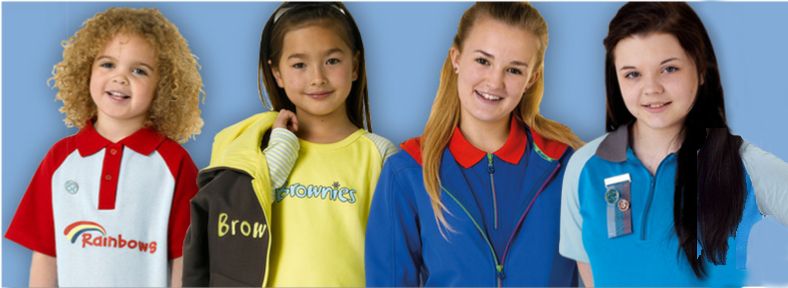
Girlguiding is the UK’s largest girls-only youth organisation, empowering over 400,000 girls and young women across its age groups. First established in 1910, Girlguiding is now over one hundred years old. When the official founder of both the Girl Guides and the Boy Scouts (Robert Baden-Powell) was asked who had started the movement (since his sister Agnes Baden-Powell was closely involved as joint-founder), he declared that the girls had, in fact, ‘started themselves’. Girl-led decision making has remained an important value in the organisation ever since.

In 2010, 50% of women in the UK had been involved in Girlguiding at some stage in their life. This may have been in one of Girlguiding’s four age sections – Rainbows, Brownies, Guides, and Rangers – or as a volunteer or Guider. Most girls who have been involved in Girlguiding say that it has had a massive positive impact on them and their life. Some famous former Girl Guides include Queen Elizabeth II, Princess Margaret, author and philanthropist JK Rowling, Nobel Prize chemist Dorothy Hodgkin, Olympic athlete Dame Kelly Holmes, actress Emma Thompson, Paralympian swimmer Ellie Simmonds, television presenter Clare Balding, actress and television presenter Cat Deeley, politician and former Paralympian medalist Tanni Grey-Thompson, and many others.

Although started in the UK, the Girlguiding movement has been so popular that it’s spread across the globe. The World Association of Girl Guides and Girl Scouts (WAGGGS) now represents ten million girls in 150 different countries. It is the world’s only movement open to every girl and any girl, sharing the same core values as a sisterhood. WAGGGS supports and encourages these girls and young women to reach their full potential as leaders and active citizens of the world. This includes fun, adventure, friendship, and the space to discover their potential.

‘[Through Girlguiding, girls] go to their first ever sleepover, canoe on rivers, learn about body confidence, and lead their own camp. Or sometimes they simply have fun and try new things with friends. Girls take what they do in guiding with them as they grow up. Everything from working in a team, to taking the lead, to speaking out on issues they care about. It helps them develop the skills and confidence to become the young women they want to be. And to make a difference to the world around them.’

Girlguiding UK website

Rainbows

The youngest section of Girlguiding, Rainbows are aged five to seven. It’s a fun and exciting programme all about developing self-confidence, building friendships, learning new things and having fun. Girls get their hands dirty with arts and crafts, get in touch with nature, and play games – it’s all about learning by doing. Rainbows were started in 1987 after pilot groups had been a success. The name Rainbows was chosen to unite the diversity of uniform colours that had developed among the pilot groups, as well as being fun and colourful like the young girls.

Brownies

The largest and most popular section, Brownies are aged seven to ten. It’s about trying new things that teach girls about themselves, their community, and their world. Brownies introduces girls to a world of new opportunities, challenges, and fun. Girls go along to camps, holidays, day trips, and sleepovers. They get together with their friends at regular meetings where they learn new hobbies, get creative, develop skills, and have outdoor adventures. Brownies was set up in 1914 after the younger sisters of Guides wanted to join, but were too young to keep up with the long ‘field days’ of their elder sisters. At first they were called Rosebuds but the girls didn’t like that and demanded a new name! Instead they became Brownies, named after the magical creatures of folk tales that did secret good deeds when no one was looking.

Guides

The original section of Girlguiding and the one from which the other sections have expanded, Guides are aged ten to 14. It’s an exciting and varied programme designed to inspire and challenge girls. Guides take part in lots of exciting activities at regular meetings as well as at special events and on trips away. They have different badges and awards that help them learn new skills and try new challenges, some of which they can do on their own and others they’ll do in groups at their regular unit meetings. Girl Scouts had existed from the earliest days of the Scouting movement in 1907. They were then officially set up as the Girl Guides in 1910, after several hundred girls decided to gatecrash a Boy Scout rally at Crystal Palace in London. Generations of girls since have been glad that they did! They were named Guides after the pioneering Guides of India, by whom Robert Baden-Powell had been greatly impressed.

Rangers

The eldest section, Rangers are aged 14 to 18. It’s all about taking the lead and finding new challenges. As girls prepare for adulthood, Rangers gives them the opportunities to try new things, have fun, travel the world, learn to lead, raise their voice, and give something back to their community, whilst also building an incredible CV through gaining skills and awards. Senior Guides were first set up in 1917 to deal with girls who were outgrowing Guides but didn’t want to leave. They became known as Rangers in 1920 to create a distinct identity for them and to separate them from the Guides, allowing the younger girls the chance to lead for themselves. They were named Rangers because this reflected the desire for them to range wide and explore a larger area than the younger girls could, both physically and intellectually.

‘When you are a Guide, you see the ones [leaders] that are the younger ones, so they’re in their twenties, and you look up to them. “Oh that’s what I would like to be like if I was that age,” and the things that they’re doing seem so fun when you’re that age because that’s what you want to be able to do yourself. But I think that also, with the older ones [leaders] it’s a mother figure or sometimes even a grandma figure, and it’s just a different group of people to speak to that aren’t connected to your school and they aren’t your family. And I think that when you’re going through all those things you feel as a teenage girl, having someone that’s completely unconnected to the rest of your life to speak to about those things – especially in Guides some of the younger leaders, they’re only actually three or four years older than you… and they can kind of influence you without them appearing to give you advice because you look at them almost as a friend.’

Cat Talbot

Harvest Festival Traditions

In the UK, the Harvest Festival or Harvest Thanksgiving is held on the Sunday closest to the Harvest Moon. The Harvest Moon is the full moon closest to the autumnal equinox on the 21st September. This year, in 2020, the Harvest Moon is on the 1st October and hence the Harvest Festival is on the following Sunday, the 4th October 2020. To find out what date it will be on in any other year, you can check when the full moon will be on a lunar calendar, which you can easily find online.

The end of harvest has been a momentous occasion for all farming communities around the world ever since the agricultural revolution, which took place around 10,000 BC. A good harvest promised plenty of food and survival through the harsh winter months. It was the cumulation of the whole year’s hard work and hence worthy of a celebration. It’s only since the Second Agricultural Revolution in the 18th century and then the Industrial Revolution a mere 200 years ago that people have come to be distanced from agricultural production.

Farming was introduced to the British Isles between 5000 BC and 4500 BC, having spread from its origins in Syria and Iraq several thousand years earlier. It then took a further 2,000 years for farming to extend across the British Isles, with hunter-gatherer and agricultural communities living alongside each other. Farming remained the dominant occupation, involving nearly all the population, for the next several thousand years. Following the aforementioned Second Agricultural Revolution in Britain, food productivity increased and fewer people had to be involved in farming.

By 1850, only 22% of the British population were involved in farming, which at that point was the smallest proportion of the population of any country in the world. Nowadays just 1.5% of the UK’s workforce is employed in the agricultural industry. The UK produces less than 60% of the food it consumes. Given this, it’s hardly surprising that in our urbanising society people feel increasingly separated from the natural rhythms of the seasons, lacking the common knowledge of our forebears. With supermarkets stocking out-of-season, plastic-packaged, instant food all year round, those of us living in affluent, comfortable countries are at risk of taking it all for granted. I think the Harvest Festival can be an important way for us to reconnect with our roots and practice appreciation for the bounteous gifts that nature provides us.

‘Come, ye thankful people, come,
Raise the song of harvest home!
All is safely gathered in,
Ere the winter storms begin;
God, our Maker, doth provide
For our wants to be supplied;
Come to God’s own temple, come;
Raise the song of harvest home!

First verse of ‘Come, Ye Thankful People, Come’ by Henry Alford (1844)

Harvest Revelry

The start of harvest season was traditionally celebrated with the Christian holiday of Lammas at the beginning of August. After about two months of hard labour, the bringing in of the final harvest was celebrated with the Harvest Festival around the end of September or early October. Thanks has been given for successful harvests in Britain since pagan times. With the arrival of the good news about Jesus Christ, these festivals turned to thanking and praising God for the harvest. By the 16th century there were established traditions about bringing in the last harvest.

Harvest Races

Farmers and their workers would race neighbouring farms not to be the last to finish cutting the corn, as that was considered bad luck – and it brought some competitive fun. Different regions had different customs for cutting the very last patch of corn or wheat. Some areas would cut this last patch, called the ‘Mell’, by throwing their scythes at it. Others would instead have the workers taking turns to be blindfolded and swing their scythes at it until it was all down. No doubt this was all accompanied with plenty of shouting, laughter, and good-natured banter.

The Hock Cart

The last wagon bringing home the harvest was called the hock cart. Both the hock cart and the horses pulling it would be decorated with flower garlands and ribbons. It would be accompanied with a merry procession of all the farm workers, which in those days would include families from nearly the whole local community. These would give songs, rhymes, and shouts of ‘hooky, hooky’ (or ‘hocky’, ‘hoakey’, ‘ or ‘horkey’ depending on which part of the country it was). In some parts of the country, local people would pelt the hock cart – and no doubt the farm workers as well – with buckets of water as a sign that it didn’t matter if it rained now that the harvest was in. I can imagine that easily turning into a water fight. There would be blessings and prayers for the harvest as well as merriment and festivities. Church bells would be rung, a seed cake known as a hoky cake would be distributed among the farm workers, and each region would have their own ceremonies and rituals.

Harvest Supper

Until the 20th century, most farmers celebrated the end of harvest with a big harvest supper, to which everyone who had helped with the harvest was invited. This was when they could taste the fruits of their labour, a celebratory time of generosity and abundance. The harvest supper would be accompanied by plenty of revelry, singing, games, and social barn dancing. It was essentially a big party. A corn dolly would be sat in the place of honour at the harvest supper table. It would then spend winter in the farmer’s home before being ploughed into the first furrow of the new season for good luck.

Corn Dollies & Countryman’s Favours

Corn dollies were made from plaiting and weaving together strands of wheat, oats, barley, or rye from the last sheaf of harvest. There are different styles of corn dollies named after the various parts of the country they originated from. Some designs are more complicated than others, but the simple loop or two of a basic corn dolly, tied with a pretty ribbon, was an easy rural craft that I enjoyed making as a child. A variation of a corn dolly is a countryman’s favour. This was a plait of straws loosely tied into a knot representing a heart. The idea was that a young man working in the fields would make a countryman’s favour from straws he picked up at the end of harvest, which he would then present to the young woman he loved. If she was wearing it next to her heart the next time he saw her, he would know that his love was reciprocated.

‘We ourselves are God’s own field,
Fruit unto his praise to yield;
Wheat and tares together sown
Unto joy or sorrow grown;
First the blade and then the ear,
Then the full corn shall appear;
Grant, O harvest Lord, that we
Wholesome grain and pure may be.’

Second verse of ‘Come, Ye Thankful People, Come’ by Henry Alford (1844)

Churches & Charity

The British tradition of celebrating the Harvest Festival of Thanksgiving in churches began in 1843. It was started by the Cornish vicar Robert Hawker, who invited his parishioners to a special church service to give thanks and celebrate the harvest. The idea was well received and spread across the country. Harvest-themed hymns also helped popularise his idea of Harvest Festival. The tradition of decorating churches with home-grown fruit, vegetables, and flowers continues to this day. Churches and schools also collect tinned or otherwise long-lasting food to distribute among the poor through food banks and homeless shelters.

As British people have come to rely more on imported food rather than home-grown produce, there has been a shift in emphasis with Harvest Festivals. They now increasingly link Harvest Festival with an awareness of food poverty and concern for people in developing countries for whom growing sufficient crops remains a struggle. Many churches engage with international development and relief charities to learn more about those in need around the world. Some churches and villages still have harvest suppers, which are often organised as charity fund-raising events.

‘For the Lord our God shall come,
And shall take the harvest home;
From His field shall in that day
All offences purge away,
Giving angels charge at last
In the fire the tares to cast;
But the fruitful ears to store
In the garner evermore.’

Third verse of ‘Come, Ye Thankful People, Come’ by Henry Alford (1844)

Harvest Supper Ideas

Harvest suppers were traditionally a shared meal for all farm workers and their families. Nowadays you could arrange one for your extended family and friends, or even organise a fund-raising event in your local community. You could learn some English country dances together, roping in your friends with musical skills, or create some rural crafts such as corn dollies. For a fund-raising event, you could even invite someone to give a short talk about a relevant topic such as the environment or an international charity. Try to cook with local, seasonal ingredients.

During late September and early October in the UK, fresh seasonal produce includes: apples, artichoke, aubergine, blackberries, beetroot, broccoli, brussels sprouts, butternut squash, carrots, cauliflower, celery, celeriac, chicory, chillies, courgettes, cucumber, damsons, elderberries, fennel, figs, garlic, grapes, kale, leeks, lettuce, marrow, melon, nectarines, onions, parsnips, pears, peas, peppers, plums, potatoes, pumpkins, rocket, radishes, runner beans, spring greens, spring onions, summer squash, sweetcorn, swedes, swiss chard, tomatoes, turnips, watercress, wild mushrooms, and more!

‘Then, thou Church triumphant come,
Raise the song of harvest home!
All be safely gathered in,
Free from sorrow, free from sin,
There, forever purified,
In God’s garner to abide;
Come, ten thousand angels, come,
Raise the glorious harvest home!’

Fourth verse of ‘Come, Ye Thankful People, Come’ by Henry Alford (1844)