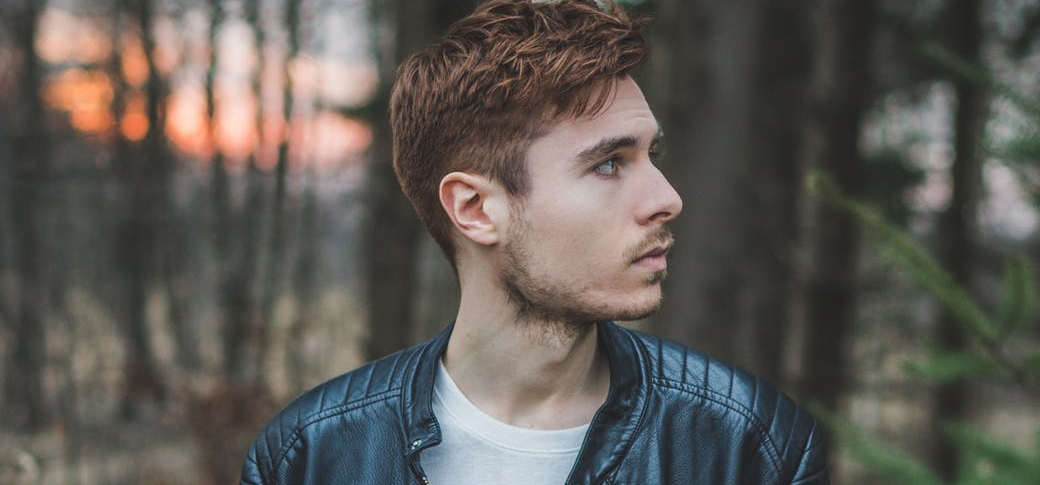
‘I have a strong feeling that masculinity is in crisis. Men are really searching for a role in modern society; the things we used to do aren’t in much demand anymore.’
Peter McAllister
Some time ago I wrote a blog post on The Undervaluing of Femininity. Whilst writing that I could reflect on my own experiences as well as those of other women and girls. For this blog post I can’t do that. Instead I’m having to rely on second-hand information. To better understand femininity I want to also understand masculinity, and this blog post is merely me processing different ideas that I’ve read or otherwise come across. The term ‘crisis of masculinity’ is thrown about far more than the undervaluing of femininity, which is generally unrecognised. What does a crisis of masculinity mean to men? Do they experience it in a similar way to how women experience an undervaluing of femininity? What does masculinity mean?
Feminism & Men
With greater gender equality and the opening of opportunities for women, masculinity can no longer be found in the rigid gender roles of the past. Unable to rely on those outdated roles, men are now having to search within themselves to come to a deeper understanding of masculinity and what it means to be a real man, instead of depending on those superficial elements. There is more flexibility and fluidity than was allowed in the past – which should be freeing, but also requires that men individually come to understand their masculinity instead of simply receiving fixed definitions from their society.
‘When I was first going on this exploration myself, right, like, I went through your classic midlife divorce, job loss, you know, my ex-wife had been pregnant, she lost the pregnancy, my entire life got cleared in a week or so, which left time for a lot of introspection. And so I started going down the wormhole of who am I as a man? And it felt like what was available to me at the time were two very different paradigms that I broke into the 1950s Marlboro man… the cowboy, the isolated, the “I don’t have any emotions”, stoic, that type of man. And then on the other side was – it felt like the swing of the pendulum that had gone too far – was this sensitive, new-age, you know and I know this is kind of mean but I’ll say it anyway, like a vegan, feminist, poet like man. And I didn’t really relate to either of them. I had a background of professional fighting and bodyguarding, and CrossFit, and very, very male stuff, but I also had gone to acupuncture school and studied Chinese medicine, and was a meditator, lived in an ashram.
‘So really I wanted to create a third option, which was the combination of the two, which was the primal – that which is in the DNA of all man. And it’s ok, the permission to give men, to say it’s ok if you want to go and f*** some s*** up in the world, if you want to fight, if you want to have desire, if you want to build things, if you want to cut down trees, classic male stuff. And yet what was so missing in so many men is this ability to feel, interpret, and be ok with emotion. Emotion and consciousness together. A responsibility of emotional intelligence, of reverence for the feminine, of reverence for nature. So the “uncivilised man” for me has those two elements together. He’s got access, I say, to his head, to his heart, and to his balls. He understands the primal, he understands when it’s time to be primal, but he also has a connection to something deeper than himself, which is consciousness or as I call it the divine.’
Traver Boehm, ‘My True North’ podcast
Masculinity & Masks
Society frequently reduces the idea of masculinity down to brute force and macho competitions. This simplification doesn’t do justice to the value and power of true masculinity. It forgets that true masculinity modifies strength with gentleness, giving purpose and meaning instead of insecure aggression or masks. Healthy masculinity cares about others and doing what is right. It is so much more than the tough, stoic façade that has historically been so damaging to human connection and mental health. Neither does healthy masculinity swing too far to other extreme of becoming a passive onlooker who stands for nothing. Real masculinity knows the values it stands for and will not compromise on integrity. It’s about the balance and combination of gentle strength. Masculinity shouldn’t deny the innate power it has, but should use that power solely for good and be unafraid of emotional vulnerability.
‘It’s almost like we as a group feel almost like animals backed into a corner. And when that happens – you know what happens – they lash out, right. They attack. And it’s counter-intuitive to the culture because the culture’s like “wait a minute, what about the patriarchy? Wait a minute, you guys are in charge. You guys are doing all the bad s***, how come you feel trapped?” Because we don’t have a place to freely express ourselves as men, and we don’t have the permission – here’s the biggie – the permission to feel our feelings… It’s about giving ourselves permission to be human.’
Traver Boehm, ‘My True North’ podcast
Rediscovering Masculinity
Historically, masculine identities tended to be linked with the gender roles of those past eras. Men were the breadwinners, the warriors, the protectors, the providers. Nowadays us women have the opportunities to win our own bread and make our own decisions. This is of course to be celebrated! Greater freedom for any group of humans is a win for humankind! If that leads to a reassessment of what masculinity stands for, then that assessment is long overdue. No identity should come from solely from work or external accomplishments. That is far too limiting and fragile a source. Instead identity – whether masculine, feminine, or individual – needs to come from intrinsically inside ourselves.
‘I need to do the work to be ok by myself, to be ok alone in a room, ok with who I am… It’s about really owning your power, owning who you are, why you’re here, and then being unapologetic about how you want to serve the world. And I use that term very specifically. How you want to serve the world. We need more men who understand that you’re here to do something. And it’s ok if you want to do something great. It’s ok if you want to step outside the box. And guess what, brother? You’re going to upset some people.’
Traver Boehm, ‘My True North’ podcast
The Oxford English Dictionary defines masculinity as ‘the assemblage of qualities regarded as characteristic of men’, which isn’t very helpful in understanding what masculinity really means. As I’ve written before, I’ve come to see healthy masculinity as embodied in the phrase gentle strength. How do you understand it? I’m interested in understanding different people’s perspectives and experiences. What do femininity and masculinity mean to you?
‘I don’t know how else to say it other than this: that men are different. Our nervous systems are different, our habit are different, our testosterone makes us different. We’re just different [to women]. And we have this collective experience that we all go through that requires us to be around other men in order to be understood, and here’s a second thing: in order to be taught.’
Traver Boehm, ‘My True North’ podcast


 Feminine Finishing School