Book Review: The Young Lady’s Friend

The Young Lady’s Friend by Mrs John Farrar, otherwise known as Eliza Ware Farrar, was first published in Boston, America, in 1838. Intended as a coming-of-age guide for middle-class young ladies upon leaving school aged 15-20, the book offers guidance and advice on how they should navigate the new stage of their life in the society of the time.

Eliza Ware Farrar was born in France in 1791. During the French Revolution she left France with her family for England, where she was educated. She later moved to America, where she married her American husband in 1828, who was a professor at Harvard. Eliza Ware Farrar had several children’s books published during the 1830s, however her most important work was The Young Lady’s Friend. This was widely popular in both America and England, reprinted as late as 1880. She died in 1870, aged 78.

A lot of the book’s interest comes from its historic context and learning about the position of young ladies in the culture of the time. Some of the advice given and certain attitudes are very much outdated, showing their cultural context. However, I think there is still value to be taken from other parts of Eliza Ware Farrar’s advice. She encourages her readers to embark upon a life of constant self-improvement, founded in her Christian faith, and promotes intellectual learning alongside practical service and consideration for others. The full text is freely available online and can be read here. Below I’ve shared a selection of quotations that I thought were interesting or helpful.

On Time Management

‘By having regular hours for the different employments of the day, you will avoid the great waste of time, which is occasioned by uncertainty as to what you shall do next.’

Eliza Ware Farrar

‘If the minutes were counted, that are daily spent in idle reverie or idler talk, in thinking of setting about a task that is not relished, and in looking for things that should never have been mislaid, they would soon amount to hours, and prove sufficient to the acquisition of some elegant art, or the study of some useful science.’

Eliza Ware Farrar

‘Never use up a rainy morning in doing a variety of little jobs, and think, because you despatch a great many, you have well bestowed your time; leave small affairs for odd half-hours, and use your uninterrupted morning for something that cannot be done in half-hours.’

Eliza Ware Farrar

‘As a general rule for living neatly and saving time, it is better to keep clean than to make clean.’

Eliza Ware Farrar

On Pouring Tea

‘There is more to be learned about pouring out teas and coffee, than most young ladies are willing to believe… I have often seen persons pour out tea, who, not being at all aware that the first cup is the weakest, and that the tea grows stronger as you proceed, have bestowed the poorest cup upon the greatest stranger, and given the strongest to a very young member of the family who would have been better without any. Where several cups of equal strength are wanted, you should pour a little into each, and then go back inverting the order as you fill them up, and then the strength will be apportioned properly.’

Eliza Ware Farrar

On Hospitality

‘When friends come to see you, uninvited, do the best you can to entertain them well, but make no comment or apology; for that always sounds to your guests like a reproach for taking you unawares.’

Eliza Ware Farrar

On Nursing

‘Whatever infirmities of temper are betrayed by the sick, consider yourself bound by the charities of your office, as nurse, to bear them patiently, and never to speak of them. The only legitimate use to be made of them is that of learning to avoid similar faults, when you are yourself equally tempted.’

Eliza Ware Farrar

On Dress

‘A pure taste in dress may be gratified at a small expense; for it does not depend on the costliness of the materials employed, but on the just proportions observed in the forms, and an harmonious arrangement of colours.’

Eliza Ware Farrar

‘All styles of dress, therefore, which impede the motions of the wearer, which do not sufficiently protect the person, which add unnecessarily to the heat of summer, or to the cold of winter, which do not suit the age and occupations of the wearer, or which indicate an expenditure unsuited to her means, are inappropriate, and therefore destitute of one of the essential elements of beauty.’

Eliza Ware Farrar

‘The same honesty and self-respect… should prevent your wearing anything, even out of sight, that you would be ashamed to have seen, if sudden indisposition caused it to be exposed before strangers.’

Eliza Ware Farrar

‘If your clothes are washed every week, you only want changes enough to last two weeks; that allows you time to mend your clothes after they come out of the wash.’

Eliza Ware Farrar

On Filial Behaviour

‘It is to be feared, that some young ladies think themselves excused from the duty of filial reverence, because they are more highly educated than their parents; they have more knowledge, more refinement, and therefore they may dictate, contradict, and set up their judgements in opposition to their fathers’ and mothers’. But this is a great mistake; no superiority of culture can change the relation of child and parent, or annul the duties that grow out of it. The better your education has been, the more cause for gratitude to those who have procured for you this blessing… the more your influence is needed in the family, the more important it is, that you should not impair it,’

Eliza Ware Farrar

‘There is besides a great meanness in turning against your parents the weapons which their kindness has put in your hands. The acquirements of their children often make parents feel their own deficiencies very painfully; and nothing but the most respectful behaviour, on the part of the offspring, can lessen the mortification,’

Eliza Ware Farrar

‘The sympathy you will so often need from affectionate parents, you must abundantly repay, or you will become selfish and exacting.’

Eliza Ware Farrar

‘If you happen to be alone in your mother’s parlour when a friend of hers enters, who is a stranger to you, you should rise to receive her, as if you were mistress of the house; place a chair for her, and enter conversation with her, till your mother appears, when you may quietly withdraw, unless she so introduces you, as to indicate her wish that you should stay and make the acquaintance.’

Eliza Ware Farrar

On Brothers

‘The important relation which sisters bear to brothers cannot be fully appreciated, without a greater knowledge of the world and its temptations to young men, than girls in their teens can be supposed to possess; and therefore I would beg you to profit by my experience in this matter, and to believe me when I assure you, that your companionship and influence may be powerful agents in preserving your brothers from dissipation, in saving them from dangerous intimacies, and maintaining in their minds a high standard of female excellence.’

Eliza Ware Farrar

‘If your brothers are younger than you, encourage them to be perfectly confidential with you; win their friendship by your sympathy in all their concerns, and let them see that their interests and their pleasures are liberally provided for in the family arrangements.’

Eliza Ware Farrar

‘If you are so happy as to have elder brothers, you should be equally as assiduous in cultivating their friendship, though the advances must of course be differently made. As they have long been accustomed to treat you as a child, you may meet with some repulses when you aspire to become a companion and friend; but do not be discouraged by this. The earlier maturity of girls, will soon render you their equal in sentiment, if not in knowledge, and your ready sympathy will soon convince them of it. They will be agreeably surprised, when they find their former plaything and messenger become their quick-sighted and intelligent companion, understanding at a glance what is passing in their hearts; and love and confidence on your part will soon be repaid in kind.’

Eliza Ware Farrar

‘ Brothers and sisters may greatly aid each other in judging of their friends of the opposite sex. Brothers can throw important light on the character and merits of young men, because they see them when acting out their natures before their comrades, and relieved from the restraints of the drawing-room; and you can in return, greatly assist your brothers in coming to wise and just conclusions concerning their female friends.’

Eliza Ware Farrar

On Family

‘If your heart is right towards God, and you feel that the great business of life is the education of your immortal spirits for eternity, you will easily bear with the infirmities of others, because you will be fully impressed with a sense of your own;’

Eliza Ware Farrar

‘It is a mistake to suppose that the nearness of the relationship makes it allowable; the more intimate our connection with any one, the more necessary it is to guard ourselves against taking unwarrantable liberties. For the very reason that you are obliged to be so much together, you should take care to do nothing disagreeable to each other.’

Eliza Ware Farrar

‘Genuine politeness is a great fosterer of family love; it allays accidental irritation, by preventing harsh retorts or rude contractions; it softens the boisterous, stimulates the indolent, suppresses selfishness, and, by forming a habit of consideration for others, harmonises the whole.’

Eliza Ware Farrar

On Female Friendships

‘You can always judge better of a person’s character by her manner of talking with others, than what she addresses directly to you, and by what she says of others, than by what she says to them.’

Eliza Ware Farrar

‘Inadvertently betraying the secrets of one friend to another is a cruel injury and a fruitful source of difficulty. Do not suffer yourself to be easily bound to secrecy, for keeping a secret is a very troublesome and disagreeable thing; but, when you are thus pledged, be scrupulously faithful.’

Eliza Ware Farrar

‘Speak of yourself only to your intimate friends, and of them, let the number be very limited and very well chosen.’

Eliza Ware Farrar

‘If you would cultivate refinement of manners, you must never allow yourself to be rude or boisterous with your young companions.’

Eliza Ware Farrar

‘Whilst you strive to bear being laughed at yourself, be very careful how you inflict that pain on others. When a good-humoured laugh has involuntarily been indulged in, at the expense of one of the company, you should always try to say or do something directly after, which shall assure the person laughed at, that she has lost no esteem or regard by being the object of your merriment.’

Eliza Ware Farrar

On Gossip

‘It is very difficult, and requires all “the wisdom of the serpent and the harmlessness of the dove,” to talk of people, without violating the laws of charity or of truth; it is therefore best to avoid it.’

Eliza Ware Farrar

‘When you receive your young friends at your own house, you should consider yourself responsible for the direction which the conversation takes; and, if it is becoming uncharitable or unprofitable, you should feel bound to give it a safer and better impulse. The introduction of a beautiful annual, or portfolio of prints and drawings, will often answer the purpose;’

Eliza Ware Farrar

‘Beware lest you become a meddler, in the vain hope of being a peace-maker.’

Eliza Ware Farrar

‘Remember the liability of a letter to miscarry, to be opened by the wrong person, to be seen by other eyes than those for whom it is meant, and be very careful what you write to the disadvantage of any one.’

Eliza Ware Farrar

On Behaviour to Gentlemen

‘What a pity it is, that that thousandth chance of a gentleman becoming your lover, should deprive you of the pleasure of a free, unembarrassed, intellectual intercourse with all the single men of your acquaintance! Yet such is too commonly the case with young ladies, who have read a great many novels and romances, and whose heads are always running on love and lovers.’

Eliza Ware Farrar

‘The less your mind dwells on lovers and matrimony, the more agreeable and profitable will be your intercourse with gentlemen.’

Eliza Ware Farrar

‘Converse always with your female friends, as if a gentleman were of the party, and with young men, as if your female companions were present.’

Anonymous

‘Love, in the heart of a woman, should partake largely of the nature of gratitude; she should love, because she is already loved by one deserving her regard; and if you never allowed yourself to think of gentlemen in the light of lovers or husbands until you were asked to do so, you would escape much suffering.’

Eliza Ware Farrar

On Refusing Gentlemen

‘The offer of a man’s heart and hand, is the greatest compliment he can pay you, and, however undesirable to you those gifts may be, they should be courteously and kindly declined, and, since a refusal is, to most men, not only a disappointment, but a mortification, it should always be prevented, if possible. Men have various ways of cherishing and declaring their attachment; those who indicate the bias of their feelings in many intelligible ways, before they make a direct offer, can generally be spared the pain of a refusal.’

Eliza Ware Farrar

‘It is his secret [that you rejected a gentleman], and you have no right to tell it to anyone; but if your parents are your confidential friends on all other occasions, he will not blame you for telling them. Your young female friends should never be allowed to tease or banter you into the betrayal of this secret.’

Eliza Ware Farrar

‘If, when your own behaviour has been unexceptional, your refusal to marry a man produces resentment, it argues some fault of character in him, and can only be lamented in silence.’

Eliza Ware Farrar

‘Never think the less of a man because he has been refused, even if it be by a lady whom you do not highly value. It is nothing to his disadvantage.’

Eliza Ware Farrar

On Good Manners

‘If you wish to be a well-bred lady, you must carry your good manners everywhere with you. It is not a thing that can be laid aside and put on at pleasure… When you try to assume it for some special purpose, it will sit awkwardly upon you, and often fail you, at your utmost need.’

Eliza Ware Farrar

‘It [proper etiquette] is a trifle, compared to the more serious business of life, but still, even these trifles mark a defect of character.’

Eliza Ware Farrar

‘All unmeaning and unnecessary movements are contrary to the rules of grace and good-breeding. When not intentionally in motion, your body and limbs should be in perfect rest.’

Eliza Ware Farrar

‘Your enjoyment of a party depends far less on what you find there, than on what you carry with you.’

Eliza Ware Farrar

On Conversation

‘The frequent use of some favourite word or phrase, is a common defect in conversation, and can only be guarded against by asking your friends to point it out to you, whenever they observe such a habit; for your own ear, having become accustomed to it, may not detect it.’

Eliza Ware Farrar

‘Good conversation is one of the highest attainments of civilised society. It is the readiest way in which gifted minds exert their influence, and as such, is worthy of all consideration and cultivation.’

Eliza Ware Farrar

‘Some persons seem to forget that mere talking is not conversing; that it requires two to make a conversation, and that each must be, in turn, a listener; but no one can be an agreeable companion, who is not as willing to listen as to talk.’

Eliza Ware Farrar

Elegance Advice

According to the Oxford English Dictionary, the word ‘elegance’ was adopted into English from the Middle French élégance during the Medieval period. By the Tudor period at end of the fifteenth century, it had come to refer to refined manners and courtesy as well as a refined appearance. If we seek to become elegant ladies, it’s good to understand what the term actually means.

‘With reference to appearance, movement, etc.: grace or simple beauty, combined with good taste; freedom from awkwardness, coarseness, or clumsiness; refined tastefulness.’

‘With reference to social conduct: refined propriety; pleasing decorousness; graciousness.’

Oxford English Dictionary

To be elegant means to be both graceful and gracious. It involves the cultivation of good taste, the refinement of manners, and the seeking of harmonious simplicity. True elegance is beautiful and pleasing to those you interact with. It offers social confidence through freedom from awkward or embarrassing behaviours. The idea of elegance seems to be inextricably bound with that of refinement. The Oxford English Dictionary states refinement to be ‘the removing of impurities or unwanted elements by some process, or series of processes.’ This is significant in that it points out that elegance is a journey of self-improvement and education. It’s a process rather than being automatic, and is therefore achievable to us all.

Have Self-Respect

Much of elegant behaviour should flow out of having a healthy sense of dignity and respect for yourself. An elegant lady knows her own worth and won’t put up with people who treat her disrespectfully, although she remains aware of her flaws and has a modest humility as well. She can stand up for herself, when appropriate to do so, and is prepared to communicate her boundaries. She treats herself with respect even when there is no one else to see – meaning she maintains standards as a matter of habit regardless of whether she’s at home alone or out socialising. She takes care to make sure that both she and her home are always presentable during daylight hours, even if she’s not expecting company. She knows that sloppy surroundings inevitably affect her mindset, and an elegant lady wants to set herself up for success.

Be Respectful of Others

Elegance also means behaving in a respectful manner towards other people, even if and especially when she doesn’t deem them to have earned her respect. An elegant lady is kindly, gracious, considerate, polite, and ensures she acts in a way that behoves the true lady she is. She seeks to be genuinely interested in other people and to put their needs first, again when appropriate. She has learnt to judge what behaviour is appropriate for different situations, and chooses to act in a way that is good and proper. An elegant lady leans into etiquette whilst seeking also to transform her heart to be more compassionate and genuinely gracious. She is aware that the words she speaks have an affect on all who hear them, so she strives to only speak that which is true and in a way that is kind, removing any coarse or clumsy language.

Seek Refined Improvement

Elegance involves refinement, and refinement is an ongoing process. An elegant lady keeps her mind active by constantly learning new things to further her journey of self-improvement. This isn’t just a mental journey, but an emotional and spiritual one as well. An elegant lady seeks to fulfil the potential of who she was created to be. By becoming the best version of herself she can become a better blessing to the people in her life.

Learn More

Book Review: Debrett's Etiquette for Girls

‘Beyond being true to oneself, many of one’s social obligations are met simply by making others feel at ease… A ready smile is an easy and excellent first defence in almost all awkward situations.’

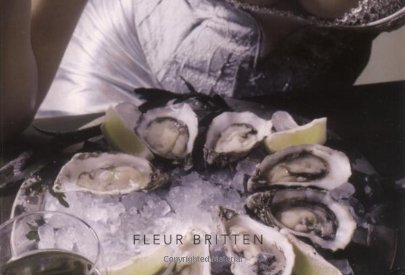
Fleur Britton

Debrett’s Etiquette for Girls by Fleur Britton was first printed in London in 2006. Published under the long-standing name of Debrett’s, it was an attempt by the organisation (best known for their listing of Peerage and Baronetage since 1769) to rebrand themselves for the twenty-first century, and is a more controversial etiquette book. Aimed at young women aged 16-30, Debrett’s Etiquette for Girls garnered interest outside that demographic as well. It feels noticeably different to the other two etiquette books I’ve reviewed recently. Rather than putting an emphasis on cultivating the inner qualities of politeness, etiquette is presented as an arguably shallower set of social skills that can help the reader get ahead in life. Parts of Debrett’s Etiquette for Girls reflect the changing morals of Western society – certain chapters would have been unthinkable just a few decades earlier.

The book has large glossy photos that depict glamorous yet elusive ‘girls about town’ – never quite showing their eyes or whole faces, and offering only glimpses of a lifestyle. These are coupled with long paragraphs of small text. Topics discussed include: social graces, image management, dining (including how to eat fancy seafood and handle fine wines), day to night events (ranging from formal dinners to night clubs and the gym), special occasions (from polo matches, yachts, and private jets to festivals, hotels, and meeting royalty or celebrities), ‘Man Management’ (the largest chapter in the book – which advises on meeting the parents and engagements as well as blind dates and one-night stands), hospitality (whether country guests, drinks parties, or flatmates), face to face interactions, written communications, gossip, ‘bitchiness’, office politics, and some ‘Golden Rules’ of etiquette.

As can be seen by listing some of the topics, Debrett’s Etiquette for Girls is a thoroughly modern etiquette book in ways both good and bad, depending on your opinions. It’s focus is on aspiring to a specific lifestyle of high society glamour, and is clearly aimed at relatively well-to-do city girls who want office careers, enjoy partying, and have no problem with society’s casual attitude to dating. Just to make it clear, I’m not making a value judgement either way on that. I’m just noting the contrast to other etiquette books. Debrett’s Etiquette for Girls exists within a twenty-first-century realm of visual merchandising and personal brands. There are definitely things I’m taking from the book, but I think it’s important to keep a critical distance and remember that the lifestyle it’s trying to sell does not have to be the ultimate dream for everyone. What I do appreciate is that the book is at least conscious of the double-standards girls must negotiate in the modern day. There is uncertainty while the rules are changing in the midst of tensions about misogyny, feminism, chivalry, and an equality that still has its limitations. Because of this, Debrett’s Etiquette for Girls calls itself ‘a modern survival manual’ and claims that ‘etiquette has re-entered the zeitgeist.’

‘Manners make life more bearable. They are there to conceal our selfish, childish instincts.’

Fleur Britton

The Perfect Guest According to Emily Post

Last week I gave a review of Emily Post’s 1922 book Etiquette: in Society, in Business, in Politics, and at Home. In that, I shared a number of quotations. However, there was one passage that was too long to include with the review. I really like this passage and so thought it merited a blog article of its own. It describes how Emily Post believed ‘the perfect guest’ should behave. I find it aspirational because it is the type of lady I want to become and the character I seek to cultivate. She is warm, caring, selfless, charming, creative, ready to be playful but also dignified, above all motivated by love and so loved in response. As we grow towards becoming better women, I think the world would be a better place if we tried to include some of these characteristics.

‘The perfect guest not only tries to wear becoming clothes but tries to put on an equally becoming mental attitude. No one is ever asked out very much who is in the habit of telling people all the misfortunes and ailments she has experienced or witnessed, though the perfect guest listens with apparent sympathy to every one else’s. Another attribute of the perfect guest is never to keep people waiting. She is always ready for anything—or nothing. If a plan is made to picnic, she likes picnics above everything and proves her liking by enthusiastically making the sandwiches or the salad dressing or whatever she thinks she makes best. If, on the other hand, no one seems to want to do anything, the perfect guest has always a book she is absorbed in, or a piece of sewing she is engrossed with, or else beyond everything she would love to sit in an easy chair and do nothing.

She never for one moment thinks of herself, but of the other people she is thrown with. She is a person of sympathy always, and instantaneous discernment. She is good tempered no matter what happens, and makes the most of everything as it comes. At games she is a good loser, and a quiet winner. She has a pleasant word, an amusing story, and agreeable comment for most occasions, but she is neither gushing nor fulsome. She has merely acquired a habit, born of many years of arduous practise, of turning everything that looks like a dark cloud as quickly as possible for the glimmer of a silver lining.

She is as sympathetic to children as to older people; she cuts out wonderful paper dolls and soldier hats, always leisurely and easily as though it cost neither time nor effort. She knows a hundred stories or games, every baby and every dog goes to her on sight, not because she has any especial talent, except that one she has cultivated, the talent of interest in everyone and everything except herself. Few people know that there is such a talent or that it can be cultivated.

She has more than mere beauty; she has infinite charm, and she is so well born that she is charming to everyone. Her manner to a duke who happens to be staying in the house is not a bit more courteous than her manner to the kitchen-maid whom she chances to meet in the kitchen gardens whither she has gone with the children to see the new kittens; as though new kittens were the apex of all delectability!

She always calls the servants by name; always says “How do you do” when she arrives, “Good morning” while there, and “Good-by” when she leaves. And do they presume because of her “familiarity” when she remembers to ask after the parlor-maid’s mother and the butler’s baby? They wait on her as they wait on no one else who comes to the house—neither the Senator nor the Governor, nor his Grace of Overthere!

This ideal guest is an equally ideal hostess; the principle of both is the same. A ready smile, a quick sympathy, a happy outlook, consideration for others, tenderness toward everything that is young or helpless, and forgetfulness of self, which is not far from the ideal of womankind.’

Emily Post, Etiquette: in Society, in Business, in Politics, and at Home (1922)

Book Review: Etiquette in Society, in Business, in Politics, & at Home

‘Manners are made up of trivialities of deportment, which can be easily learnt if one does not happen to know them. Manner is personality, the outward manifestation of one’s innate character and attitude towards life.’

Emily Post

Emily Post first published her book Etiquette: in Society, in Business, in Politics, and at Home in New York in 1922, the era of the ‘roaring twenties’. She was an American lady, born in 1872 and living until 1960. Emily Post is occasionally heralded as the ‘mistress of manners’ in America, due to the popularity of her book. The 1920s were a lively time of modernity, during which progress seeped into the established traditions. This can be felt in the contrast with Florence Hartley’s Victorian etiquette book – although many of the conventions were still the same, there is an underlying energy along with references to a new, freely social youth. A large part of Emily Post’s popularity was that her book fed into the American dream of being able to get ahead. Etiquette is presented as something anyone can learn if they so desire.

Emily Post’s Etiquette: in Society, in Business, in Politics, and at Home is a sizeable volume. The free audio book (which I’ve linked below) adds to a total of over 20 hours long. It was intended to be a complete guide for both ladies and gentlemen of the time, and has much advice that remains relevant today, even whilst other parts are of more of a historical interest. Emily Post covers a range of topics including: greetings, conversation, visits, dinners, balls and dances, debutantes, weddings, Christenings, funerals, hospitality, letter writing, business, dress, teaching children etiquette, everyday manners, and travelling.

A recurring group of fictional characters – or pseudonymous characters at least – play out situations throughout the book, initiating readers into their sophisticated society. Aspects of their existence are now out of touch, such as the assumption of employing at least one servant and the formality of introductions. Despite that, the principles underpinning good manners are enduring. Emily Post herself notes a relaxing of certain formalities in her own time. She writes a lot about of etiquette of various social occasions, the organisation of weddings, and letter writing, ending on an optimistic note about what she hopes the future of America to be. Since it’s freely available online, I’ve shared below a number of quotations advising on different topics.

On Conversation

‘People who talk too easily are apt to talk too much, and at times imprudently, and those with good imaginations are unreliable in their statements. On the other hand, the “man of silence” who never speaks unless he has something worth while to say, is apt to wear well among his intimates, but is not likely to add much to the gaiety of the party.’

Emily Post

‘The charming talker is neither more nor less than a fisherman – or fisherwoman rather, since in America women make more effort to be agreeable than men do. Sitting next to a stranger, she wonders which “fly” she had better choose to interest him. She tries one topic – not much of a nibble – so she tries another topic, or perhaps a third, before he rises to the bait.’

Emily Post

On Social Interest

‘Many things are of interest when briefly told and for the first time; nothing interests when too long dwelt upon; and little interests when told a second time.’

Emily Post

‘On the other hand, to be bored is a bad habit and one only too easy to fall into. As a matter of fact, it is impossible, almost, to meet anyone who has not something of interest to tell you if you are but clever enough yourself to find out what it is.’

Emily Post

On Hospitality

‘There never lived a lady of great cultivation and charm whose home – whether a palace, a farm cottage, or a tiny apartment – did not reflect the charm of its owner.’

Emily Post

‘Some people have the gift of hospitality. Others, whose intentions are just as kind and whose houses are perfection in luxury of appointments, seem to petrify at every approach. Such people appearing at a picnic colour the entire scene with the blue light of their austerity. Such are usually not masters but slaves of etiquette. Their chief concern is whether this is correct or whether that is properly done, or is this or that such a one as they care to know. They seem… to be anxiously asking themselves, have I failed today or have I not? Introspective people who are fearful of others and fearful of themselves are never successful hosts or hostesses.’

Emily Post

‘It is still unforgivable to eat a man’s bread and remain his enemy. It is unforgivable to criticise your host or in his presence to criticise his friends. It is unforgivable to be rude to anyone under your own roof or under the roof of a friend. If you must quarrel with your enemy, seek public or neutral ground, since quarrels and hospitality must never be mingled.’

Emily Post

On Politeness

‘To be courteously polite and yet keep one’s walls up is a thing every thoroughbred person knows how to do, and a thing everyone who is trying to become such must learn how to do. A rule can’t be given because there isn’t any… a well-bred person always lives within the rules of his personal reserve. A vulgarian has no walls, or at least none that do not collapse at the slightest touch. But those who think they appear superior by being rude to others, whom fortune has placed below them, might as well, did they but know it, shout their own unexalted origin to the world at large since by no other method could it be more widely published.’

Emily Post

On Dining

‘To give a perfect dinner of ceremony is the supreme accomplishment of a hostess.’

Emily Post

‘The turning of the table is accomplished by the hostess, who merely turns from the gentleman on her left probably, with whom she has been talking through the soup and the fish course, to the one on her right. As she turns, the lady to whom the gentleman on the right has been talking turns to the gentleman further on, and in a moment everyone at the table is talking to a new neighbour.’

Emily Post

‘One inextricable rule of etiquette is that you must talk to your next-door neighbour at dinner table. You must. That is all there is about it. Even if you are placed next to someone with whom you have had a bitter quarrel, consideration for your hostess, who would be distressed if she knew you had been put in a disagreeable place, and further consideration for the rest of the table which is otherwise blocked, exact that you make no outward sign of your repugnance and that you make a pretence, at least for a little while, of talking together.’

Emily Post

On Balls

‘To refuse to dance with one man and then immediately dance with another, is an open affront to the first one, excusable only if he was intoxicated or otherwise actually offensive so that the affront was both intentional and justifiable. But under ordinary circumstances, if she is dancing she must dance with everyone who asks her. If she is not dancing, she must not make exceptions.’

Emily Post

‘It is always the privilege of the girl to stop dancing. The man is suppose to dance on and on until she or the music stops.’

Emily Post

On Popularity

‘The great ballroom success, first and foremost, dances well. Almost always, she is pretty… Let us suppose therefore that she dances well, that she has a certain degree of looks, that she is fairly intelligent. The next most important thing, after dancing well, is to be unafraid and look as though she were having a good time… There is one thing that every girl who would really be popular should learn, in fact she must learn: self-unconsciousness. The best advice might be to follow somewhat the precepts of mental science, and make herself believe that a good time exists in her own mind. If she can become possessed with the idea that she is having a good time, and look as though she were, the psychological effect is astonishing.’

Emily Post

‘A gift of more value than beauty is charm, which in a measure is another word for sympathy or the power to put yourself in the place of others, to be interested in whatever interests them so as to be pleasing to them if possible, but not to occupy your thoughts and futilely wondering what they may think about you. Would you know the secret of popularity? It is unconsciousness of self, altruistic interest, and inward kindliness outwardly expressed in good manners.’

Emily Post

‘If you know anyone who is always in demand, not only for dinners, but for trips on private cars and yachts, and long visits in country houses, you may be very sure of one thing: the popular person is first of all unselfish or else extremely gifted; very often both.’

Emily Post

On Standards

‘This is a rather noteworthy fact: all people of good position talk alike, behave alike, and live alike. Ill-mannered servants, incorrect liveries or services, sloppily dished food, carelessness in any of the details that to well-bred people constitute the decencies of living, are no more tolerated in the smallest cottage than in the house.’

Emily Post

‘Well-bred people never deteriorate in manner. Their behaviour is precisely the same whether at Great Estates or in camp. A gentleman may be in his shirt sleeves actually, but he never gets into shirt sleeves mentally – he has no inclination to.’

Emily Post

On Being a Lady

‘The instincts of a lady are much the same as those of a gentleman. She is equally punctilious about her debts, equally averse to pressing her advantage; especially if her adversary is helpless or poor.’

Emily Post

‘All thoroughbred women, and men, are considerate of others less fortunately placed, especially of those in their employ. One of the tests by which to distinguish between the woman of breeding and the woman merely of wealth, is to notice the way she speaks to dependants… When you see a woman in silks and sables and diamonds speak to a little errand girl or a footman or a scullery maid as though they were the dirt under her feet, you may be sure of one thing; she hasn’t come a very long way from the ground herself.’

Emily Post

On Everyday Manners

‘Just as no chain is stronger than its weakest link, no manners can be expected to stand a strain beyond their daily test at home. Those who are used to losing their temper in the bosom of their family will sooner or later lose it in public. Families which exert neither courtesy nor charm when alone, can no more deceive other people into believing that either attribute belongs to them than they could hope to make painted faces look like “real” complexions.’

Emily Post

‘In the present day of rush and hurry, there is little time for “home” example. To the over-busy or gaily fashionable, “home” might as well be a railroad station, and members of a family passengers who see each other only for a few hurried minutes before taking trains in opposite directions. The days are gone when the family sat in the evening around the fire, or a “table with a lamp,” when it was customary to read aloud or to talk. Few people “talk well” in these days; fewer read aloud, and fewer still endure listening to any book literally word by word.’

Emily Post

On Travelling

‘To do nothing that can either annoy or offend the sensibilities of others, sums up the principal rules for conduct under all circumstances—whether staying at home or travelling. But in order to do nothing that can annoy or give offence, it is necessary for us to consider the point of view of those with whom we come in contact; and in travelling abroad it is necessary to know something of foreign customs which affect the foreign point of view.’

Emily Post

Learn More

Chapter timestamps:
Introduction: Manners and Morals – 00:00:00
Chapter 1: What is Best Society? – 00:16:54
Chapter 2: Introductions – 00:23:03
Chapter 3: Greetings – 00:53:27
Chapter 4: Salutations of Courtesy – 01:01:23
Chapter 5: On the Street and in Public – 01:12:01
Chapter 6: At Public Gatherings – 01:28:41
Chapter 7: Conversation – 01:53:47
Chapter 8: Words, Phrases, and Pronunciation – 02:15:33
Chapter 9: One’s Position in the Community – 02:32:32
Chapter 10: Cards and Visits – 02:49:23
Chapter 11: Invitations, Acceptances and Regrets 03:42:50
Chapter 12, Part 1: The Well-Appointed House – 04:14:54
Chapter 12, Part 2: The Well-Appointed House – 04:39:55
Chapter 12, Part 3: The Well-Appointed House – 05:06:31
Chapter 13: Teas and Other Afternoon Parties – 05:31:25
Chapter 14, Part 1: Formal Dinners – 05:55:01
Chapter 14, Part 2: Formal Dinners – 06:17:13
Chapter 14, Part 3: Formal Dinners – 06:45:32
Chapter 14, Part 4: Formal Dinners – 07:05:17
Chapter 14, Part 5: Formal Dinners – 07:27:11
Chapter 15: Dinner-Giving with Limited Equipment – 07:49:12
Chapter 16: Luncheons, Breakfasts and Suppers – 08:01:56
Chapter 17, Part 1: Balls and Dances – 08:27:40
Chapter 17, Part 2: Balls and Dances – 08:53:12
Chapter 18: The Debutante – 09:20:52
Chapter 19: The Chaperon and Other Conventions – 09:44:05
Chapter timestamps:
Chapter 20: Engagements – 00:00:00
Chapter 21, Part 1: First Preparations before a Wedding – 00:27:15
Chapter 21, Part 2: First Preparations before a Wedding – 00:52:38
Chapter 21, Part 3: First Preparations before a Wedding – 01:20:18
Chapter 22, Part 1: The Day of the Wedding – 01:39:49
Chapter 22, Part 2: The Day of the Wedding – 02:03:12
Chapter 22, Part 3: The Day of the Wedding – 02:26:37
Chapter 23: Christenings – 02:45:18
Chapter 24: Funerals – 02:58:25
Chapter 25, Part 1: The Country House and Its Hospitality – 03:52:50
Chapter 25, Part 2: The Country House and Its Hospitality – 04:31:18
Chapter 26: The House Party in Camp – 05:07:04
Chapter 27, Part 1: Notes and Shorter Letters – 05:24:21
Chapter 27, Part 2: Notes and Shorter Letters – 05:41:44
Chapter 27, Part 3: Notes and Shorter Letters – 05:57:16
Chapter 27, Part 4: Notes and Shorter Letters – 06:16:08
Chapter 27, Part 5: Notes and Shorter Letters – 06:35:32
Chapter 28: Longer Letters – 06:51:48
Chapter 29: The Fundamentals of Good Behaviour – 07:17:37
Chapter 30: Clubs and Club Etiquette – 07:30:10
Chapter 31: Games and Sports – 08:03:02
Chapter 32: Etiquette in Business and Politics – 08:16:49
Chapter 33, Part 1: Dress – 08:37:11
Chapter 33, Part 2: Dress – 08:58:18
Chapter 34: The Clothes of a Gentleman – 09:23:06
Chapter 35: The Kindergarten of Etiquette – 09:42:07
Chapter 36: Every-Day Manners at Home – 10:14:31
Chapter 37, Part 1: Travelling At Home and Abroad – 10:30:21
Chapter 37, Part 2: Travelling At Home and Abroad – 10:58:38
Chapter 38: The Growth of Good Taste in America – 11:32:14

Book Review: The Ladies’ Book of Etiquette & Manual of Politeness

‘Politeness is goodness of heart put into daily practice.’

Florence Hartley

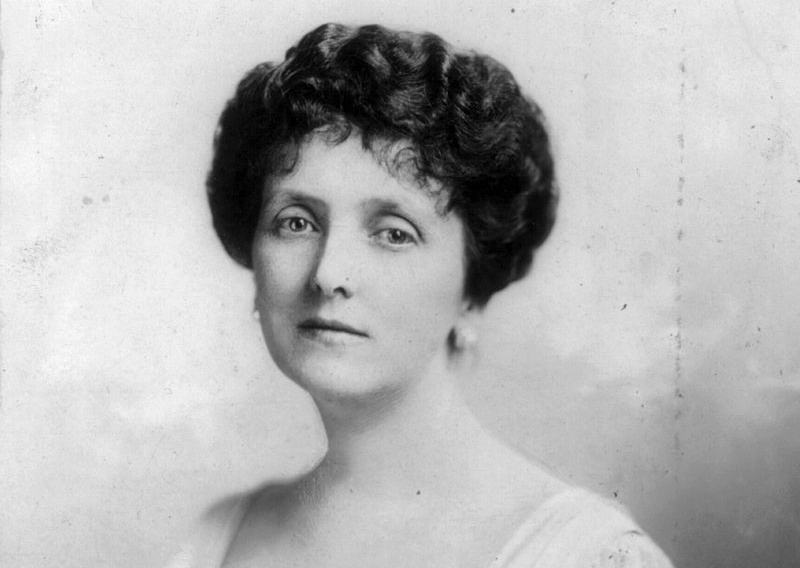
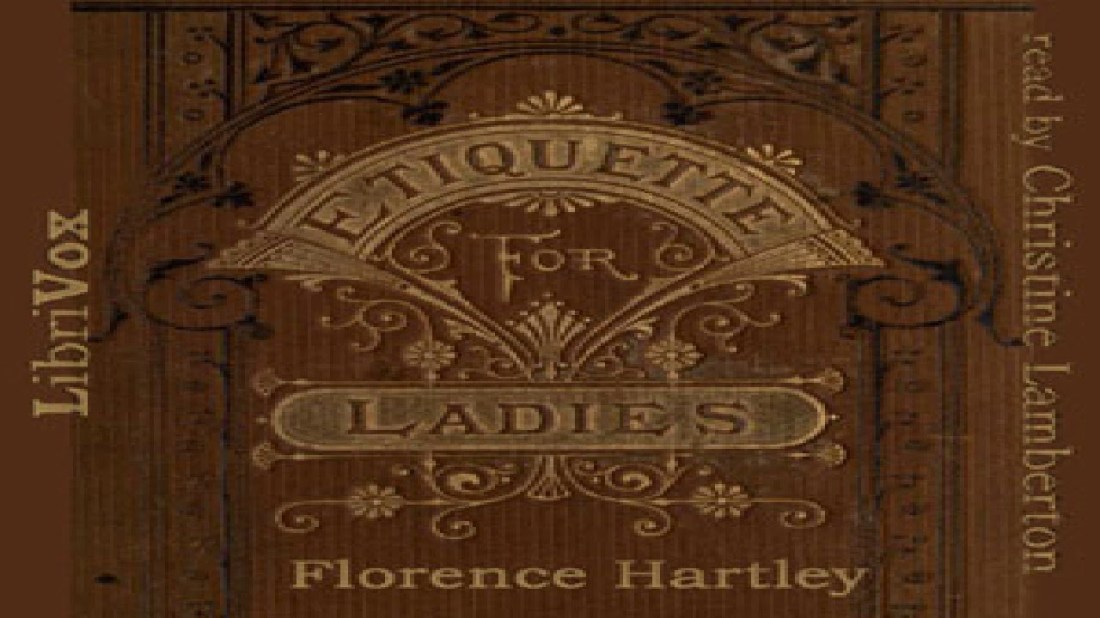
The Ladies’ Book of Etiquette, and Manual of Politeness. A Complete Hand Book for the Use of the Lady in Polite Society was written by Florence Hartley, an American lady of the mid-Victorian period. It was first published in Boston in 1860, and is now freely available online to the public. An equivalent book of etiquette for gentlemen was published in the same year by a Cecil B Hartley, who I suppose to have been some male relation of Florence Hartley. Besides etiquette, Florence Hartley also wrote on needlework and was an advocate for women’s health. Her books received favourable reviews during her own time, but little is known about her life.

Since it is Victorian, some parts of Florence Hartley’s book are naturally dated – for instance the constant requirement for an escort or chaperone, the suspicion of servants, the formality of bowing in greeting, and the abundance of socialising hours available to the Victorian lady of leisure. Despite this, there’s much advice that is still relevant today. The underlying principles of good manners are universal, carrying across into all cultural contexts, even though the specific behaviour of etiquette manifests differently. Florence Hartley’s discussion of ‘true Christian politeness’ for ladies explores a range of topics including: conversation, dress, travelling, hospitality, visiting, letter writing, deportment, conduct in church, social events, accomplishments, servants, engagements, and weddings.

I appreciate quirky old books, and so personally find the historic material as interesting as the etiquette still applicable today. For Florence Hartley, etiquette seems to be most exemplified in hospitality and therefore this is a large focus in the book, with information for both hostess and guest. She included a considerable chapter on accomplishments, where in addition to the usual accomplishments she promotes conversational skills, horse riding, and gives detailed instructions on needlework. Besides working on such accomplishments, ladies were advised to walk four or five miles a day, and the visiting hours of Victorian society tended to be between 11am and 3pm. Since The Ladies’ Book of Etiquette, and Manual of Politeness is no longer under copyright restrictions, I have taken advantage of that by sharing a liberal selection of quotations below, along with a link to the free audiobook.

On Politeness & Etiquette

‘To be truly polite, remember, you must be polite at all times and under all circumstances.’

Florence Hartley

‘True politeness will be found – its basis in the human heart – the same in all these varied scenes and situations, but the outward forms of etiquette will vary everywhere. Even in the same scene, time will alter every form and render the exquisite polish of last year, obsolete rudeness next year.’

Florence Hartley

‘If you neglect these little details at home, and in private, they will be performed awkwardly and with an air of restraint when you are in company. By making them habitual, they will become natural and appear easily, and sit gracefully upon you.’

Florence Hartley

On Conversation

‘To be able to converse really well, you must read much. Treasure in your memory the pearls of what you read. You must have a quick comprehension. Observe passing events and listen attentively whenever there is any opportunity of acquiring knowledge.’

Florence Hartley

‘You may unintentionally start a subject which annoys or troubles the friend with whom you may be conversing; in that case do not stop abruptly when you perceive that it causes pain, and above all do not make the matter worse by apologising. Turn to another subject as soon as possible and pay no attention to the agitation your unfortunate remark may have excited.’

Florence Hartley

‘One good rule can be always followed by young ladies: to converse with a lady friend as if there were gentlemen present, and to converse with a gentleman as if in the room with other ladies.’

Florence Hartley

On Invitations & Hospitality

‘The severest test of good breeding in a lady is in the position of hostess.’

Florence Hartley

‘As a first rule, with regards to paying a visit, the best one is never to accept a general invitation. Instances are very common where women – I cannot say ladies – have upon a slight acquaintance and a “when you are in C, I should be very happy to have you visit me,” actually gone to C from their own home and, with bag and baggage, quartered themselves upon the hospitality of their newly made friend for weeks at a time. Even where there is a long-standing friendship, it is not well to visit uninvited.’

Florence Hartley

‘Your enjoyment of a party depends far less on what you find there than on what you carry with you… If you go to C, and to here, and to make the best of whatever occurs, with a disposition to admire all that is beautiful and to sympathise in the pleasures of others, you can hardly fail to spend the time pleasantly. The less you think of yourself and your claims to attention the better. If you are much attended to, receive it modestly and consider it as a happy accident. If you are little noticed, use your leisure in observing others.’

Florence Hartley

On Gracious Dignity

‘Leave him to think that the ladies in America [or whatever country you are from] are well-bred, however much he may dislike some little national peculiarity.’

Florence Hartley

‘If you receive an impertinent letter, treat it with contempt. Do not answer it.’

Florence Hartley

On Accomplishments

‘Take the young lady, after a solid basis has been laid in her mind of the more important branches of education, and rear upon that basis the structure of lighter education: the accomplishments. To cultivate these, disregarding the more solid information, is to build your castle without any solid foundation and is not only absurd, but unsteady.’

Florence Hartley

‘First upon the list of accomplishments comes the art of conversing well. It is always ready. Circumstances in society will constantly throw you into positions where you can use no other accomplishment.’

Florence Hartley

Learn More

Chapter timestamps:
Introduction – 00:00:30
Chapter 1: Conversation – 00:08:00
Chapter 2: Dress – 00:28:20
Chapter 3: Travelling – 00:58:40
Chapter 4: How to Behave at a Hotel – 01:10:17
Chapter 5: Evening Parties, Etiquette for the Hostess – 01:17:58
Chapter 6: Evening Parties, Etiquette for the Guest – 01:37:50
Chapter 7: Visiting, Etiquette for the Hostess – 01:48:19
Chapter 8: Visiting, Etiquette for the Guest – 02:00:30
Chapter 9: Morning Receptions or Calls, Etiquette for the Hostess – 02:21:06
Chapter 10: Morning Receptions or Calls, Etiquette for the Guest – 02:30:57
Chapter 11: Dinner Company, Etiquette for the Hostess – 02:44:38
Chapter 12: Dinner Company, Etiquette for the Guest – 03:06:05
Chapter 13: Table Etiquette – 03:23:32
Chapter 14: Conduct in the Street – 03:31:23
Chapter 15: Letter Writing – 03:46:35
Chapter 16: Polite Deportment and Good Habits – 04:44:00
Chapter 17: Conduct in Church – 05:13:10
Chapter 18: Ballroom Etiquette, For the Hostess – 05:20:25
Chapter 19: Ballroom Etiquette, For the Guest – 05:35:54
Chapter 20: Places of Amusement – 05:47:57
Chapter 21, Part 1: Accomplishments – 05:59:45
Chapter 21, Part 2: Accomplishments – 06:49:03
Chapter 21, Part 3: Accomplishments – 07:28:38
Chapter 22: Servants – 08:07:47
Chapter 23: On a Young Lady’s Conduct When Contemplating Marriage – 08:35:50
Chapter 24: Bridal Etiquette – 09:14:49
Chapter 25: Hints on Health – 09:23:40
Chapter 26: Miscellaneous – 10:11:53

Elegant Eating Etiquette

In my previous blog article, Introduction to Dining Etiquette, I wrote about the basics of table manners and the difference between Continental and American methods of using cutlery. As a follow-up to that, I thought I’d share here some additional tips about Western dining etiquette and how to eat elegantly.

Napkins

You should follow your hostess’ lead as to when to place your napkin on your lap, however this would ideally be as soon as you’ve sat down at the table. It should definitely be before you commence eating, because you don’t want to risk dropping food on your clothes. Traditionally, different sized napkins are used for different meals, with dinner napkins being larger than ones for afternoon tea. When you take your napkin, fold it equally in half along its sides so that it forms a rectangle. Then place it on your lap with the folded edge towards your body. Try to do this quietly under the table, without making a fuss over it or flapping the napkin where people can see. To use your napkin, open the corners by your knees and lift the napkin to delicately dab your lips. Don’t make a big show of scrubbing your mouth. You can then refold your napkin to cover any stains, as they will be inside the folded layers. If you don’t like a mouthful of food it is polite to swallow it anyway, however if you can’t force yourself do that or it contains a bone, then discreetly spit it out into your napkin. Give the impression you are merely dabbing your mouth. You shouldn’t leave the table during dinner, but if you need to then place your napkin on your chair. This is a signal to the waiters that you are coming back. At the end of the meal, gather your napkin together and leave it to the left of your plate on the table.

Bread & Butter

When taking butter from a butter dish, use your butter knife to cut off all you want and place it on the edge of your bread plate. Don’t spread butter straight onto your bread from the butter dish. Instead, tear off one bite size piece of bread at a time with your fingers and butter each piece with your knife to eat individually, using the butter on the side of your plate. This avoids getting crumbs into the butter, which besides looking more aesthetically pleasing is considerate to anyone else sharing that butter dish. This is especially vital if the butter may be shared with someone who is on a gluten free diet. Even if you are not sharing the butter, however, it’s still proper etiquette to act as if you might be and to avoid contaminating it with crumbs.

Soup

When eating soup, your soup spoon should be scooped away from you. This helps to avoid splashes onto clothes, although it’s also a leftover from when soup spoons used to be much larger than they are today. Avoid overfilling your spoon – aim to fill it by about two thirds. Again, this helps avoid spillages. You can remove drips from the bottom of your spoon by gently scraping it against the lip of your soup dish if it has one. If it doesn’t, then just briefly rest your spoon on the surface of your soup to remove drips. Never blow on your soup as that may cause splashes. It is better to instead wait for it to cool on the spoon if it is too hot. Don’t tilt your soup bowl, even to get the last drops, as that is how accidents happen and messes occur. Quietly sip the soup from the edge of your spoon that is closest to you.

Salt & Pepper

Always taste your food first before adding salt or pepper. This indicates that it’s simply a matter of personal preference rather than a case of your not trusting the cook’s judgement. If you are asked to pass either the salt or pepper make sure to always pass them as a pair. The salt and pepper should stay together. Ask someone to pass the salt and pepper to you if you would like them and they’re not within easy reach. Never lean across someone else to get them. When someone has asked for something at the dinner table (in this case salt and pepper), always pass it on to that person first. It would be rude to make them wait by using it first whilst it’s being passed down the table. Because of this, it’s polite and the proper etiquette to ask your neighbour if they would like the salt or pepper first before asking them to pass it to you. And of course, it goes without saying that you should always say the ‘magic words’ of please and thank you.

Spaghetti

Spaghetti notoriously takes no small degree of skill to eat with elegance. You should never twirl it on a spoon or cut it with a knife. Instead, take a small amount of spaghetti between the prongs of your fork. Twirl it clockwise against an empty edge of your plate until you have a neat bite-sized piece you can eat. If your fork picks up too much spaghetti, simply drop it off the fork and try again with a smaller amount. Be considerate to those around you by not slurping or shoving your mouth with too much for you to elegantly manage. Spaghetti can be a tricky food, so it may be wise to practise in private first and, unless you’re confident, possibly to avoid spaghetti altogether on a first date.

Learn More

Cutlery, Courses, & Table Settings

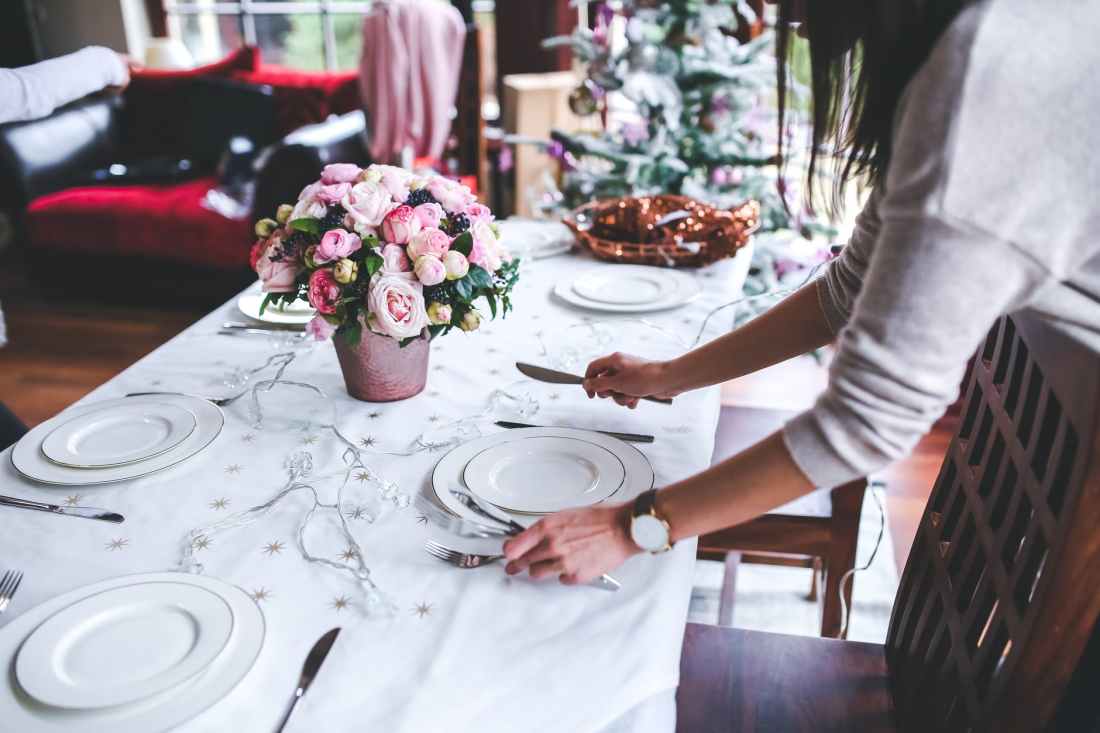
Formal evening dinners are about enjoying quality food whilst also enjoying conversation with the company present. Since they are intended to be a pleasurable experience rather than just a fuelling of the body, these dinners usually have multiple courses with a sequence of different foods. These different courses mean that additional cutlery is used and if you are unfamiliar with these it can be confusing as to what is expected. In general, it’s better to be over-prepared so you feel knowledgeable and at ease, rather than to be under-prepared. Embarrassment and confusion will only distract you from the main reason you are there: to socialise with other people. It takes just a little knowledge of the system for the dining etiquette to be suddenly not so complicated as it may initially appear.

Dinner Presentation

There are two main styles in which dinner may be presented. The first, service à la française, originated in France and involved all the food being displayed on the table at the same time. This can still be seen today in the adapted form of buffets. The second, service à la russe, originated in Russia and was introduced to Paris by a Russian ambassador in 1810. This involved multiple courses being brought in separately from the kitchen by footmen or waiters throughout the meal. Service à la russe had the advantage that food was still hot when the time came to eat it and it became popular in England, later catching on in France and the rest of the Western world. Most formal dinners and Western restaurants today use a version of service à la russe.

Place Setting Layout

An easy way to remember the order for place settings is to hold your hands out in front of you and bend your thumbs to touch halfway along your index fingers. Your left hand will form a letter ‘b’, indicating that your bread plate and butter knife are on your left. Your right hand will form a letter ‘d’, indicating that your drinks glasses are on your right.

In the centre in front of you will either be an empty space for plates to be set (if you are in Britain) or a large service plate for other plates to be set on top of (if you are in America). In America it’s felt that guests shouldn’t come to a ‘naked’ place setting so service plates are used for decoration, although they also help catch drips or spills. However, in Britain service plates are considered unnecessary since they are not eaten from and so are traditionally not used.

Another cultural difference is that in American place settings the spoons are positioned above the plate, whereas in British settings they are traditionally positioned to the right hand side. However, since the American setting is used in international business it has become the norm in much of Britain. At Buckingham Palace, for instance, the American place setting for spoons is now used because The Queen receives many international guests and wishes to put them at ease – an example of following the spirit of etiquette over always obeying the rules of correct etiquette.

Cutlery Layout

A good general rule with cutlery is that you work from the outside in, and with cutlery above your plate you work from the bottom to the top. If you’re unsure which cutlery to use, you can watch your fellow diners to follow their lead. Forks will be positioned to the left of the plate to be used in the left hand, whereas knives will be positioned to the right to be used in the right hand. Knife blades should be facing inwards towards your plate to show that you mean your neighbour no harm.

The invention of stainless steel during the Industrial Revolution led the Victorians to design an excess of different cutlery utensils, each suited for specific foods. While the most elaborate of Victorian excesses are now rarely seen, formal dinners still make use of multiple cutlery pieces. The cutlery set on the table will indicate what types of food can be expected. Sometimes it will also show how many courses there will be, but this isn’t always the case as some etiquette experts consider it bad form to have more than three knives and forks on the table at a time, with the exception of an oyster fork. In this case, any cutlery for additional courses will be brought in separately later. Before the pudding course everything will be removed from your place setting except your water goblet and wine glasses.

Types of Cutlery

This isn’t an exhaustive list but consists of the most likely items to be encountered, as well as demonstrating the system in which cutlery is arranged.

To right of dinner plate: oyster fork resting in soup spoon, fish knife, entreé knife, meat knife, salad knife.

To left of dinner plate: fish fork, entreé fork, meat fork, salad fork.

Above dinner plate: ice cream fork, dessert fork, dessert spoon.

This setting would indicate an eight-course dinner consisting of hors d’œuvres, soup, fish, entreé, palate cleanser, main course, salad, and pudding, which would then likely be followed by coffee afterwards. The salad knife and fork would most likely be brought in later with the salad course, to avoid an excess of cutlery on the table at any one time.

Three-Course Dinners

Three-course dinners are the most common and are standard for all but the most formal dinners today. Additional courses would most likely be found at only very formal events. A three-course dinner consists of soup, a main course, and pudding.

Soup is first in a three-course dinner as a lighter, liquid starter. The soup spoon should be scooped away from you to avoid potential spills and then sipped from the side of the spoon. A bread roll may be served at the same time on your bread plate, but you shouldn’t dunk the bread in your soup unless you’re in an informal environment with friends.

The main course is the richest and most substantial part of a dinner. Unless you have chosen a vegetation option, it traditionally includes meat and should be eaten with the meat knife and meat fork.

Pudding is the sweet course that concludes a dinner. Depending on what is served, it would usually be eaten with the dessert fork in the left hand and dessert spoon in the right hand, with the spoon transferring food to your mouth. Having the most sugary foods at the end of a meal is best for your dental health because your enzymes are already at work and prepared to break the sugar down.

Full-Course Dinners

Although the Victorians had very elaborate multi-course dinners, these became shortened throughout the twentieth century. Whilst the three-course dinner is the standard nowadays, additional courses may be encountered at grander affairs. As a general guide, these courses start with light food then become richer with the main course or roast as the pinnacle, followed by more delicate and sweet foods to finish.

  1. Hors d’œuvres is French for ‘outside of works’ because the chef’s main work will come later in the main courses. It is an appetiser that may be finger food or could use the oyster fork.
  2. Amuse-bouche is French for ‘mouth amuser’ and is small bites of food that offer a glimpse of the chef’s skill while guests are waiting for the next courses. They emerged as part of the nouvelle cuisine movement of the 1960s so were not found in more traditional meals.
  3. Soup is a relatively light course that prepares guests from the more substantial foods to come.
  4. Fish traditionally came next. It was eaten using the fish fork and fish knife, however these largely fell out of fashion after World War One because the upper classes viewed them as a pretentious middle-class invention and preferred to use two forks instead.
  5. Entrée means ‘entrance’ in French and is a small course prior to the main course. However, in America and parts of Canada it is instead sometimes used to refer to the main course itself. This is because only the upper classes would regularly eat a full-course dinner and, as eating habits became simplified, Americans began to eat what would have been an entrée as their main course instead. European eating habits also became simplified, but they retained the term entrée as referring to a starter course.
  6. Roast/main course is the richest, most substantial, and largest course of the dinner. It usually involves meat, unless you are vegetarian.
  7. A palate cleanser is sometimes served between two more substantial courses, such as between the roast and cold dish or alternatively between the entreé and roast. It is usually a punch or sorbet, which is eaten with the ice cream fork.
  8. Cold dish/second main course is the last of the more substantial courses and traditionally involved cold meat, as opposed to the hot meat of the main course.
  9. Salad is served after the main courses in Britain, whereas in America it’s instead served before the main course. It is eaten with the salad fork and salad knife, which are smaller than those used for meat.
  10. Pudding is the British term for the sweet course, although in America it’s commonly called ‘dessert’. The pudding course could include cake, pie, tart, ice cream, pastry, custard, or an actual pudding – to give a few examples.
  11. Dessert, unlike pudding, is the fruit course that acts as as a palate cleanser at the end of a meal. It’s name comes from the French ‘desservir‘.
  12. Savouries/cheese are served after dessert in Britain. Savouries are less popular nowadays and a cheese course may be seen instead. The idea for both is the same – it’s something plain and salty that will clear the palate before the following drinks. In America, France, and most other European countries, however, cheese is instead served to accompany wines before pudding.
  13. Coffee isn’t really a course but is frequently served after dinner. The increased blood sugar levels from dinner can induce sleepiness and coffee helps to counter that effect, allowing people to continue after dinner discussions.

Learn More

10 Lessons From My First Society Dinners

Some time ago, a group I belonged to was invited to attend some of the dinner meetings of a larger society, which was formed of local business leaders. It was a social and charitable affair rather than being a business occasion, but it was still relatively formal. The only semi-formal event I’d ever been to before was my school prom, so I didn’t know what to expect for a society dinner. Like most things in life, it turned out I needn’t have worried so much. However, there were a few details that it would have been useful to know beforehand. Here are the lessons I learnt, so that you can be better prepared for society than I was.

1 Dress Codes

Always clarify the dress code with another woman if you’re unsure what to wear. Ideally you should ask the hostess, but if that’s not possible make sure to ask another woman whom you know is going. I learnt this the hard way. Although of course not always the case, in general it can be a bad idea to trust a man to communicate the dress code. It’s easy for them as they can simply add or take away a tie and jacket, but us ladies need to plan our entire outfit. Before my first society dinner I got the mistaken impression that it was a black tie event, when it turned out to be more of a ‘lounge suit’ affair. Being conscious that you’re either over- or under-dressed will distract you from confidently participating in the activities, so it’s best to check. The next time I went to a society dinner I made sure to tell the girls who were going for the first time what to expect!

2 Formality

Society dinners may seem somewhat intimidating at first for those of us who aren’t used to them, but they aren’t a big deal for everyone. People who have grown up with their family participating in such events find them completely normal. There is a scale of formality above what most of us experience in our everyday lives, and on that scale these ‘formal’ events may actually be considered relatively informal. It’s better to show respect by overestimating rather than underestimating the formality of an event, but in many cases you can be a lot more relaxed than you think. After all, you are there to socialise not to be judged.

3 Seating Arrangements

At dinners it’s traditional to be seated man, woman, man, woman. The idea is that this encourages more diverse and interesting conversation, whilst also giving an orderly symmetrical arrangement. At some dinners you may be designated a seat, but at others you’ll be free to choose. We were given place cards at one dinner I went to, which we could place wherever we liked. I put my name at the chair next to the girl I had travelled there with, however, when it was time to be seated I discovered that it had been moved so that I was instead sat between two men. It took me by surprise and had I known that custom beforehand it would have saved me confusion.

4 Conversation

Because of that change in seating arrangements I ended up being sat next to an old military man with whom, on a surface level at least, I had nothing in common. Society dinners are fundamentally social events, so you should go ready to make conversation with anyone. Those could be people of very different stages of life, backgrounds, and interests. Don’t make prior expectations of who you’ll be talking to; it helps to be prepared for anything. The height of politeness is to be equally able to be polite with anyone, but don’t beat yourself up if you’re not comfortably there yet. It’s a learning experience.

5 Asking Occupation

It goes without saying that you should never discuss finance, politics, or serious religion in situations that call for small talk. What I hadn’t considered beforehand was the more subtle question of asking about someone’s career. Since someone’s career forms a large part of the way they interact with the world, it’s natural to want to find out when you’re searching for a common topic of conversation. The difficulty is that it can come across (however unintentionally) like you’re looking to place them or fishing for information to figure out whether they might be useful to you. I would suggest being cautious of directly asking people what they do, or at least to be mindful of how you phrase the question unless they bring it up first.

6 Follow the Lead

If you are new to society dinners and uncertain how to maintain small talk with strangers, you don’t need to worry about it too much. That’s not your responsibility. It takes two people to make a conversation and if you’re new it’s ok to let the other person do that work. Don’t be afraid to leave moments of silence. If it’s just a social occasion, there’s no pressure and you don’t need to ‘prove’ yourself. Just let other people lead the conversation and make sure you’re ready to follow where it goes.

7 Strange Traditions

If you are going to a society dinner, be prepared for strange customs and traditions. This is especially true if the company is mostly formed of an older generation, as the dinners I went to were. Before the first course was served, everyone had to stand up while the society’s president said grace and thanked God for dinner. This wasn’t a shock for me as I ‘d grown up in a Christian family, but it was amusing to see other people’s reactions when the group I came with were talking about it later. They found it a very quaint, unexpected oddity! Later on, I was the one taken by surprise. We all had to stand up again whilst a ‘loyal toast’ was given to The Queen, and I didn’t realise what was happening in time to raise my glass with everyone else. So be prepared for unfamiliar traditions!

8 Coffee

At many dinners it’s customary for coffee to be served after the meal. This wasn’t a big deal but was something I hadn’t known beforehand. I think that being aware of small things such as the usual order of events and courses can help you feel much more at ease. If you can predict what will happen next it helps you feel more like you know what you’re doing, rather than being constantly surprised by small details that remind you it’s an unfamiliar experience.

9 Transport Plans

Before you go to any event, make sure you know how you’re getting home again afterwards, especially if it’s an evening event. For example, if you’re travelling by public transport you don’t want to be worrying about where exactly the bus stop is – that’s not a fun way to end your evening. Suss out your plan in appropriate detail beforehand, and don’t be afraid to ask an acquaintance to point you in the right direction if necessary.

10 Experience

My final point is to make the most of the experience and remember that it’s good to try new things. The only way to extend your comfort zone and grow as a person is to step slightly outside of that comfort zone. Preparation beforehand will help you feel more at ease and if you go once then the next time will be much less intimidating. This doesn’t just apply to formal events such as society dinners, but to all new experiences in life. We are lucky to have these opportunities and they offer us the chance for personal growth, through which we can develop different aspects of our personalities and life experience.

Introduction to Dining Etiquette

‘Man, it has been said, is a dining animal. Creatures of the inferior races eat and drink; man only dines.’

Mrs Beeton’s Book of Household Management

From family suppers to formal dinners, eating together is often an important social occasion. Food and drink, however, provide many opportunities for things to go wrong and it can be very unpleasant to sit next to a messy or loud eater. Because of this, etiquette is especially important when at the dining table.

Modern Western table manners arose during the Renaissance, when the concept of personal betterment and refinement was popular. In 1533 Catherine de’ Medici left Florence (the cultural centre of the Renaissance) to marry Henry II, the future king of France. Both were fourteen-years-old at the time. Catherine de’ Medici did much to Italianise French dining habits and is credited for introducing modern table manners to the rest of Europe, which was still feasting in a Medieval fashion. The use of forks was slow to catch on, and it was only by the eighteenth century that etiquette guides required the use of forks. Our dining etiquette originates from that period.

Basic Table Manners

‘The best table manners are always those that no one notices.’

Debrett’s

The basics of table manners are the rules we were taught as children. They may seem like common sense, but are important to remember. Wash your hands and be clean before coming to the table. Wait until everyone has been served before beginning to eat. Chew with your mouth closed, finish your mouthful before talking, and never stuff your face with more than you can elegantly manage. Don’t burp, slurp, chew loudly, or make other unseemly noises. Avoid making scraping or clattering noises with cutlery. Don’t pick your teeth at the table or spit out food. Keep your elbows off the table, sit with a good posture, and show interest in the conversation. Don’t use your phone at the table or even have it visible at the table. Listen politely and wait your turn instead of interrupting conversation. If you want something from the other side of the table, ask someone to please pass it to you rather than reaching across them. Try to match your eating speed to those around you, so they are not waiting for you to finish nor you waiting for them at the end. It is a matter of being respectful so that the focus is on enjoying the food and conversation, rather than being distracted by someone’s atrocious table manners.

Continental Style Dining

There are two styles of using cutlery: the continental style and the American style. The continental style is used throughout continental Europe as well as in Britain. The American style, as evident from its name, is unique to America. The difference between the two styles is in their usage of the knife and fork.

The knife should be held in the right hand while the fork is used in the left hand. The handles of the knife and fork should be held inside the palms of each hand, with the index fingers pointing straight down the backs of each. The knife should never be held like a pen. The right index finger should reach to where the knife handle joins the blade, while the left index finger should reach to just before the bridge of the fork with the fork tines turned downwards. The remaining fingers should be wrapped around each piece of cutlery to hold it securely. Your elbows should be held close to your sides, and your wrists should be held low above the plate.

In the continental style, the fork is used to hold a piece of food in place whilst the knife cuts a single mouthful. Only a single mouthful should be cut at a time – you’re not a little child anymore who needs all their food cut up for them beforehand. The fork is then used, still in the left hand, to transfer that piece of food to the mouth. The knife remains in the right hand, held low above the plate until it is needed to cut the next mouthful.

The fork tines can be used to stab a piece of food, and the knife can be used to help pile softer foods on the back (the convex side) of the fork. When eating continental style, the concave side of the fork should never be used to shovel food. Apparently piling food on the back of the fork is a very British thing to do, and different types of food can be combined in a single mouthful as long as it’s of a manageable size.

American Style Dining

American style dining is also known as the ‘zig-zag’ or the ‘cut-and-switch’ method. To begin with, the knife and fork are held in the same way as in the continental style. However, once a mouthful of food has been cut, the knife is then laid to rest diagonally across the top of the plate. The fork is transferred from the left to the right hand and is held like a pen with the concave side facing upwards. The left hand is placed to rest neatly in your own lap until it’s needed again. The fork (now in the right hand) is used to stab a piece of food and transfer it to your mouth. The fork is then moved back into the left hand again and the knife taken up in the right hand to repeat the process.

There are various theories as to why Americans have their own style of dining instead of using the continental style. The continental style is used throughout Europe as well as in much of the rest of the world for international business. The most popular story appears to be that the American style of dining was once the norm in France. Americans chose to adopt the French way of dining since they considered France to be the height of civility. However, by the 1850s the French switched to the continental style. They considered it more efficient, even though it initially required more practice for right-handed people to become fully coordinated. The Americans, meanwhile, continued using their cutlery the way they had before.

Other Western Cultural Differences

Besides the most obvious difference in the use of cutlery, there are a number of other differences between the dining etiquettes of Western countries. In America, your spare hand should be kept neatly in your lap under the table. In Britain, you shouldn’t put your cutlery down during a course unless you are reaching for your drink or napkin, but between courses your hands should be kept in your lap beneath the table. By comparison, in France this would be considered incredibly rude. When dining in France, your hands should be visible above the table at all times. Historically this was to prove you weren’t hiding a weapon. Nowadays it shows that you’re not misbehaving beneath the table, and also gives ladies a chance to show off their fine rings. This rule is also true for much of the rest of continental Europe, including Spain, Italy, Germany, and Sweden.

In Germany it is polite to avoid using your knife to cut, instead slicing food with the side of your fork if possible. This is a compliment to the host or hostess since to cut with your knife would suggest that the food was undercooked. Another cultural etiquette difference is the position that your knife and fork are left in when you have finished eating. In Britain they should be left in a 6:30 position (imagining your knife and fork as the handles on a clock) to signal that you have finished, whereas in America they should be left in a 4:20 position. Again, this varies from country to country in continental Europe.

Learn More