Decoding Dress Codes

I thought today we’d talk about dress codes. Although usually only formal invitations state a dress code, all occasions have some expected level of appropriate dress. Most of the time we intuitively recognise these, but it can still be tricky to know what to wear. Understanding what the different levels of formality are and what they each require can be helpful. This knowledge is a framework to judge what level of formality is expected. There is some fluidity within levels and most forms of dress can be amalgamated into it as the equivalent of some level in the scale.

The formality levels of Western dress codes are:

  1. White Tie
  2. Black Tie
  3. Morning Dress
  4. Lounge Suits / ‘Formal Business’
  5. ‘Formal’ Smart Casual / ‘Business Casual’
  6. ‘Informal’ Smart Casual
  7. Casual
  8. ‘Old Clothes’

Expectations for men’s clothing are generally quite clear cut, especially at the most formal levels, where it’s strictly defined. Ladies’ clothing, by comparison, is open to wider interpretation. This is more challenging but also gives greater creativity and variety – as can be seen at white and black tie events, when the dress code allows the ladies to stand out in their beautiful bright gowns against the monotone uniformity of the gentlemen.

White Tie

White tie is the most formal of Western dress codes and is rarely seen nowadays. ‘White tie’ will always be stated on the invitation and it is only worn in the evening, after 6pm. It is reserved for only the most formal occasions. White tie may be worn at certain royal ceremonies, state banquets, high society balls, and livery dinners. It may also be called ‘full evening dress.’

Gentlemen: black single-breasted tailcoat; black trousers; white shirt with wing collar; low-cut white evening waistcoat; white bow tie (hence the name ‘white tie’); cufflinks; studs; black lace-up shoes; black socks; in winter a black overcoat and white silk scarf are optional.

Ladies: full-length formal evening dress or ballgown; dresses traditionally show décolletage; finest jewellery; tiaras may be worn by married women only; small evening bag; long evening gloves (which should be removed before eating); evening coat, cloak, or wrap.

Black Tie

Black tie is much more commonly seen than white tie, although it is still only worn for semi-formal evening events after 6pm. Black tie may be worn for public or private dinners, balls, parties, awards ceremonies, and high society events. Although referred to as ‘semi-formal’ (in comparison to the more formal white tie), these are still very formal events. Black tie may also be referred to as ‘dinner jackets’ or, in America, as ‘tuxedos.’

Gentlemen: black single-breasted dinner jacket; black trousers; white evening shirt with turned-down collar; cummerbunds or waistcoats are optional; black bow tie (hence the name ‘black tie’); studs; black lace-up shoes; black socks; a white handkerchief in the left breast pocket is traditional.

Ladies: long evening dress or cocktail dress; palazzo cut evening trousers may be an alternative option; voluminous dresses or very tight dresses are both inappropriate for sit-down dinners; sheer or black tights; fine jewellery; evening bag; evening coat.

Morning Dress

Morning dress is the daytime equivalent of white tie, for formal events starting before 6pm. It may be worn at some official functions, weddings, formal daytime events, and social season events such as the horse races. Morning dress is no longer commonly worn, so the events that it is worn for are special occasions.

Gentlemen: black or grey single-breasted morning coat; grey or grey and black-striped trousers; white or light-coloured shirt with a white turned-down collar; waistcoat; tie; cufflinks; a tie pin is optional; smart black shoes; a grey or black top hat is worn at certain events; a handkerchief in the left breast pocket and an understated buttonhole are optional.

Ladies: smart day dress or skirt; dresses should be modest and shoulders should be covered; a tailored jacket, shrug, or shawl are optional in summer; daytime jewellery; shoes should be day- rather than evening-style (i.e. not too high heels); tights; hats or fascinators.

Lounge Suits / ‘Formal Business’

Traditionally lounge suits were considered ‘informal’, however nowadays it’s common for it to be the most formal level of clothing that the average person wears. It can be worn during both daytime and evening for most business events, as well as many social events such as dinners, lunches, receptions, christenings, weddings, and funerals. The term ‘lounge suit’ is used on invitations, whilst in conversation it is generally referred to as a ‘business suit’ or ‘dark suit.’

Gentlemen: dark single-breasted jacket; dark trousers; white or light-coloured shirt with turned-down collar; a single- or double-breasted waistcoat is optional (this is the difference between a three-piece or two-piece suit); belts should not be worn with a waistcoat; tie; smart shoes.

Ladies: smart day dress or skirt or trouser suit; dresses should be below the knee; shoulders should be covered; jacket or coat; daytime bag; for evening events, a smart dress or cocktail dress with an evening bag; if necessary, the same dress can be worn for day and evening, with a jacket removed and accessories added in the evening.

‘Formal’ Smart Casual / ‘Business Casual’

Smart casual is a rather vague term as far as formality of dress code goes. There is often an unspoken division between the more formal ‘smart casual’ and its more informal variant. An intuitive judgement will likely need to be made on this from what type of event it is for. Generally if it is a business situation, the more formal variant will be called for.

Gentlemen: jacket or blazer; flannels or needlecord trousers or chinos (not jeans); shirt with a collar; a jumper or sweater is optional if it’s cold; smart shoes; ties shouldn’t be required.

Ladies: smart day dress or skirt or trousers; jacket or possibly a cardigan; smart shoes; smart accessories optional; avoid high heels or suits; avoid denim.

‘Informal’ Smart Casual

One of the main differences from the more ‘formal’ smart casual is that ‘informal’ smart casual allows the wearing of denim. However, this denim must be smart and in good quality – no ripped jeans please! It is one level more dressed up than what you may usually wear around home, and should have the effect of looking relaxed yet polished. You want to look like you have made some effort!

Gentlemen: smart dark-coloured jeans; polo shirt or equivalent (not a collar-less t-shirt); generally informal but smart and clean and tidy.

Ladies: denim allowed but it must be immaculate and dark-coloured; nice top; flats rather than heels; not too dressy but well put-together and made an effort.

Casual

Casual wear most likely forms your everyday go-to outfits. It is comprised of anything not suitable for more formal dress codes. This may include t-shirts or shorts, for example, but just because it’s casual doesn’t mean it can’t be pretty. With a little forethought and planning of your outfits, perhaps the coordinating of accessories, you can still look elegant and well put-together.

‘Old Clothes’

Now this category isn’t included in any clothing scales I can find, but I think it’s helpful to recognise that there’s a level below casual. ‘Old clothes’ are things that you loved but which are now worn out. They don’t look too smart anymore, so you should avoid wearing them out in public, but they can be convenient for tasks at home. ‘Old clothes’ are what you can wear while gardening, decorating, or doing other such messy work when you don’t want to ruin your nicer clothes. The important thing is to recognise when items of clothing should be downgraded to this level, rather than allowing them to downgrade your whole style.

Cutlery, Courses, & Table Settings

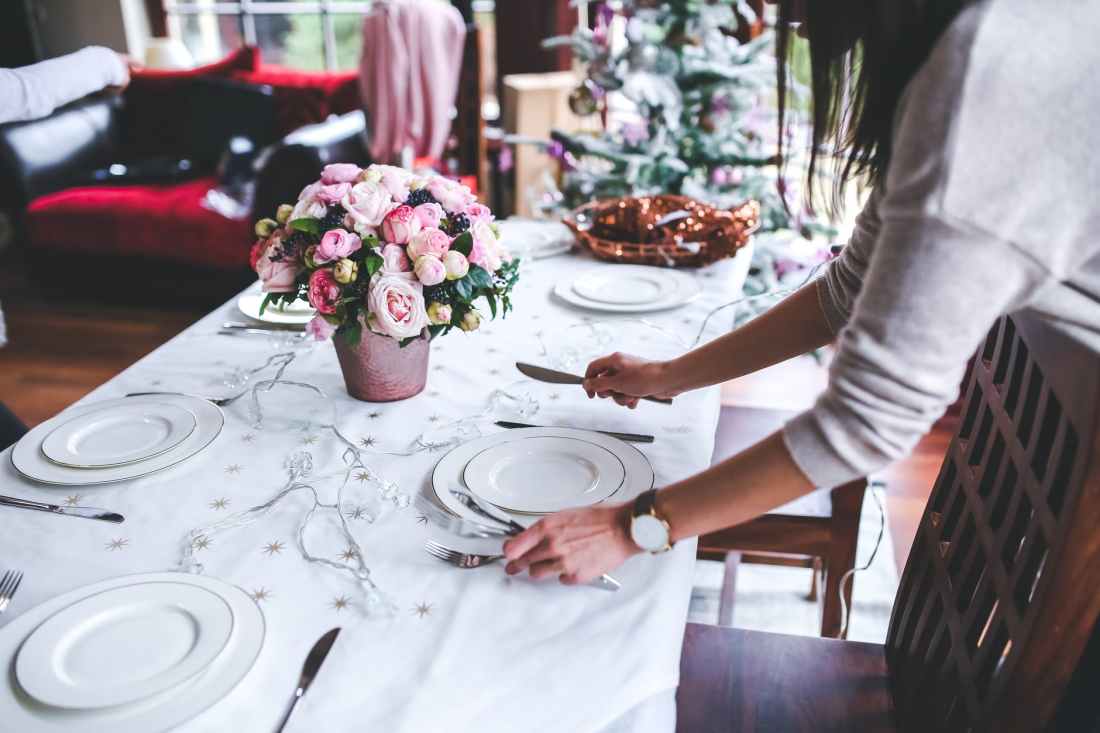
Formal evening dinners are about enjoying quality food whilst also enjoying conversation with the company present. Since they are intended to be a pleasurable experience rather than just a fuelling of the body, these dinners usually have multiple courses with a sequence of different foods. These different courses mean that additional cutlery is used and if you are unfamiliar with these it can be confusing as to what is expected. In general, it’s better to be over-prepared so you feel knowledgeable and at ease, rather than to be under-prepared. Embarrassment and confusion will only distract you from the main reason you are there: to socialise with other people. It takes just a little knowledge of the system for the dining etiquette to be suddenly not so complicated as it may initially appear.

Dinner Presentation

There are two main styles in which dinner may be presented. The first, service à la française, originated in France and involved all the food being displayed on the table at the same time. This can still be seen today in the adapted form of buffets. The second, service à la russe, originated in Russia and was introduced to Paris by a Russian ambassador in 1810. This involved multiple courses being brought in separately from the kitchen by footmen or waiters throughout the meal. Service à la russe had the advantage that food was still hot when the time came to eat it and it became popular in England, later catching on in France and the rest of the Western world. Most formal dinners and Western restaurants today use a version of service à la russe.

Place Setting Layout

An easy way to remember the order for place settings is to hold your hands out in front of you and bend your thumbs to touch halfway along your index fingers. Your left hand will form a letter ‘b’, indicating that your bread plate and butter knife are on your left. Your right hand will form a letter ‘d’, indicating that your drinks glasses are on your right.

In the centre in front of you will either be an empty space for plates to be set (if you are in Britain) or a large service plate for other plates to be set on top of (if you are in America). In America it’s felt that guests shouldn’t come to a ‘naked’ place setting so service plates are used for decoration, although they also help catch drips or spills. However, in Britain service plates are considered unnecessary since they are not eaten from and so are traditionally not used.

Another cultural difference is that in American place settings the spoons are positioned above the plate, whereas in British settings they are traditionally positioned to the right hand side. However, since the American setting is used in international business it has become the norm in much of Britain. At Buckingham Palace, for instance, the American place setting for spoons is now used because The Queen receives many international guests and wishes to put them at ease – an example of following the spirit of etiquette over always obeying the rules of correct etiquette.

Cutlery Layout

A good general rule with cutlery is that you work from the outside in, and with cutlery above your plate you work from the bottom to the top. If you’re unsure which cutlery to use, you can watch your fellow diners to follow their lead. Forks will be positioned to the left of the plate to be used in the left hand, whereas knives will be positioned to the right to be used in the right hand. Knife blades should be facing inwards towards your plate to show that you mean your neighbour no harm.

The invention of stainless steel during the Industrial Revolution led the Victorians to design an excess of different cutlery utensils, each suited for specific foods. While the most elaborate of Victorian excesses are now rarely seen, formal dinners still make use of multiple cutlery pieces. The cutlery set on the table will indicate what types of food can be expected. Sometimes it will also show how many courses there will be, but this isn’t always the case as some etiquette experts consider it bad form to have more than three knives and forks on the table at a time, with the exception of an oyster fork. In this case, any cutlery for additional courses will be brought in separately later. Before the pudding course everything will be removed from your place setting except your water goblet and wine glasses.

Types of Cutlery

This isn’t an exhaustive list but consists of the most likely items to be encountered, as well as demonstrating the system in which cutlery is arranged.

To right of dinner plate: oyster fork resting in soup spoon, fish knife, entreé knife, meat knife, salad knife.

To left of dinner plate: fish fork, entreé fork, meat fork, salad fork.

Above dinner plate: ice cream fork, dessert fork, dessert spoon.

This setting would indicate an eight-course dinner consisting of hors d’œuvres, soup, fish, entreé, palate cleanser, main course, salad, and pudding, which would then likely be followed by coffee afterwards. The salad knife and fork would most likely be brought in later with the salad course, to avoid an excess of cutlery on the table at any one time.

Three-Course Dinners

Three-course dinners are the most common and are standard for all but the most formal dinners today. Additional courses would most likely be found at only very formal events. A three-course dinner consists of soup, a main course, and pudding.

Soup is first in a three-course dinner as a lighter, liquid starter. The soup spoon should be scooped away from you to avoid potential spills and then sipped from the side of the spoon. A bread roll may be served at the same time on your bread plate, but you shouldn’t dunk the bread in your soup unless you’re in an informal environment with friends.

The main course is the richest and most substantial part of a dinner. Unless you have chosen a vegetation option, it traditionally includes meat and should be eaten with the meat knife and meat fork.

Pudding is the sweet course that concludes a dinner. Depending on what is served, it would usually be eaten with the dessert fork in the left hand and dessert spoon in the right hand, with the spoon transferring food to your mouth. Having the most sugary foods at the end of a meal is best for your dental health because your enzymes are already at work and prepared to break the sugar down.

Full-Course Dinners

Although the Victorians had very elaborate multi-course dinners, these became shortened throughout the twentieth century. Whilst the three-course dinner is the standard nowadays, additional courses may be encountered at grander affairs. As a general guide, these courses start with light food then become richer with the main course or roast as the pinnacle, followed by more delicate and sweet foods to finish.

  1. Hors d’œuvres is French for ‘outside of works’ because the chef’s main work will come later in the main courses. It is an appetiser that may be finger food or could use the oyster fork.
  2. Amuse-bouche is French for ‘mouth amuser’ and is small bites of food that offer a glimpse of the chef’s skill while guests are waiting for the next courses. They emerged as part of the nouvelle cuisine movement of the 1960s so were not found in more traditional meals.
  3. Soup is a relatively light course that prepares guests from the more substantial foods to come.
  4. Fish traditionally came next. It was eaten using the fish fork and fish knife, however these largely fell out of fashion after World War One because the upper classes viewed them as a pretentious middle-class invention and preferred to use two forks instead.
  5. Entrée means ‘entrance’ in French and is a small course prior to the main course. However, in America and parts of Canada it is instead sometimes used to refer to the main course itself. This is because only the upper classes would regularly eat a full-course dinner and, as eating habits became simplified, Americans began to eat what would have been an entrée as their main course instead. European eating habits also became simplified, but they retained the term entrée as referring to a starter course.
  6. Roast/main course is the richest, most substantial, and largest course of the dinner. It usually involves meat, unless you are vegetarian.
  7. A palate cleanser is sometimes served between two more substantial courses, such as between the roast and cold dish or alternatively between the entreé and roast. It is usually a punch or sorbet, which is eaten with the ice cream fork.
  8. Cold dish/second main course is the last of the more substantial courses and traditionally involved cold meat, as opposed to the hot meat of the main course.
  9. Salad is served after the main courses in Britain, whereas in America it’s instead served before the main course. It is eaten with the salad fork and salad knife, which are smaller than those used for meat.
  10. Pudding is the British term for the sweet course, although in America it’s commonly called ‘dessert’. The pudding course could include cake, pie, tart, ice cream, pastry, custard, or an actual pudding – to give a few examples.
  11. Dessert, unlike pudding, is the fruit course that acts as as a palate cleanser at the end of a meal. It’s name comes from the French ‘desservir‘.
  12. Savouries/cheese are served after dessert in Britain. Savouries are less popular nowadays and a cheese course may be seen instead. The idea for both is the same – it’s something plain and salty that will clear the palate before the following drinks. In America, France, and most other European countries, however, cheese is instead served to accompany wines before pudding.
  13. Coffee isn’t really a course but is frequently served after dinner. The increased blood sugar levels from dinner can induce sleepiness and coffee helps to counter that effect, allowing people to continue after dinner discussions.

Learn More

10 Lessons From My First Society Dinners

Some time ago, a group I belonged to was invited to attend some of the dinner meetings of a larger society, which was formed of local business leaders. It was a social and charitable affair rather than being a business occasion, but it was still relatively formal. The only semi-formal event I’d ever been to before was my school prom, so I didn’t know what to expect for a society dinner. Like most things in life, it turned out I needn’t have worried so much. However, there were a few details that it would have been useful to know beforehand. Here are the lessons I learnt, so that you can be better prepared for society than I was.

1 Dress Codes

Always clarify the dress code with another woman if you’re unsure what to wear. Ideally you should ask the hostess, but if that’s not possible make sure to ask another woman whom you know is going. I learnt this the hard way. Although of course not always the case, in general it can be a bad idea to trust a man to communicate the dress code. It’s easy for them as they can simply add or take away a tie and jacket, but us ladies need to plan our entire outfit. Before my first society dinner I got the mistaken impression that it was a black tie event, when it turned out to be more of a ‘lounge suit’ affair. Being conscious that you’re either over- or under-dressed will distract you from confidently participating in the activities, so it’s best to check. The next time I went to a society dinner I made sure to tell the girls who were going for the first time what to expect!

2 Formality

Society dinners may seem somewhat intimidating at first for those of us who aren’t used to them, but they aren’t a big deal for everyone. People who have grown up with their family participating in such events find them completely normal. There is a scale of formality above what most of us experience in our everyday lives, and on that scale these ‘formal’ events may actually be considered relatively informal. It’s better to show respect by overestimating rather than underestimating the formality of an event, but in many cases you can be a lot more relaxed than you think. After all, you are there to socialise not to be judged.

3 Seating Arrangements

At dinners it’s traditional to be seated man, woman, man, woman. The idea is that this encourages more diverse and interesting conversation, whilst also giving an orderly symmetrical arrangement. At some dinners you may be designated a seat, but at others you’ll be free to choose. We were given place cards at one dinner I went to, which we could place wherever we liked. I put my name at the chair next to the girl I had travelled there with, however, when it was time to be seated I discovered that it had been moved so that I was instead sat between two men. It took me by surprise and had I known that custom beforehand it would have saved me confusion.

4 Conversation

Because of that change in seating arrangements I ended up being sat next to an old military man with whom, on a surface level at least, I had nothing in common. Society dinners are fundamentally social events, so you should go ready to make conversation with anyone. Those could be people of very different stages of life, backgrounds, and interests. Don’t make prior expectations of who you’ll be talking to; it helps to be prepared for anything. The height of politeness is to be equally able to be polite with anyone, but don’t beat yourself up if you’re not comfortably there yet. It’s a learning experience.

5 Asking Occupation

It goes without saying that you should never discuss finance, politics, or serious religion in situations that call for small talk. What I hadn’t considered beforehand was the more subtle question of asking about someone’s career. Since someone’s career forms a large part of the way they interact with the world, it’s natural to want to find out when you’re searching for a common topic of conversation. The difficulty is that it can come across (however unintentionally) like you’re looking to place them or fishing for information to figure out whether they might be useful to you. I would suggest being cautious of directly asking people what they do, or at least to be mindful of how you phrase the question unless they bring it up first.

6 Follow the Lead

If you are new to society dinners and uncertain how to maintain small talk with strangers, you don’t need to worry about it too much. That’s not your responsibility. It takes two people to make a conversation and if you’re new it’s ok to let the other person do that work. Don’t be afraid to leave moments of silence. If it’s just a social occasion, there’s no pressure and you don’t need to ‘prove’ yourself. Just let other people lead the conversation and make sure you’re ready to follow where it goes.

7 Strange Traditions

If you are going to a society dinner, be prepared for strange customs and traditions. This is especially true if the company is mostly formed of an older generation, as the dinners I went to were. Before the first course was served, everyone had to stand up while the society’s president said grace and thanked God for dinner. This wasn’t a shock for me as I ‘d grown up in a Christian family, but it was amusing to see other people’s reactions when the group I came with were talking about it later. They found it a very quaint, unexpected oddity! Later on, I was the one taken by surprise. We all had to stand up again whilst a ‘loyal toast’ was given to The Queen, and I didn’t realise what was happening in time to raise my glass with everyone else. So be prepared for unfamiliar traditions!

8 Coffee

At many dinners it’s customary for coffee to be served after the meal. This wasn’t a big deal but was something I hadn’t known beforehand. I think that being aware of small things such as the usual order of events and courses can help you feel much more at ease. If you can predict what will happen next it helps you feel more like you know what you’re doing, rather than being constantly surprised by small details that remind you it’s an unfamiliar experience.

9 Transport Plans

Before you go to any event, make sure you know how you’re getting home again afterwards, especially if it’s an evening event. For example, if you’re travelling by public transport you don’t want to be worrying about where exactly the bus stop is – that’s not a fun way to end your evening. Suss out your plan in appropriate detail beforehand, and don’t be afraid to ask an acquaintance to point you in the right direction if necessary.

10 Experience

My final point is to make the most of the experience and remember that it’s good to try new things. The only way to extend your comfort zone and grow as a person is to step slightly outside of that comfort zone. Preparation beforehand will help you feel more at ease and if you go once then the next time will be much less intimidating. This doesn’t just apply to formal events such as society dinners, but to all new experiences in life. We are lucky to have these opportunities and they offer us the chance for personal growth, through which we can develop different aspects of our personalities and life experience.

Introduction to Dining Etiquette

‘Man, it has been said, is a dining animal. Creatures of the inferior races eat and drink; man only dines.’

Mrs Beeton’s Book of Household Management

From family suppers to formal dinners, eating together is often an important social occasion. Food and drink, however, provide many opportunities for things to go wrong and it can be very unpleasant to sit next to a messy or loud eater. Because of this, etiquette is especially important when at the dining table.

Modern Western table manners arose during the Renaissance, when the concept of personal betterment and refinement was popular. In 1533 Catherine de’ Medici left Florence (the cultural centre of the Renaissance) to marry Henry II, the future king of France. Both were fourteen-years-old at the time. Catherine de’ Medici did much to Italianise French dining habits and is credited for introducing modern table manners to the rest of Europe, which was still feasting in a Medieval fashion. The use of forks was slow to catch on, and it was only by the eighteenth century that etiquette guides required the use of forks. Our dining etiquette originates from that period.

Basic Table Manners

‘The best table manners are always those that no one notices.’

Debrett’s

The basics of table manners are the rules we were taught as children. They may seem like common sense, but are important to remember. Wash your hands and be clean before coming to the table. Wait until everyone has been served before beginning to eat. Chew with your mouth closed, finish your mouthful before talking, and never stuff your face with more than you can elegantly manage. Don’t burp, slurp, chew loudly, or make other unseemly noises. Avoid making scraping or clattering noises with cutlery. Don’t pick your teeth at the table or spit out food. Keep your elbows off the table, sit with a good posture, and show interest in the conversation. Don’t use your phone at the table or even have it visible at the table. Listen politely and wait your turn instead of interrupting conversation. If you want something from the other side of the table, ask someone to please pass it to you rather than reaching across them. Try to match your eating speed to those around you, so they are not waiting for you to finish nor you waiting for them at the end. It is a matter of being respectful so that the focus is on enjoying the food and conversation, rather than being distracted by someone’s atrocious table manners.

Continental Style Dining

There are two styles of using cutlery: the continental style and the American style. The continental style is used throughout continental Europe as well as in Britain. The American style, as evident from its name, is unique to America. The difference between the two styles is in their usage of the knife and fork.

The knife should be held in the right hand while the fork is used in the left hand. The handles of the knife and fork should be held inside the palms of each hand, with the index fingers pointing straight down the backs of each. The knife should never be held like a pen. The right index finger should reach to where the knife handle joins the blade, while the left index finger should reach to just before the bridge of the fork with the fork tines turned downwards. The remaining fingers should be wrapped around each piece of cutlery to hold it securely. Your elbows should be held close to your sides, and your wrists should be held low above the plate.

In the continental style, the fork is used to hold a piece of food in place whilst the knife cuts a single mouthful. Only a single mouthful should be cut at a time – you’re not a little child anymore who needs all their food cut up for them beforehand. The fork is then used, still in the left hand, to transfer that piece of food to the mouth. The knife remains in the right hand, held low above the plate until it is needed to cut the next mouthful.

The fork tines can be used to stab a piece of food, and the knife can be used to help pile softer foods on the back (the convex side) of the fork. When eating continental style, the concave side of the fork should never be used to shovel food. Apparently piling food on the back of the fork is a very British thing to do, and different types of food can be combined in a single mouthful as long as it’s of a manageable size.

American Style Dining

American style dining is also known as the ‘zig-zag’ or the ‘cut-and-switch’ method. To begin with, the knife and fork are held in the same way as in the continental style. However, once a mouthful of food has been cut, the knife is then laid to rest diagonally across the top of the plate. The fork is transferred from the left to the right hand and is held like a pen with the concave side facing upwards. The left hand is placed to rest neatly in your own lap until it’s needed again. The fork (now in the right hand) is used to stab a piece of food and transfer it to your mouth. The fork is then moved back into the left hand again and the knife taken up in the right hand to repeat the process.

There are various theories as to why Americans have their own style of dining instead of using the continental style. The continental style is used throughout Europe as well as in much of the rest of the world for international business. The most popular story appears to be that the American style of dining was once the norm in France. Americans chose to adopt the French way of dining since they considered France to be the height of civility. However, by the 1850s the French switched to the continental style. They considered it more efficient, even though it initially required more practice for right-handed people to become fully coordinated. The Americans, meanwhile, continued using their cutlery the way they had before.

Other Western Cultural Differences

Besides the most obvious difference in the use of cutlery, there are a number of other differences between the dining etiquettes of Western countries. In America, your spare hand should be kept neatly in your lap under the table. In Britain, you shouldn’t put your cutlery down during a course unless you are reaching for your drink or napkin, but between courses your hands should be kept in your lap beneath the table. By comparison, in France this would be considered incredibly rude. When dining in France, your hands should be visible above the table at all times. Historically this was to prove you weren’t hiding a weapon. Nowadays it shows that you’re not misbehaving beneath the table, and also gives ladies a chance to show off their fine rings. This rule is also true for much of the rest of continental Europe, including Spain, Italy, Germany, and Sweden.

In Germany it is polite to avoid using your knife to cut, instead slicing food with the side of your fork if possible. This is a compliment to the host or hostess since to cut with your knife would suggest that the food was undercooked. Another cultural etiquette difference is the position that your knife and fork are left in when you have finished eating. In Britain they should be left in a 6:30 position (imagining your knife and fork as the handles on a clock) to signal that you have finished, whereas in America they should be left in a 4:20 position. Again, this varies from country to country in continental Europe.

Learn More

Why Etiquette?

While I’m working on the next blog article for our series on biblical women (next up is Sarah!), I’ve decided to kick off with a new series. Since the last bible study was of a rather dark story, I thought it might be nice to have some more lighthearted posts to mix it up a bit and continue with some of the other ideas I have for Feminine Finishing School. So let’s talk about etiquette!

History of Etiquette

The word ‘etiquette’ comes from the French étiquette, which meant a label or note. This is because signs were placed around the court of the French king Louis XIV at Versailles to remind his courtiers how they were expected to behave. These signs were known as étiquettes. The term was then borrowed by the Spanish royal court, who began using it to refer to the actual behaviour rather than just the signs it was written on. The French borrowed it back from Spain with this new meaning, and from France it was then adopted into English. According to the Oxford English Dictionary, the word ‘etiquette’ was first used in English in 1737. By the mid-eighteenth century, etiquette had become established as a word in the English language. With the arrival of the Industrial Revolution, it then grew in importance as increased opportunities for social mobility became available to the public and people wanted to improve themselves.

Relevance of Etiquette Today

Etiquette is sometimes dismissed as a snobbish set of silly rules. Although some people may have degraded it to that, that is not its true nature. The purpose of etiquette is NOT to catch people out! It’s not about judging other people for their social faux pas, but about learning the correct behaviour to help put others at ease. True etiquette and good manners are about the spirit of intention behind them. They act as a social lubricant that can allow you to feel more confident in how to behave, so as to best communicate and interact with other people. Making the effort to act according to etiquette is a way to show respect and appreciation for those around you.

While the underlying spirit of good manners, respect, and kindness are universal, the more specific details of etiquette are culturally defined. As such, behaving with good etiquette is an implicit signal that you either belong to that culture or that you care enough to learn about it. By appearing gracious and graceful as a true lady (or gentleman), you allow bridges to be crossed between people and doors to be opened to new opportunities. Etiquette should be guided by the circumstance in which you find yourself, as it is dependant on the different cultures and levels of formality, however it’s wise to be prepared beforehand with a knowledge of the proper behaviours.

Often these are not things that most of us learn while growing up. Those who are in the know tend to take that knowledge for granted, so it can be difficult for us to learn ourselves. However, I hope that Feminine Finishing School can become a place to gather that information from the obscure corners it’s been hiding in. I have plans to write many blog articles on the overlooked details of etiquette, so I do hope that you will enjoy learning alongside me.

Adah & Zillah: The Beginning of Oppression

Bible Verses: Genesis 4:19-24

Very little is known about Adah and Zillah. There are only a few Bible verses about them, and they tend to be overlooked, however they are the first women after Eve to be named in the Bible. The ancient biblical authors clearly thought they were important enough to include, but what can we learn from them? Adah and Zillah were the two wives of Lamech, who was descended from Eve’s son Cain. Cain had given in to the power of evil by murdering his twin brother out of jealousy, despite God warning him to not let sin rule over him. Because of this, Cain had to leave the presence of God and with each generation his descendants spiralled down into more sin, eventually coming to Lamech with the sixth generation. All in all, it’s a pretty miserable picture of the humanity that God had once declared ‘very good’.

Lamech was characterised as a new low point in the human story. He was arrogant, violent, and boasted of his cruelty in murdering those who had done him even the slightest harm. Instead of worshipping God, he sung of his brutality and terrible power. Lamech was an oppressive, aggressive force who gloried in injustice. And it is in this context that Adah and Zillah emerge, as the first example of polygamy in the Bible. No doubt they were just as fallen and sinful, but we don’t know enough details about their lives to be able to say. What we do know is that they were treated as property to be accumulated rather than humans and women to be valued. The Bible makes it clear that polygamy and the oppression of women are a result of sin and cause great pain and suffering that is against God’s good plan.

Names are significant in the Bible as they often have meanings in Hebrew. In the cases of Adah and Zillah this link appears to be more tenuous than in other cases, however it has been suggested that Adah may mean ‘ornament’ while Zillah may mean ‘shadow’. These meanings certainly fit with the way that the two women are presented. Being named an ‘ornament’ would suggest that Adah was treated as no more than a trophy wife rather than as her own person, whereas the name ‘shadow’ suggests that Zillah was hidden unseen in the dark and not allowed to fulfil her potential. The power-obsessed Lamech treated these two women as little more than status symbols and an audience for his boasting. It is a far cry from the loving, monogamous marriage that God had intended for Adam and Eve.

Why was this depressing story included in the Bible? The ancient biblical authors clearly wrote of Adah and Zillah for a reason, especially since the book of Genesis is about ‘beginnings’ and sets the scene for God’s plan in this world. I think its purpose is to show clearly from the outset that this is not what our God wants. Later stories in the Bible have many examples of oppression, violence, arrogance, polygamy, and the mistreatment of women. Even God’s people, who chose to follow Him, frequently fell short in the way they treated their womenfolk. God uses broken people, but He has a better plan for us all. And He knows all His daughters, every overlooked Adah and Zillah, by name.

So this story is a cautionary tale of how not to treat women, or any other oppressed group. It is a demonstration of how sin has multiplied from Eve’s curse of being ruled over by a bad husband to the systematic oppression of women in a patriarchal society. Sin hurts everyone, but it has been especially damaging to women – hence why war was initiated between Eve (women) and the serpent (forces of evil/sin).

Yet not all is bad. Even when fallen, human creativity continues. Adah and Zillah’s children became the first craftsmen and artists, specialising in different occupations. The number 7 in ancient Jewish culture signified completion or wholeness, and as these children were the 7th generation from Adam and Eve, they showed a totality of the human project being launched into the world.

This human creativity is directly linked to the mothers, Adah and Zillah, who bore life to their children. Humanity may have got lost along the way, but they still had the inner urge to create and God could use that to build a better future. While the individual story itself is a human tragedy, there remains an element of hope to be found in the promise of a greater story. While it is Adah and Zillah who suffer most, it is from them that hope continues. Women are an important part of God’s plan.

Things had gone wrong along the way, but this was only the beginning and God would redeem His people.

Top Ten Traditional Hymns

As much as we need creativity and to avoid stagnancy with new Christian songs, I find that sometimes there is just something beautiful about traditional hymns. They’ve been sung across generations throughout communities, becoming a deep-rooted tradition. They unite thousands of people from all walks of life, some of whom have never even met, in the shared worship of one God. There’s something about the time-enduring aspect of it that I find very special. There’s a peace in the ritual familiarity of singing many-times-repeated words. A grounding in faith and steadfastness when life seems crazy. A reminder that people much older and wiser than us can testify to God’s faithfulness even if we don’t always feel it right then, and that there is a reason why Jesus of Nazareth is still remembered two thousand years later. There is a reason why this faith has lasted all this time. A reason why, despite people throughout history being convinced that religion could not last, that there have always been people coming back to our good, loving Father.

I want to share a few of my favourite hymns (by female singers, since this is Feminine Finishing School!) and collect a mini library of songs that we can come back to when we need to listen again. Or at least that I can come back to! These are all songs that I like personally, and most are traditional in my church and culture. I would love to know what songs are traditional in your culture, whether they’re Christian or otherwise. Please do comment below! And I hope you enjoy these songs!

1. Be Thou My Vision

‘Be Thou My Vision’ is based on a sixth-century Irish poem. The most popular English version was translated in 1912 by Eleanor Hull, and since 1919 it has been sung to an Irish folk tune known as ‘Slane’. It remains one of the most popular hymns in Britain.

2. How Great Thou Art

‘How Great Thou Art’ is based on a Swedish traditional melody and poem composed by Carl Boberg in 1885. Additional verses were added by Stuart K Hine when he translated it into English in 1949, and in 2013 it was voted the UK’s favourite hymn.

3. Amazing Grace

‘Amazing Grace’ was published in 1779 by John Newton, who after an eventful life as a sailor that gained him a bad reputation, gradually converted to Christianity and later became a clergyman. It gained popularity during the Second Great Awakening of early 19th century America.

4. Peace In Christ

‘Peace In Christ’ is a relatively recent hymn, written in 2018 by Nik Day in response to the chaos in the world. Yet despite this, it feels very much like a traditional hymn – and the video is also incredibly cute!

5. In Christ Alone

‘In Christ Alone’ is another modern hymn. Written in 2001 by Keith Getty and Stuart Townend, it has an Irish melody and has so quickly become traditional that I was surprised to learn how relatively recent it is.

6. The Lord’s My Shepherd

‘The Lord’s My Shepherd’ is based on Psalm 23 in the Bible and is attributed to King David. It is now traditionally sung to the tune ‘Crimond’, which was composed by Jessie Seymour Irvine around 1872.

7. Lord Of The Dance

‘Lord Of The Dance’ was written in 1963 by the English songwriter Sydney Carter, who borrowed an American tune. It has since become very popular in British primary schools, and so holds nostalgic memories for many people.

8. When You Believe

‘When You Believe’ was composed for the 1998 musical animated film ‘The Prince of Egypt‘, which told the story of Exodus. Again, it’s one of those songs that sounds as if it could be older than it is.

9. Abide With Me

‘Abide With Me’ was written in 1847 by Henry Francis Lyte as he lay dying from tuberculosis. He survived only three more weeks after its completion. It is frequently chosen for singing at funerals, and was also played on the deck of the Titanic while it sank.

10. Here I Am, Lord

‘Here I Am, Lord’ was written by Dan Schutte in 1981, who based it on the biblical passages Isaiah 6:8 and 1 Samuel 3. In 2013 it was voted the UK’s fifth most popular hymn.

There are many more hymns of course, but I decided to limit this list to ten. What songs are traditional in your culture? I’d love to know, so please do comment below!

Eve: Mother of All the Living

Bible Verses: Genesis 1:26-31, Genesis 2:18-4:2, Genesis 4:25, Genesis 5:1-2, 2 Corinthians 11:2-3, 1 Timothy 2:11-15

Eve is famous for being the first woman in the Bible, and infamous for being deceived into eating from the tree of the knowledge of good and evil. She appears in what biblical scholars have recognised as the ‘primeval history’ of Genesis chapters 1-11, as opposed to the more literally historic ‘ancestral history’ of Genesis chapters 12-50. This primeval history forms a creation ‘myth’ that shares deep theological truths about the nature of God, humans, and the world. The claims it makes are radically different to the creation myths of the cultures that surrounded the ancient biblical authors – but this blog post will focus on the messages of Eve. Eve is not just the first woman but the only woman to exist before the fall of humanity into sin. As such, she can help in understanding what God’s intention for women is. However, it is important to remember that all the characters in the Bible are just that – their own flawed characters – and are not perfect models of how we should live.

Created & Blessed by God

From the beginning woman was created equally with man in the image of God, who declared them to be a ‘very good’ creation. God blessed Adam and Eve (and through them all humanity), granting them the authority to rule earth together in the shared purpose of furthering God’s good plan. They were called to ‘be fruitful and multiply’, or in other words to create life and flourishing. This doesn’t just mean to have children, but to reflect the image of God’s creativity and love by doing whatever brings life and encourages earth to thrive.

A Need for Woman

The only thing that God states to have been ‘not good’ before humanity’s fall from Eden was for Adam to be alone. According to the Bible, our God is a God who loves to share. He is a trinity of three-in-one which means that God is a community of love and sharing, who also wants to love and share with us. Since humans are made in the image of God, we have a need to love and share with others and are made to be in community. God, however, did not bring Adam and Eve together straight away. Instead God waited for Adam to recognise he needed someone and that there was not an equal partner to be found among any of the animals. Eve was different from the other creatures of the earth and Adam had to recognise she was missing so that he would truly appreciate both her and God’s goodness.

Strong Help Meet

When He creates Eve, God says that He will make a ‘help meet’ for Adam. This is an English translation of the Bible, whereas it was originally written in Hebrew and used the phrase ‘ezer kenegdo’. This phrase has implications that are lost in the English translation. The word ‘ezer’ does not in any way indicate a subservient assistant, but rather someone strong who provides vital help – or in other words, a rescuer. Throughout the Old Testament this term is most frequently used to refer to God Himself, who is a strong helper and rescuer to His people. Obviously, women are only human and the type of help they provide is not comparable to God’s, however it shows that God created woman as a powerful important partner for man to solve the only thing that was ‘not good’ and so that man would not be alone.

The word ‘kenegdo’ means that woman is corresponding to and fit for man. They are equal and the same, yet also different in important ways that enable them to meet as good partners and complete each other. This can be seen from the fact Eve was taken from one of Adam’s ribs. She was taken from his side to be his partner beside him, not from his foot to be subservient and trampled upon or from his head to rule over him. Ribs are also strong and provide vital help in protecting the heart and life itself. God brought Eve to Adam as a treasured gift to be valued and loved, and God prepared Adam beforehand as a gift to Eve so that he would be ready to value and love her. Adam recognises this when he declares Eve to be ‘bone of my bones’ and ‘flesh of my flesh’. Their partnership is created good by God and men are to ‘cleave unto his wife’ and give them priority over all other human relationships.

Naïve but Not Innocent

Eve had been brought to Adam in the beautiful garden of Eden, where they dwelled close to the presence of God and in peace with all the other creatures whom God had made. All was good. The Bible says that ‘they were both naked, the man and his wife, and were not ashamed’. This can be taken both as in unclothed and as in emotionally naked. They trusted each other completely and could be truly themselves, vulnerable without hiding anything, physically or emotionally. God had told Adam that they could eat from any tree in the garden – except for the tree of the knowledge of good and evil. This was just one simple restriction. Just one test that allowed them freewill to either trust or disobey God. Adam, as the first human, was given the responsibility to share this command with Eve. God could have repeated His message to her directly, but it seems that God likes people to share with each other and grow in relationship together.

However, Eve was not properly taught God’s words. God had said not to EAT of the tree, or they WILL die; yet Eve had learnt this as to not EAT or even TOUCH the tree, or they MIGHT die. Eve had learnt a distorted version of God’s command, but she still knew what she was not to do. Before the fall she could have had no way of knowing the intentions of the serpent that tempted her – no one had ever faced temptation before – yet this sadly only makes her naïve. She was not innocent in her deception because she ultimately still chose to distrust and disobey God.

Distorted Humanity

What is so tragic is that Eve was tempted into eating from the tree of the knowledge of good and evil because she saw it to be ‘a tree to be desired to make one wise’, when true wisdom can only come from God. We are told later in the Bible that ‘The fear of the LORD is the beginning of knowledge’ (Proverbs 1:7) – and Eve chose the very opposite of this. She trusted surface appearances over God’s words and valued her own desires over Him.

The sad thing is that even as she is about to sin by eating the fruit, Eve still has the instinct to share it with Adam. Humans were made to be so good, yet instead ended up leading each other into sin. It’s worth noting that while this whole scene between Eve and the serpent was taking place, Adam was just complacently standing by. Adam knew exactly what God’s command had been, yet even though he was close enough to be passed a piece of fruit he did not interfere to protect the woman he loved.

Consequences to Human Sin

Immediately there were consequences to their sin. God is the creator and the ultimate source of life. To cut yourself off from Him means death. Adam and Eve died spiritually that day, meaning they could no longer live where heaven and earth overlapped in the garden of Eden, and in dying spiritually they set a ticking clock on how long their physical bodies could last.

Their sin also brought death to their relationship. The first thing Adam and Eve do is try to cover themselves and hide, as they can no longer trust each other. They even try to hide themselves from God, which of course does not work, even though God respects their free will by pretending He can’t see them and doesn’t already know what they’ve done.

Reflecting on the detail of this story, I find it amazing! This is essentially the first prodigal son story. Even though these humans had just brought death to the world by doing the one thing God told them not to, His first response is to call for them. Our Father wants so much for us to be in His loving presence, and yet loves us so much that He respects our free will and decisions even when they’re terrible! Like any loving parent, God wants the best for us but knows we must be allowed to make our own mistakes, with the hope that we will return to Him again.

Responses to Sin

When God asked Adam and Eve what they had done they both tried to avoid responsibility by blaming others. Adam becomes very defensive, blaming Eve and even daring to blame God for giving him Eve, before he admits what he did. Through this defensive denial of self-responsibility, Adam only adds further damage to his two most valuable relationships, attempting to protect himself by sacrificing his wife. Eve in turn tries to blame the serpent before admitting what she has done but does not at least contribute further damage towards her broken relationships.

Even though God loved them unconditionally, there is a cost to sin and they each had to face the consequences. Gender has become distorted and corrupted as a result of the fall, yet from this story in the Bible it is clear there were God-ordained differences between men and women even before the fall because they each face different consequences.

Consequences for Woman

For Eve there would be increased pain in childbirth and raising children. Since she must bring life into a world now full of death, it is inevitable that this would bring hardship. Yet even among judgement God was so eager to bless humanity that He declared what is known as the ‘protoevangelium’ – the first promise of a future saviour who will defeat evil by sacrificing himself. This saviour would be the woman’s child and God warns the serpent that He ‘will put enmity between thee and the woman’, signalling the start of a war between humanity and spiritual evil.

Another consequence for Eve was that she would desire her husband but that because of his own sinful nature he would be inclined to take advantage of this. Men would tend to rule over women instead of becoming the partnership God intended. We only need to look at history to see how this has played out, with girls being taught to idolise romantic relationships and women being oppressed or disregarded by patriarchal cultures. The word translated ‘desire’ in the Bible is the Hebrew word ‘teshuqah’, which can also be translated as ‘turning’. This suggests that women will tend to turn to their husbands to fulfil their needs, instead of turning to God. They will desire their romantic partner more than they desire God. This gives men a tremendous amount of power and is doomed to failure because no human can fulfil all another human’s needs. That is a position meant to be filled only by our ever-loving, all-powerful God.

The Woman Named Eve

It is only at this point in the story that ‘the woman’ is called Eve for the first time. Adam names her after God has pronounced the consequences of their sin, marking their reconciliation as husband and wife and his newfound appreciation of her.  The Bible explains that he calls her Eve ‘because she was the mother of all living.’ Most names in the Bible have significant meaning and Eve’s is no exception. In our English translations the name ‘Eve’ is derived from the original Hebrew ‘Chavah’. ‘Chavah’ means ‘life’ or ‘living one’ and is also connected to the Hebrew word for ‘experience’. As the first woman, Eve is life. From her we can see that womanhood is inextricably wrapped up with the giving of life – whether this is through mothering children or by nurturing creation in other ways.

Eve Finds Faith

Not much is said about Eve after she and her husband Adam are exiled from the Garden of Eden. The story of the Bible instead continues by following her children and then descendants. However, the little that is said about her in the remainder of the Old Testament can tell us a lot. Eve had already been the first woman, the first wife, and the first human sinner. Now she became the first mother and the first human to praise God. When Eve gives birth to her first son Cain, she recognises that her child is gift from God and praises Him accordingly, declaring ‘I have gotten a man from the LORD’. She then gives birth to a second son named Abel, but the evil that had entered the world through sin does not go away and destroys this next generation. Cain murders his younger brother Abel and in consequence God sends Cain away to wander the earth in punishment. The pain and grief this must have caused Eve is left to be imagined. What we do know is that Eve had found a strong faith for God. When she gives birth to her third son Seth, she still appreciates and praises God even in her grief. She knows He has not forgotten her.

Danger of Deception

While the story of Eve is told in the book of Genesis in the Old Testament, there are also two commentaries on this story to be found in the New Testament. In 2 Corinthians the story of Eve’s deception by the serpent is presented as a cautionary tale to the church. Like Eve, we are also at risk of being ‘beguiled’ through ‘subtilty’ and need to guard against our minds being ‘corrupted from the simplicity that is in Christ’. God had made his will clear with the simple command that Adam and Eve must not eat from the tree of the knowledge of good and evil, yet the serpent distorted this to make it seem more complex than it was. Eve allowed herself to doubt and be deceived by the serpent’s over-complications instead of trusting God’s unchanging word. We must learn from her mistakes and avoid making the same.

Education for Women

The second New Testament commentary on Eve is found in 1 Timothy. This passage can be confusing if we don’t understand it properly, so I will link below a video series that I think explains it really well and in a biblical way. Eve was deceived by the serpent because she had not been fully taught God’s word and this lack of education had left her vulnerable to others’ suggestions. Adam had also disobeyed God but had done so knowingly, whereas Eve hadn’t understood what God had asked of her. For this reason, the Bible says to ‘Let the woman learn’ – a radical statement in its day – so they can study holy scripture and come to know God better. We are to learn from scripture with a peaceful spirit, rather than claiming false authority, and are to subject ourselves to the word of God. Through good biblical education we can defend against deception and become the woman that Eve was created to be.

Mother of All the Living

The passage in 1 Timothy concludes by declaring that ‘she shall be saved in childbearing’. This does not mean that women’s sole purpose is to have children, although children are a precious gift. Rather, for those of us who are Christians, we know we are saved by our saviour Jesus Christ and our faith in Him alone, not by what we do or fail to do. However, it was the childbearing of women that led to Jesus finally coming into the world. Eve brought death into the world through sin and was the mother of all the living. Then many generations later, Mary was the mother of the living Christ who defeated the power of death and sin on the cross. Because of these women, we are all saved through their childbearing – as long as we ‘continue in faith and charity and holiness with sobriety’ by choosing to follow Christ. God’s promise in the Garden of Eden of a future saviour is fulfilled! God brought life and salvation through woman, making Eve not just the mother of all the living as in all the people on earth, but the mother of all who shall have eternal life through our Lord Jesus Christ! What an amazing God we have!

Learn More

Women in Genesis

Later in this blog I want to look at what the differences are between masculinity and femininity, and about how we can live into our true femininity as twenty-first-century women. However, issues of gender have become so confused in our broken world that I’m very cautious of getting distracted by stereotypes rather than seeing the reality that lies beneath them. I think it’s important to ground our ideas in something. Since I’m a Christian, I want to make sure that I’m learning God’s definition of femininity, and the Bible is the best place to do this.

There are so many fascinating women in the Bible who express their femininity in vibrant, diverse, individual ways. They range from the gentle, trusting Mary who became the mother of Jesus, to the strong-minded, laughing Sarah who became the first matriarch of the Jewish people. From the glamorous, courageous Queen Esther who saved her people from genocide, to the bold judge Deborah who rescued her people through battle, and the humble yet daring Ruth who saw God at work in her everyday life. There’s Mary Magdalene who was among the first to see Jesus after he had risen from the dead, affluent businesswoman Lydia and church leader Phoebe who each furthered the spread of the gospel, and the faithful grandmother Lois who taught her children well. There’s Rehab who was a prostitute before she came to know God, anonymous midwives who conspired against the pharaoh to save the lives of persecuted Jewish babies, the singing prophetess Miriam, and Naomi who changed her name to Mara (meaning ‘bitter’) as a sign of mourning. And these are just a few of the many, many women to be found in the Bible.

There are too many women to look at in one go, so for now we’ll just be focusing on some of the most significant women in Genesis. Genesis is the first book in the Bible and its name means ‘beginnings’ as it sets the scene for what God’s plan is for humanity. Each blog post in this series will include Bible verse references so you can read along – and I’d encourage you to join in with this, even if you aren’t Christian, as there are some amazing stories. For those of you who may be unfamiliar with the Bible, the references take the form of ‘John 3:16’. This means the book of John (the Bible is a library of 66 books), chapter three, verse 16. These numbers will be printed in your Bible to make it easy to find – or you can easily find the Bible free online or in free Bible apps.

I’m excited for this series! I hope you will enjoy learning about these amazing biblical women too. Below I’ve included a list of all the women who are mentioned in Genesis, with those I plan to write a more detailed blog post on in bold.

List of Women in Genesis

  1. Eve
  2. Cain’s wife
  3. Adah (1)
  4. Zillah
  5. Naamah
  6. Daughters of Adam
  7. Daughters of Seth
  8. Daughters of Enos
  9. Daughters of Cainan
  10. Daughters of Mahalaleel
  11. Daughters of Jared
  12. Daughters of Enoch
  13. Daughters of Methuselah
  14. Daughters of Lamech
  15. Daughters of men
  16. Noah’s wife
  17. Noah’s sons’ wives
  18. Daughters of Shem
  19. Daughters of Arphaxad
  20. Daughters of Salah
  21. Daughters of Eber
  22. Daughters of Peleg
  23. Daughters of Reu
  24. Daughters of Serug
  25. Daughters of Nahor
  26. Sarai/Sarah
  27. Milcah
  28. Iscah
  29. Captive women
  30. Hagar
  31. Lot’s two daughters
  32. Lot’s wife
  33. Women servants from Abimelech
  34. Abimelech’s wife
  35. Abimelech’s maidservants
  36. Ishmael’s wife
  37. Rebekah
  38. Reumah
  39. Daughters of the Canaanites
  40. Abraham’s maidservants
  41. Rebekah’s nurse Deborah
  42. Rebekah’s damsels
  43. Keturah
  44. Abraham’s concubines
  45. Judith
  46. Bashemath (1)
  47. Daughters of Heth
  48. Mahalath
  49. Rachel
  50. Leah
  51. Zilpah
  52. Bilhah
  53. Dinah
  54. Daughters of the land of Shechem
  55. Adah (2)
  56. Aholibamah
  57. Anah
  58. Bashemath (2)
  59. Esau’s daughters
  60. Timna
  61. Mehetabel
  62. Matred
  63. Daughter of Shuah
  64. Tamar
  65. Tamar’s midwife
  66. Potiphar’s wife
  67. Asenath
  68. Jacob’s daughters
  69. Jacob’s sons’ daughters
  70. Jacob’s sons’ wives

Learn More

Humans: Man & Woman

Humans. We’re one species and yet two distinct types of people. Every society throughout the world and throughout history has acknowledged this two-in-one nature of humanity. It structures our interactions and relations with each other. On one level it’s simple, yet at the same time it’s an amazing, complex mystery. Nowadays gender may be more fluid, understood by many people as a spectrum rather than a strict binary, yet most humans still identify as either male or female.

Despite this universal recognition, we often struggle to clarify exactly what it means to be a man or a woman beyond basic biology. Is anatomy all there is to it? Or are we different on the inside too, at an emotional or spiritual level? We have been shaped by our cultures and socialisation, but surely there’s more to gender than just learnt differences? As humans we are more alike than we are different, but we are distinct too – and when those differences work together it is something beautiful.

In our present-day society in the West, we often turn to science for answers. Science, we think, can rationally and logically categorise distinctions. It can explain things in a way that makes sense. There’s much value in that, yet science is imperfect. For years it was received wisdom that men’s and women’s brains functioned in separate ways, however recent research has revealed that many of those studies were in fact unknowingly biased. Human brains have a plasticity that means they are very flexible to the influences of upbringing. Society socialises girls and boys differently – whether for good or for ill – and since that begins to shape their brains from a very young age it is hard to say what is society and what is nature. It’s the old and perhaps outdated debate of nature versus nurture. Where can we draw the line?

As a Christian, I try to root my worldview in God’s word. At the very beginning of the Bible in the stories of creation, this is how humans are introduced:

‘And God said, Let us make man in our image, after our likeness: and let them have dominion over the fish of the sea, and over the fowl of the air, and over the cattle, and over all the earth, and over every creeping thing that creepeth upon the earth. So God created man in his own image, in the image of God created he him; male and female created he them.’

Genesis 1:26-27

Here the name ‘man’ is used to refer to mankind, to humanity. God ‘created he him’ – humans as a singular species – and ‘male and female created he them’ at the same time. We’re the same and yet distinctive, a creation that is two-in-one. This is shown in the claim that we are made in the ‘image’ of God.

Being the image of God doesn’t refer to physical appearance because God is spirit not physical. What it refers to is the role and purpose of humans on earth. We are made to be God’s representatives and ‘have dominion’ to rule over the earth by taking care of it, continuing God’s work in creation of bringing about goodness. We are endowed with portions of God’s qualities and characteristics, and humans are called to represent God’s love in the world. Understanding that all humans are made in the image of God is of vital importance in Christianity because it means we believe that everyone is immensely valuable and deserves love, dignity, and equality. Men and women are each made in the image of God, yet a distinction is made between them that marks each as distinct and equally valuable.

While creating the world, God designed it beautifully with order. He separated light from dark, heaven from earth, land from sea, day from night, and animals into different habitats. His final crowning creation was humanity, whom He separated into male and female. As men and women, we are a part of God’s beautifully ordered plan. Separate and yet the same. Sharing in God’s image and purpose together as equal partners.

An understanding of our shared humanity must be the basis of any attempts to differentiate what it means to be men/boys or women/girls. What specifically those differences are I’ll consider in another blog post.

Learn More